


MAX77693 Power IC
MAX77693 Power IC
Regular price
Rs.450.00 PKR
Regular price
Sale price
Rs.450.00 PKR
Shipping calculated at checkout.
Quantity
Couldn't load pickup availability
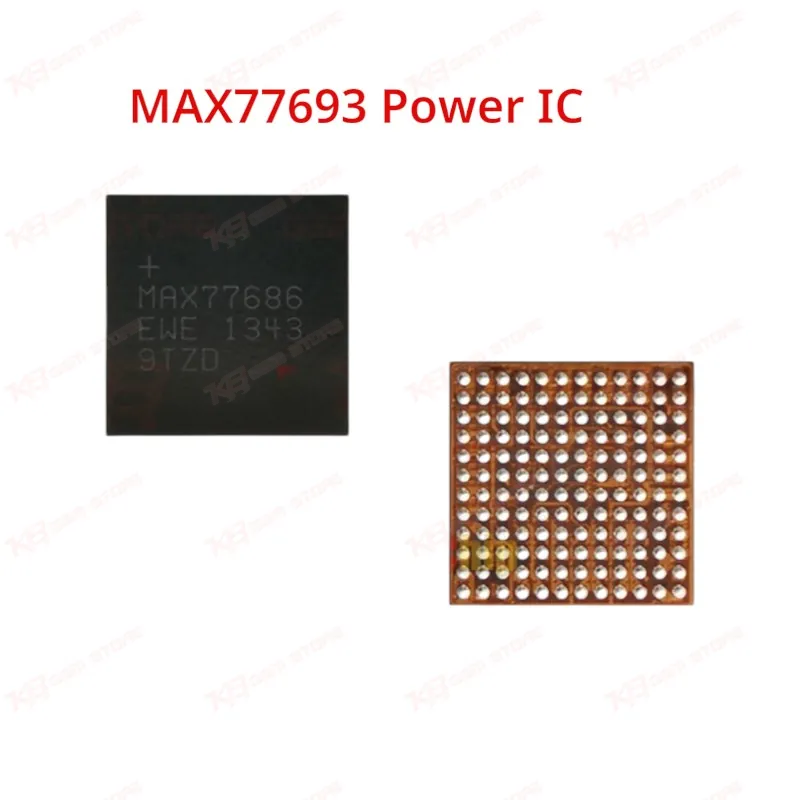
The MAX77693 is a Maxim power management IC built for Samsung Galaxy S III (I9300), Galaxy Note 2 (N7100), and Galaxy Note 10.1 (P600) motherboards. It regulates unregulated input voltage into stable output rails and also handles MUIC (Micro USB Interface Controller) functions, flash LED control, and haptic motor control on a single BGA chip. Technicians reach for this IC when a board shows dead-after-drop symptoms, charging issues, no vibration, or flash LED faults traced back to the power management stage. A direct fit for board-level repair benches running reballing and BGA rework on these Samsung chipsets.
⚖️ Weight: 0.01 kg
SKU:MST-IC-191
- Safe & Secure Payment
- Fast Delivery
- WhatsApp Support


Description
FAQ
What is the product name?
The product name is MAX77693 Power Management IC.
What is the brand of this product?
The brand of this product is Maxim Integrated.
What is the model of this product?
The model of this product is MAX77693.
What is this product used for?
This product is used to regulate power delivery and control MUIC, flash LED, and haptic motor functions on Samsung Galaxy S III, Note 2, and Note 10.1 motherboards.
Which devices are compatible with this product?
This product is compatible with Samsung Galaxy S III (I9300), Samsung Galaxy Note 2 (N7100), and Samsung Galaxy Note 10.1 (P600).
Who should use this product?
This product is suitable for mobile repair technicians, repair shops, service centers, and professional BGA rework technicians.
Does this IC handle both charging and vibration motor functions?
Yes, the MAX77693 integrates PMIC power regulation and haptic motor control in the same chip, so both charging faults and vibration faults on these Samsung models can trace back to this IC.
What package type does the MAX77693 use, and what does that mean for reballing?
It uses a BGA 100 package, which means reballing requires a stencil matched to the 100-ball pattern and controlled hot air to avoid cold joints on this tight ball pitch.