

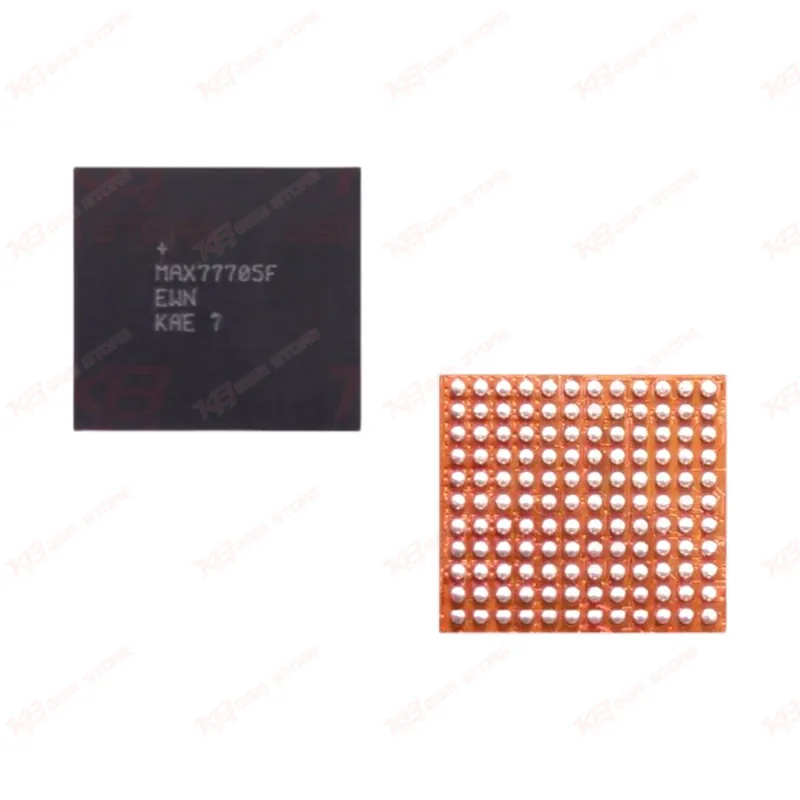
MAX77705F Power Management IC (PMIC) for Samsung Galaxy S9, S9+, Note 9
MAX77705F Power Management IC (PMIC) for Samsung Galaxy S9, S9+, Note 9
Regular price
Rs.250.00 PKR
Regular price
Sale price
Rs.250.00 PKR
Shipping calculated at checkout.
Quantity
Couldn't load pickup availability
MAX77705F is the Power Management IC used on Samsung Galaxy S9, S9+, and Note 9 motherboards. This PMIC controls power distribution from the battery to the charging circuit, display, and other core components on the board. When a Galaxy S9 series device shows dead phone symptoms, no charging response, or hangs on logo after a drop or liquid damage, this IC is one of the first checkpoints on the motherboard. Genuine tested chips help technicians restore stable power delivery without replacing the full board. Suitable for BGA rework benches handling Samsung PMIC replacement and reballing jobs.
⚖️ Weight: 0.01 kg
SKU:MST-IC-71
- Safe & Secure Payment
- Fast Delivery
- WhatsApp Support
Description
FAQ
What is the product name?
The product name is MAX77705F Power Management IC.
What is the brand of this product?
The brand of this product is Maxim Integrated.
What is the model of this product?
The model of this product is MAX77705F.
What is this product used for?
This product is used for managing power distribution from the battery to the charging circuit and other core components on Samsung Galaxy S9 series boards.
Which devices are compatible with this product?
This product is compatible with Samsung Galaxy S9 (G960F, G960U, G960W, G9600), Galaxy S9+, and Galaxy Note 9.
Who should use this product?
This product is suitable for mobile repair technicians, repair shops, service centers, and professional users.
Does replacing the MAX77705F fix dead phone issues on Galaxy S9?
Yes, if diagnosis confirms the PMIC as the fault point, replacing MAX77705F commonly restores power in dead phone cases caused by IC failure.
What tools are needed to replace this IC?
A hot air rework station with accurate temperature control, quality flux, and either a stencil or manual reballing technique are needed for safe removal and placement.