


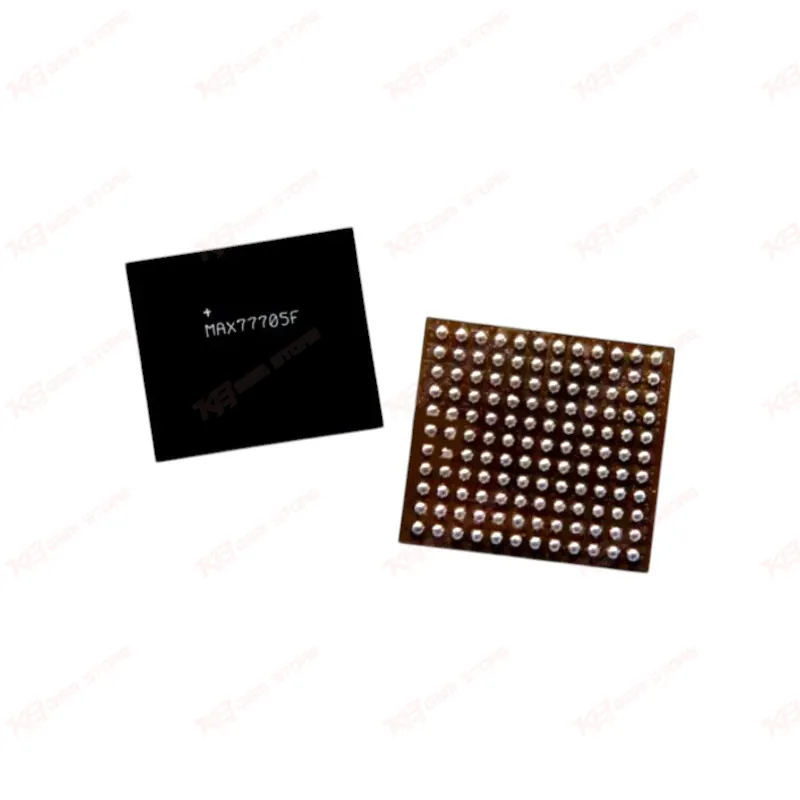
MAX77804 Power IC
MAX77804 Power IC
Regular price
Rs.300.00 PKR
Regular price
Sale price
Rs.300.00 PKR
Shipping calculated at checkout.
Quantity
Couldn't load pickup availability
The MAX77804 power management IC handles voltage regulation and power distribution on Samsung Galaxy Note 3 (N9005, N900, N7505, N750), Galaxy Tab S T365, and Galaxy S5 Broadband LTE-A (G906S) motherboards. When a board shows dead after flash, no power on, or hang on logo symptoms tied to the power rail, this BGA chip is the direct replacement for a damaged or shorted original. Reflow it with a hot air station or infrared rework machine after confirming a short on the power line with your multimeter or thermal camera. Built for GSM technicians who need an exact-match PMIC for motherboard-level repair, not a generic substitute.
⚖️ Weight: 0.01 kg
SKU:MST-IC-79
- Safe & Secure Payment
- Fast Delivery
- WhatsApp Support


Description
FAQ
What is the product name?
The product name is the MAX77804 Power Management IC.
What is the brand of this product?
The brand of this product is Maxim Integrated (Analog Devices).
What is the model of this product?
The model of this product is MAX77804.
What is this product used for?
This product is used to replace a faulty or shorted power management IC on affected Samsung motherboards, restoring normal power-on and charging function.
Which devices are compatible with this product?
This IC is compatible with the Samsung Galaxy Note 3 (N9005, N900, N7505, N750), Galaxy Tab S T365, and Galaxy S5 Broadband LTE-A (G906S).
Who should use this product?
This product is suitable for mobile repair technicians, repair shops, service centers, and professional users handling motherboard-level BGA repair.
Does a shorted MAX77804 always cause a dead phone on Note 3 boards?
A shorted MAX77804 is a common cause of dead phone symptoms on Note 3 boards, but the short should always be confirmed with a bench power supply and thermal imaging before replacing the chip, since nearby components can cause similar symptoms.
What tools do I need to replace the MAX77804 on a motherboard?
You need a hot air rework station, flux, a stencil sized for the MAX77804 BGA footprint, solder balls or paste for reballing, and a microscope to inspect the joints after reflow.