


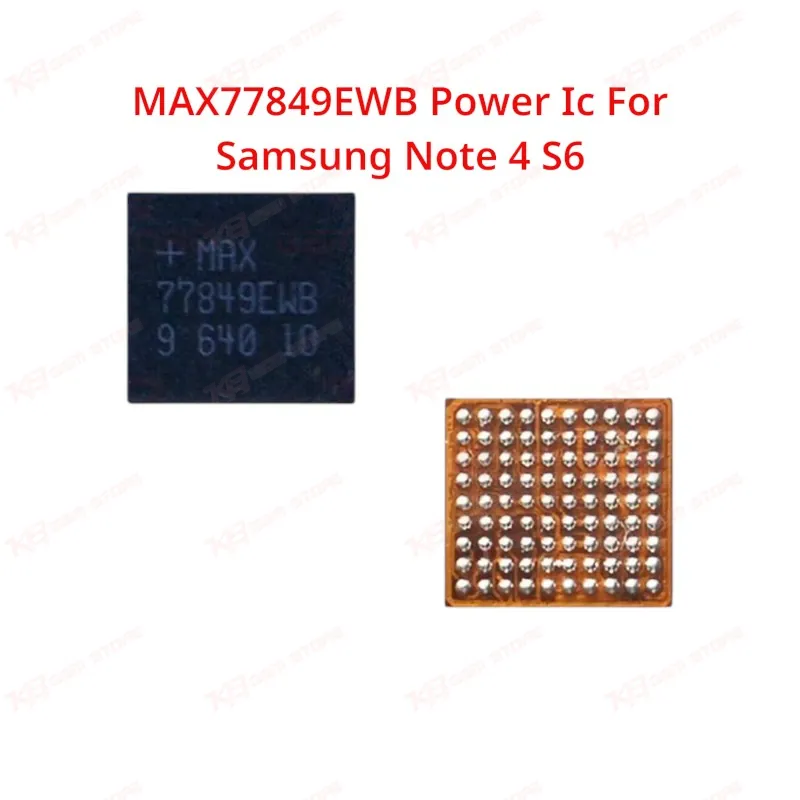
MAX77849EWB Power Ic For Samsung Note 4 S6
MAX77849EWB Power Ic For Samsung Note 4 S6
Regular price
Rs.500.00 PKR
Regular price
Sale price
Rs.500.00 PKR
Shipping calculated at checkout.
Quantity
Couldn't load pickup availability
The MAX77849EWB is a small power management IC used on the motherboard of the Samsung Galaxy Note 4 and Galaxy S6. It handles USB cable detection and charging path control, so a faulty chip usually shows up as a dead phone, no charging, or a device stuck at the logo. Technicians pull this chip when charging IC replacement or hardware fault diagnosis points to the power management line rather than the battery or charging port. Reflow with hot air and a proper preheat, then test charging behavior before closing the board.
⚖️ Weight: 0.01 kg
SKU:MST-IC-184
- Safe & Secure Payment
- Fast Delivery
- WhatsApp Support


Description
FAQ
What is the product name?
The product name is MAX77849EWB Power IC For Samsung Galaxy Note 4 & S6.
What is the brand of this product?
The brand of this product is Maxim Integrated.
What is the model of this product?
The model of this product is MAX77849EWB.
What is this product used for?
This product is used for replacing a faulty power management IC on Samsung Note 4 and S6 motherboards when the phone shows dead phone, no charging, or hang-on-logo symptoms.
Which devices are compatible with this product?
This product is compatible with the Samsung Galaxy Note 4 and Samsung Galaxy S6.
Who should use this product?
This product is suitable for mobile repair technicians, repair shops, service centers, and professional users comfortable with board-level soldering.
does the MAX77849EWB control charging on the Note 4 and S6?
Yes, it manages USB cable detection and charging path switching as part of the device's power management and MUIC circuit.
Is the MAX77849EWB the same as the MAX77843 used in other Samsung phones?
It belongs to the same Maxim power management and MUIC architecture family as the MAX77843, and board-level repair documentation groups the two together, though they are used on different device models.