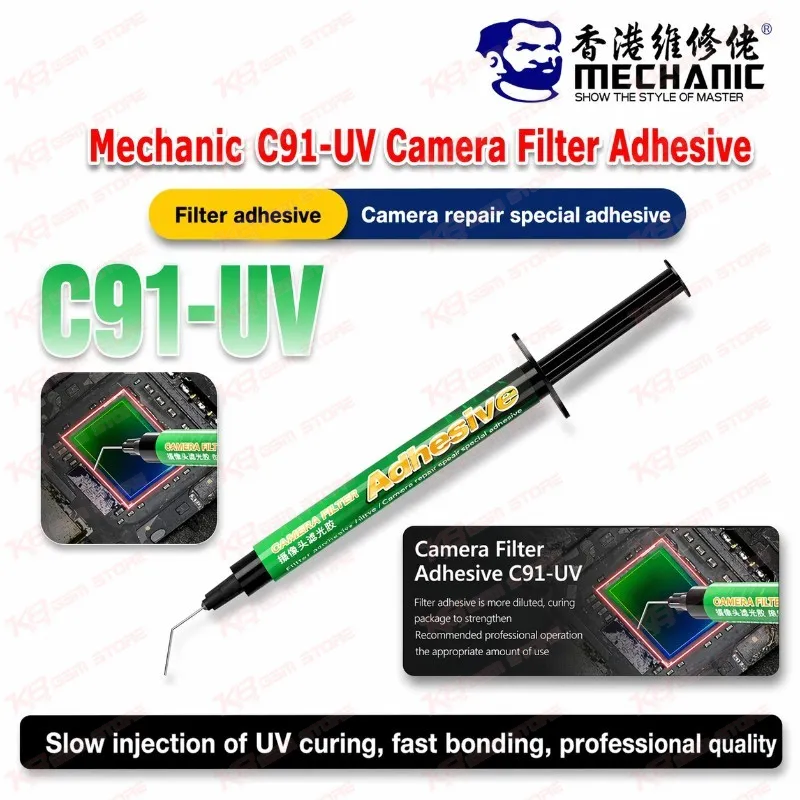
Mechanic C91-UV Camera FIlter Adhesive solves one of the most delicate jobs on a repair bench: bonding a replacement CMOS filter back onto a smartphone camera module without clouding the image path. When a customer walks into your shop with a camera that shows haze, a strange tint, dust spots, or a cracked filter glass after a drop, the fault often sits right above the image sensor rather than on the logic board, and the fix calls for a clean optical bond instead of a full module swap. Mechanic formulates the C91-UV as a thin, low-viscosity UV-curing glue, noticeably more diluted than its sister product, the C90-UV blue-ray adhesive, and that thinner body lets it run into the narrow seating edge around the filter frame without pooling onto the glass surface. The adhesive stays workable until you expose it to ultraviolet light, which gives you time to seat the filter, check alignment under the microscope, clean any excess with a fine swab, and only then lock everything in place. Once UV light reaches it, the glue cures into a transparent, durable bond that strengthens the filter package and holds it steady against the everyday knocks a phone takes in a pocket. This controlled curing window matters in real workshop conditions, because instant glues and general-purpose epoxies start setting the moment they touch the part, and a slightly tilted filter means a soft corner or visible flare in every photo the customer takes. A typical workflow with the C91-UV starts with opening the device, disconnecting the battery, and removing the camera module from the housing; you then lift the damaged filter, clear old adhesive residue and dust from the sensor frame, and place the new filter with precision tweezers while you work under a stereo microscope so you can see the seating edge clearly. You apply a very small amount of C91-UV around the perimeter with a fine needle tip or dispensing pin, let the thin glue travel along the edge, confirm that nothing has crept onto the optical area, and then cure it with a UV lamp. After curing, you reinstall the module, power on the phone, and test focus, sharpness, and colour in both photo and video mode before you hand it back. Because the filter sits directly over the image sensor, any contamination during this job shows up in the final picture, so pairing this adhesive with a dust-removal gel stick, lint-free swabs, and a clean anti-static work mat makes a real difference to your success rate. The 3 g pack holds enough glue for many filter jobs, since each repair needs only a thin bead, and that keeps the per-repair cost low for busy shops that handle daily camera complaints alongside charging issue, display problem, and network issue repairs. Technicians who already stock the Mechanic C89 anti-shake glue for optical stabilisation holes and the C90-UV for blue-glass package fixing will find that the C91-UV completes the trio, giving your bench a dedicated adhesive for each layer of a modern camera stack instead of one compromise glue for everything. The C91-UV fits naturally into a camera and optical repair setup built around microscopes, PCB holders, and a reliable UV curing lamp, while your hot air stations and soldering stations stay reserved for board-level work such as connector replacement or FPC rework on the same module. For service centres and training institutes, a dedicated filter adhesive also helps standardise camera repair procedures, so every technician on the team follows the same bonding and curing steps and delivers consistent image quality. Whether you run a small repair counter in Lahore or a multi-bench service centre in Karachi or Islamabad, the Mechanic C91-UV Camera FIlter Adhesive gives you a precise, controllable, and transparent bonding solution for CMOS filter replacement, helping you turn a camera hardware fault into a clean, professional repair instead of an expensive full module replacement.