


Brand:
MECHANIC
Mechanic CD48 Camera Lens Dusting Stick
Mechanic CD48 Camera Lens Dusting Stick
Regular price
Rs.800.00 PKR
Regular price
Sale price
Rs.800.00 PKR
Shipping calculated at checkout.
Quantity
Couldn't load pickup availability
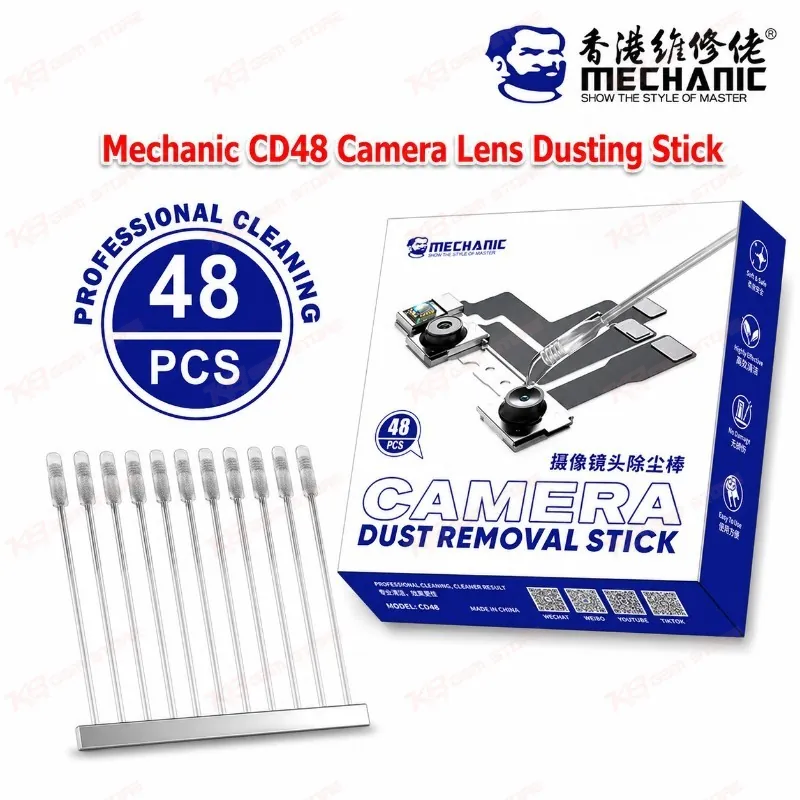
The Mechanic CD48 Camera Lens Dusting Stick gives your repair bench a fast, residue-free way to lift dust and stains from mobile phone camera lenses before you close up a back glass or hand the phone back to a customer. Each pack carries 48 synthetic resin gel sticks arranged in breakable rows, so you snap off one stick per job and keep the rest clean. The soft adhesive tip grabs particles with a simple press-and-rotate motion and leaves no sticky film behind. Pakistani repair shops rely on it to fix blurry camera complaints, dust spots after camera module replacement, and lens dirt during back glass work.
SKU:MST-SOLDERING-ACCESSORIES-880
⚖️ Weight: 0.09 kg
- Safe & Secure Payment
- Fast Delivery
- WhatsApp Support


Description
FAQ
What is the product name?
The product name is Mechanic CD48 Camera Lens Dusting Stick.
What is the brand of this product?
The brand of this product is Mechanic.
What is the model of this product?
The model of this product is CD48.
What is this product used for?
This product is used for removing dust and stains from mobile phone and tablet camera lenses during repair and reassembly.
Which devices are compatible with this product?
This product is compatible with smartphone and tablet camera lenses universally — it does not depend on a specific brand or model.
Who should use this product?
This product is suitable for mobile repair technicians, repair shops, service centers, and professional users.
Does the Mechanic CD48 leave glue residue on the camera lens?
No. The soft adhesive tip lifts dust and stains with strong adhesion and leaves no residue, so you can close the phone right after cleaning.
Can one CD48 stick be reused across multiple phones?
Mechanic designs each stick for individual use. You break one stick off the row for each job, which keeps the process hygienic and avoids moving dirt from one device to another; the pack gives you 48 sticks.