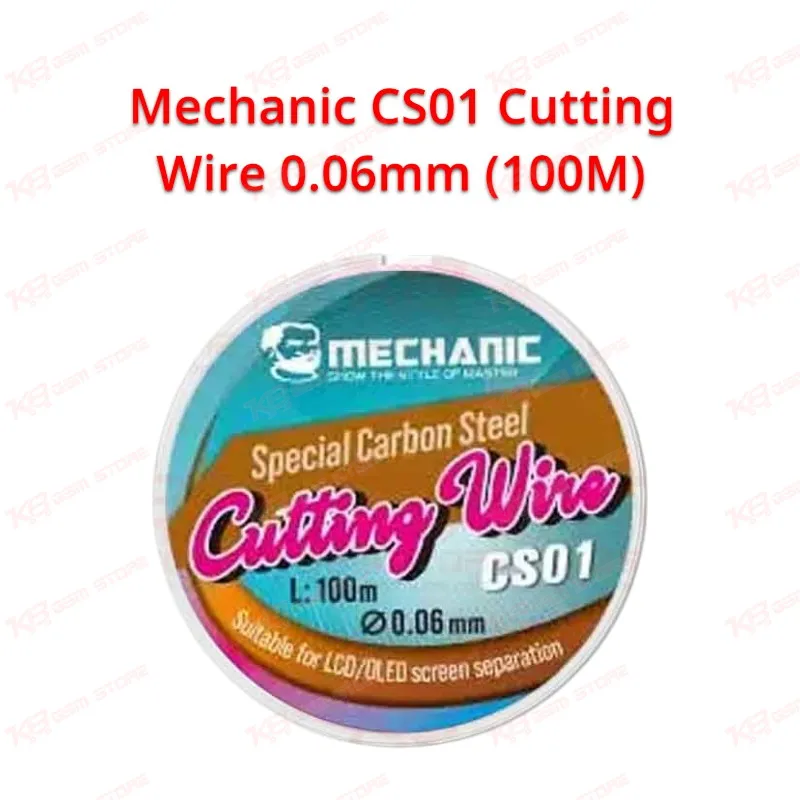
When you're separating a glued screen from its frame, the tool doing the actual cutting matters just as much as your technique, and the Mechanic CS01 Cutting Wire 0.06mm handles that job with the kind of consistency you need on a busy repair bench. Built from special carbon steel alloy, this wire combines high hardness with strong tensile strength, which means you get a cutting edge that holds up through repeated use instead of weakening or snapping halfway through a job. Screen separation work puts real stress on cutting wire, especially when adhesive is stubborn or a frame is tightly sealed, and a wire that breaks mid-cut costs you time and risks damaging the screen you're trying to save. The CS01 addresses that directly with its reinforced carbon steel construction, giving you a cutting tool that stays intact under the pull and tension separation work demands. At 0.06mm thickness, this wire sits in a useful middle ground for LCD and OLED screen separation, thin enough to slide cleanly under adhesive layers without forcing the glass, yet substantial enough to maintain control as you work your way around the screen perimeter. You'll find this thickness practical for general screen removal tasks where you need consistent cutting performance without the wire flexing or wandering off your intended line. High rust prevention is built into the alloy composition, so the wire holds its cutting quality even after sitting in your toolbox for a while between jobs, which matters if you're not running through cutting wire every single day. The 100 meter length is a real practical advantage here. Instead of running out mid-project or reordering constantly, you get enough wire to handle dozens of screen separations before needing a fresh roll, which keeps your repair costs per job lower and your bench better stocked. For technicians dealing with dead phone screen replacements, cracked display swaps, or frame separation during board-level repair, having a dependable length of cutting wire on hand removes one more variable from the job. This wire fits naturally into the screen removal step of your repair workflow, typically used before you access the battery, motherboard, or internal components for further diagnostics or component-level work. It pairs well with heat guns or hot plates that soften the adhesive first, since a warmed screen separates more easily and reduces the physical stress placed on both the wire and the display glass. Technicians working through daily walk-in repairs, screen replacement services, or bulk refurbishment jobs will notice the difference a stronger, more rust-resistant wire makes over cheaper alternatives that fray or snap under normal working tension. The high surface finish on this wire also reduces the risk of leaving scratch marks or debris on the screen surface during separation, which protects polarized layers that are easy to damage with rougher cutting materials. If your workshop handles a steady volume of screen replacements across different phone brands, keeping a roll of CS01 0.06mm on hand means you're not stopping mid-repair to search for cutting wire or improvising with lower-quality alternatives. It's a straightforward, functional tool, but in screen separation work, consistency and reliability are exactly what keep your repair turnaround times predictable and your finished jobs free from avoidable screen damage.