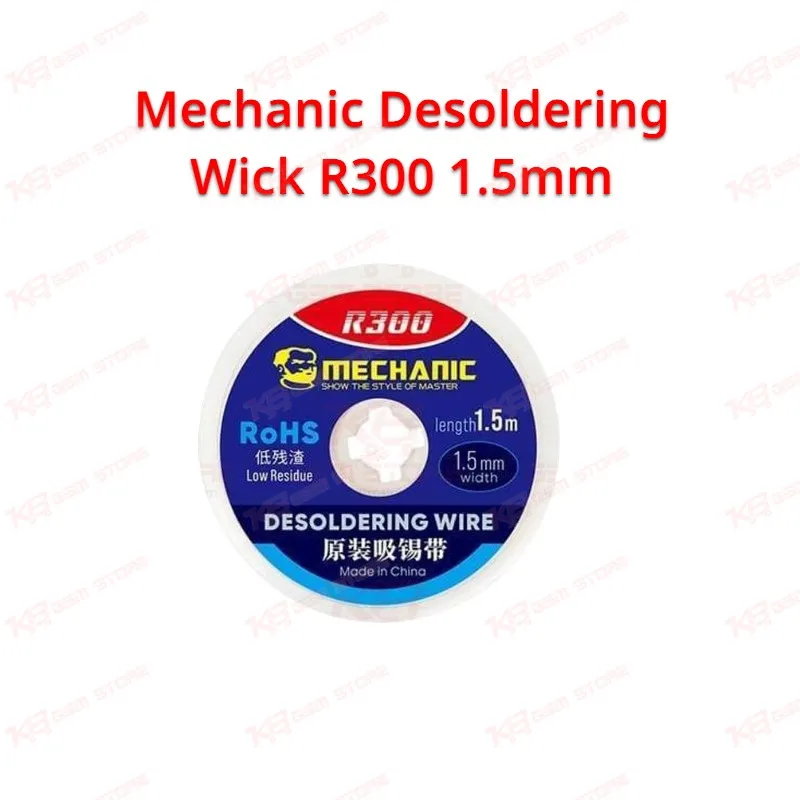
Solder wick is one of those tools every repair technician reaches for multiple times a day, and the Mechanic R300 Desoldering Wick 1.5mm is built specifically for that kind of repeated, precise use on mobile phone PCBs. Made from copper braid, it's engineered to soak up melted solder cleanly, leaving pads free of bridges and excess tin so your next step, whether that's reballing an IC or mounting a new connector, starts on a clean surface.The braid measures 1.5mm in width and comes in a 1.5-meter length per roll, giving you enough material to handle dozens of desoldering jobs before needing a refill. At only around 8 grams per roll, it takes up almost no space in a tool drawer, which matters when your bench is already crowded with hot air stations, microscopes, and IC testers.What sets the R300 apart from generic solder wick is the flat braid construction. A thin, soft flat weave transmits heat more efficiently than round or thicker braided wick, so the copper reaches soldering temperature faster and pulls solder up into the braid with less dwell time on the board. That matters on modern phone PCBs where components sit close together and prolonged heat exposure risks lifting pads or damaging nearby SMD parts. The faster the wick absorbs solder, the less time your iron tip needs to stay in contact with the board.This responsiveness also makes the R300 a solid choice when you're working with lead-free solder, which typically requires higher iron temperatures than traditional leaded solder. Many older or thicker wicks struggle to keep up with lead-free's higher melting point, but the R300's improved thermal transmission helps it absorb solder even under that increased heating load, so you're not fighting the tool while trying to clean a dead phone board or clear a shorted trace.The copper braid carries an anti-oxidation and anti-corrosion treatment, which keeps the wick from tarnishing in storage and helps it perform consistently across sessions rather than degrading after the first few uses. Low residue is another practical benefit here — after desoldering, you're left with minimal flux and tin buildup on the board, which cuts down on the cleaning step before you move to the next stage of repair, whether that's applying new flux, positioning a new IC, or prepping the area for reballing.On a Pakistani repair bench, this wick shows up constantly in day-to-day work: cleaning up pads after an IC change, removing old solder before a jumper wire repair, prepping a board for a new charging port, or simply tidying a footprint before reflow. It's equally useful for clearing solder bridges after hot air rework, cleaning connector pins, and general PCB maintenance during board-level diagnostics. Technicians handling dead phone repairs, boot loop issues, or charging faults often need to remove and replace components multiple times during troubleshooting, and having a wick that responds fast under heat saves real time across a busy repair queue.Using it is straightforward: place the braid directly over the solder you want to remove, then press your heated soldering iron tip onto the wick so the heat transfers through to the solder beneath. As the solder melts, it wicks up into the copper braid through capillary action. Once you see the solder has been absorbed, lift the wick and iron together off the board, then trim away the used, blackened section with nippers or scissors to expose fresh braid for the next use.A few safety points worth keeping in mind: only handle the wick by its packaging or a heat-safe grip, since the braid itself gets hot fast once it touches the iron tip. Avoid pressing the iron too hard against the wick, and don't hold heat on one spot for more than a few seconds, since prolonged contact can damage nearby components or lift copper pads on delicate mobile PCBs. Keep the wick and iron away from flammable materials while in use.For any repair shop running through IC changes, connector swaps, or board-level rework on a regular basis, the Mechanic R300 1.5mm wick is a low-cost, high-frequency-use item worth keeping stocked in bulk rather than buying one roll at a time.