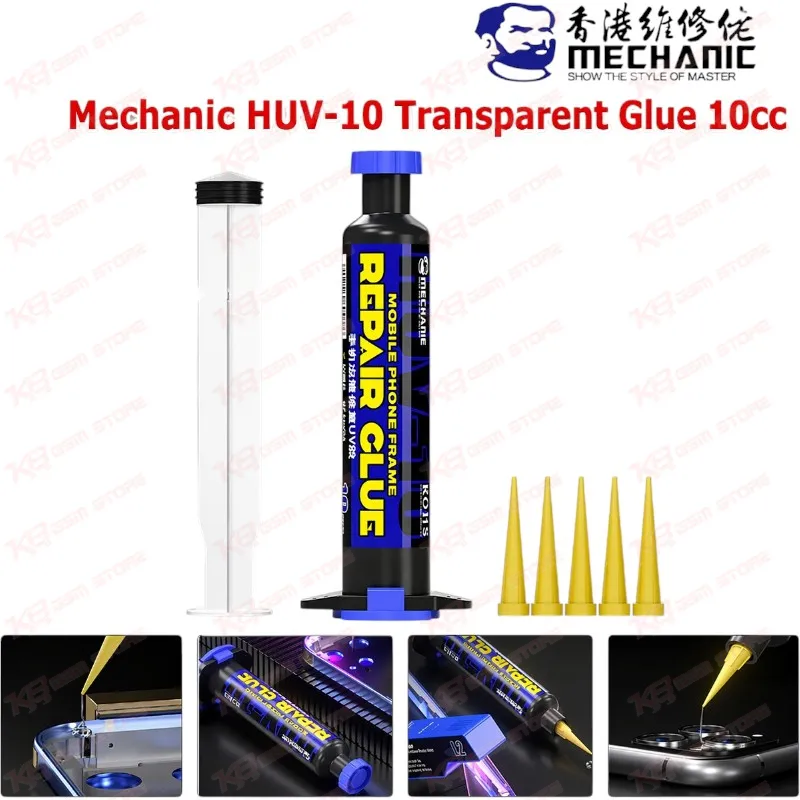
Mechanic HUV-10 Transparent Glue 10cc solves a specific problem on the repair bench: bonding glass to LCD or digitizer layers without ruining the optical clarity of the screen. You apply it in a thin, even line across the panel surface, press the glass down to spread it evenly, then cure it under a UV lamp or sunlight until it hardens into a clear, solid bond. This is the same lamination method used across the mobile repair industry for rebuilding cracked screens where the original glass gets replaced but the LCD or OLED panel underneath is reused to cut customer repair cost. A poor-quality glue leaves bubbles, cloudy patches, or a yellow tint after curing, and that ruins an otherwise good repair job — this is why technicians pick a UV adhesive that cures clear and stays clear over time. The HUV-10 sits in the same category as other liquid optical clear adhesives used for screen refurbishing, meaning it fills the microscopic air gap between the touch glass and the display layer, which improves both the visual quality of the reassembled screen and the touch response afterward. In your daily workflow, this glue fits right after the digitizer separation and cleaning stage — once you remove the old glass with a separator machine or wire, clean off the old OCA film or leftover adhesive, and prep the LCD surface, the HUV-10 goes on before you press the new glass in place. It works well for phones where a full LCD replacement is not economical and where lamination is the more practical repair choice. Since it stays liquid until UV exposure, you get working time to align the glass properly before locking it in place, which matters more on curved-edge screens where a rushed bond shows up as a visible edge line later. A 10cc bottle covers a good number of small to mid-size lamination jobs before running out, so it suits a workshop doing screen glass repairs regularly rather than a one-off job. Keep the bottle away from direct light when not in use since UV-cure adhesives start hardening the moment they get meaningful UV exposure, and a partially cured bottle wastes product and gives inconsistent results on the next job. Apply a thin bead rather than overloading the surface — excess glue pushes out from the edges during pressing and creates cleanup work along the frame that eats into your turnaround time. For dead phone or cracked-glass jobs where the customer wants a cost-effective fix instead of a full panel replacement, this kind of lamination glue is what keeps that option viable for your shop. Store it at normal room temperature, keep the nozzle clean between uses, and avoid contaminating the bottle tip with dust or old cured glue, since that affects flow consistency on the next application. This is a consumable every screen-repair bench goes through regularly, and having a reliable batch on hand keeps your glass lamination jobs consistent instead of gambling on inconsistent no-name adhesive that clouds up after a few weeks.