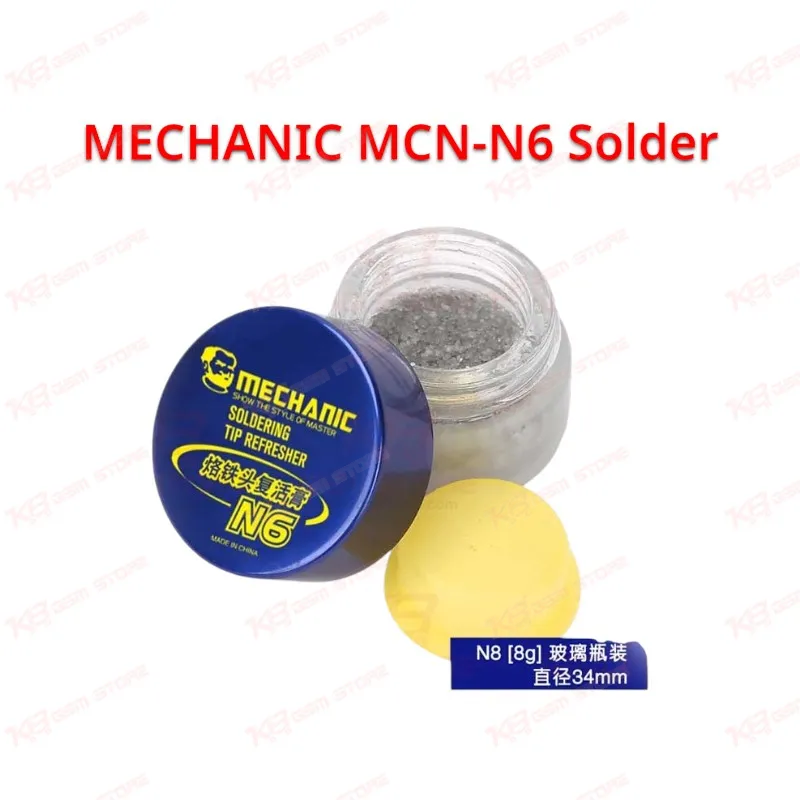
Every technician who spends hours on a soldering iron knows the moment a tip goes bad: it turns dark, solder beads up instead of flowing, and joints start looking dry no matter how careful you are. That oxidation happens naturally with heat and use, and once a tip reaches that stage, a damp sponge or brass wire cleaner only wipes the surface without actually restoring the tinned layer underneath. The MECHANIC MCN-N6 Tip Refresher solves that exact problem. You press the hot tip into the paste, move it around for a few seconds, and the chemical composition strips the oxide layer while simultaneously depositing a fresh coat of solder across the tip. The result is a tip that looks and performs like new, without buying a replacement. For a repair shop running multiple stations every day, that difference adds up fast in saved tool costs and reduced downtime. The paste is formulated lead-free, which matters for technicians working in enclosed repair spaces or training environments where fume exposure is a real concern. Unlike liquid flux or tip tinner sticks that dry out quickly once opened, this cream stays usable in its sealed tin for a long time, so it holds its effectiveness even if you only touch it occasionally. Application is straightforward: heat your iron to its normal working temperature, dip or press the tip into the compound, rotate it gently against the paste surface, then wipe off the residue with a dry cloth or standard cleaning sponge. The tip should come back tinned and bright within one or two applications. This makes it especially useful during long BGA reballing sessions, motherboard-level IC rework, or general phone repair work where a dull tip directly slows down soldering accuracy on small pads and closely spaced components. On a repair bench, tip condition affects far more than convenience. A poorly tinned iron transfers heat unevenly, which increases the risk of lifted pads, cold joints, or overheating sensitive components nearby — all common causes of a board coming back after a repair. Keeping a jar of MCN-N6 within reach means a technician can restore tip performance mid-job instead of stopping to swap tips or, worse, continuing to work with a degraded tool and risking a bad joint. It fits naturally into the same toolkit as flux paste, solder wire, and hot air rework stations, since all of these tools depend on consistent heat transfer to do their job properly. Because the formula is designed for tip resurrection rather than general PCB cleaning, it should be used specifically on the metal tip itself and not as a substitute for flux during actual soldering work. Store the tin closed when not in use to keep the compound from drying out over time, and avoid letting foreign debris fall into the paste, since contamination can affect how cleanly it re-tins a tip. For technicians running a busy service center, having this on hand extends the working life of every soldering iron tip in the shop, reduces the frequency of tip replacement purchases, and keeps solder joints consistent across jobs. It is a small, low-cost item, but it solves a recurring, practical problem that every soldering-heavy workshop deals with regularly, which is exactly why it has become a common fixture on repair benches across Pakistan's mobile repair and electronics rework industry.