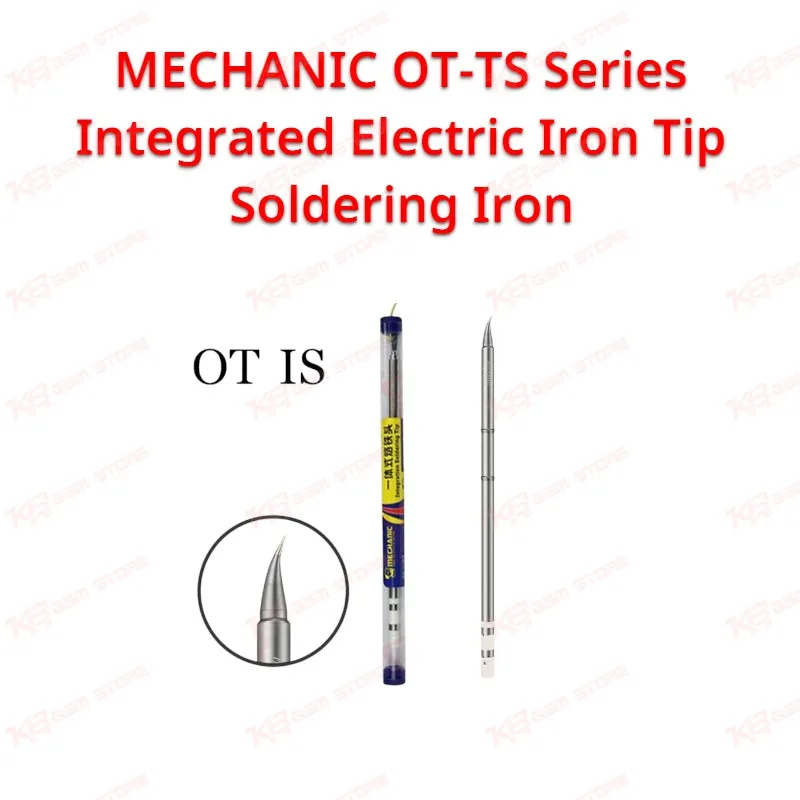
The MECHANIC OT-TS is an integrated soldering iron tip, meaning the heating core and the tip itself are fused into one replaceable unit rather than separate parts you assemble on your bench. This design cuts out the loose-contact heat loss you get with older two-piece tip-and-core setups, so more of the generated heat actually reaches the solder joint instead of dissipating at the connection point. For a repair shop running multiple boards a day, that translates into faster tin flow and less time waiting for the tip to recover between joints.At the core of the OT-TS sits a Swiss imported heating element. This isn't just a marketing label — the heating core is what determines how quickly your iron reacts when you touch a cold joint or a large ground plane that pulls heat away fast. MECHANIC rates this core at a 5-second heat-up time to working temperature and a 6-second solder melting time, which puts it in line with what most T12-compatible tips on the market claim, but the integrated build helps that speed hold up under continuous use rather than degrading after the first few boards.The tip itself carries multi-layer electroplating. This plating layer is what keeps the tip from oxidizing black after repeated heating cycles — a problem that kills tin adhesion on cheaper unplated tips within days. On a workshop bench where the iron sits at temperature for hours, oxidation resistance directly affects how often you need to clean or replace tips. The plating also reduces the friction coefficient on the tip surface, so solder wets and flows across the blade edge instead of beading up or sticking unevenly.The blade shape on this OT-TS variant is built for flat-contact soldering work. Compared to a fine conical tip, the blade profile gives you more surface area against pads, jumper points, and IC legs, which is useful when you're doing drag soldering across a row of pins or reflowing a wider pad on a motherboard. It's a practical shape for technicians doing daily board-level repair rather than ultra-fine 0201 rework, where a needle tip would be the better pick.Fit-wise, the OT-TS is built for T12 series soldering iron handles and stations — the same handle standard used across popular soldering stations like the MECHANIC T12 Pro, T12 Max, and other T12-compatible units already common on GSM repair benches in Pakistan. Since this is a handle-standard fit rather than a phone-model-specific part, it works across any board you're servicing, whether it's a Samsung, iPhone, Oppo, Vivo, Infinix, or Tecno motherboard — the tip doesn't care what phone the board came from, only that your station uses a T12 handle.For technicians dealing with dead phone repairs, IC change jobs, jumper wire work, or charging port resoldering, a tip that heats fast and holds plating matters more than people give it credit for. A worn or oxidized tip is one of the most common reasons a "good" repair turns into a cold joint or a lifted pad, so keeping a stock of OT-TS tips on hand is a low-cost way to protect your actual repair work from bad tool contact.