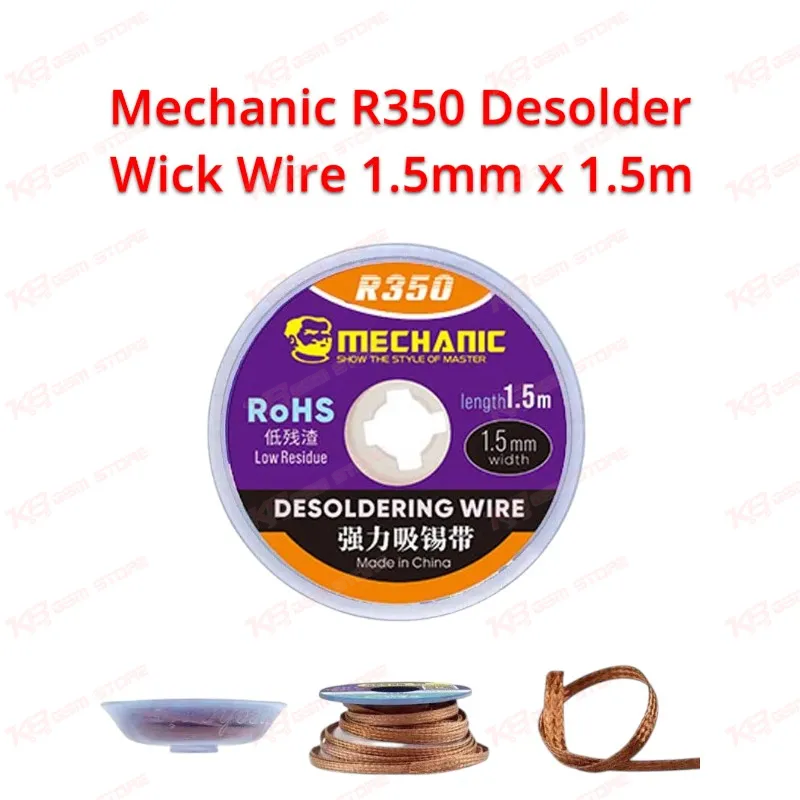
Every mobile repair technician working on a dead phone or a board with a stubborn IC change karna job knows that clean solder removal makes or breaks the repair. The Mechanic R350 Desoldering Wick Wire 1.5mm x 1.5m gives you that clean removal through a pure copper braid engineered specifically for fine-pitch work. Unlike generic wick that leaves globs of tin behind or lifts pads on delicate boards, the R350 series uses a double-layer strong tin absorption structure that pulls molten solder into the braid quickly and evenly, so you spend less time reworking the same joint. The braid comes pre-coated with flux, which means you rarely need to add extra flux paste before you start pulling solder, saving time when you are working through a stack of boards during a busy day at the repair shop. You place the wick directly over the solder joint, rest your heated iron tip on top, and watch the melted solder wick upward into the copper strands through capillary action. Once the joint looks clean, you lift the iron and the wick together rather than dragging the braid across the board, which protects surrounding pads and traces from scratching or lifting. This technique works whether you are clearing solder from a charging port, removing a PMIC before an IC change, prepping a pad before reballing, or cleaning flux residue off a board after a failed repair attempt. The 1.5mm width sits in the sweet spot for smartphone and tablet motherboard work: narrow enough to target individual pads on a crowded board, yet wide enough to lift a reasonable volume of solder per pass so you are not constantly cutting fresh sections. Technicians handling network issue repairs, charging issue diagnostics, or board-level troubleshooting on Qualcomm and MediaTek platforms rely on this width because it gives them the control needed near sensitive components without risking a short. The copper itself carries anti-oxidation and anti-corrosion treatment, so the braid stays conductive and effective even after sitting on the shelf for a while, which matters for shops that stock wick in bulk rather than buying fresh rolls every week. Low residue is one of the more practical benefits here. After absorbing solder, the wick leaves minimal flux residue on the board, cutting down the cleaning step before you move on to reflow or component placement. That matters when you are running back-to-back repairs and cannot afford a long cleanup cycle between each board. The 1.5-meter length gives you enough material to get through multiple repair jobs before you need a fresh roll, and because you cut off the used, solder-filled section after each pass, a single roll stretches across many joints rather than a handful. This makes it a cost-effective consumable for repair shops running high volumes of motherboard, BGA, and SMD work. Safety matters when handling a heated iron near a fine copper braid. Keep the working area ventilated, wear eye protection to guard against solder splashes, and make sure your iron tip stays clean and properly tinned before each session, since a dirty tip slows down absorption and can drag solder rather than lift it cleanly. Store unused wick in its original packaging or a sealed container away from moisture, since exposure to humidity over time can affect how cleanly the copper absorbs solder. Whether you run a service center handling walk-in repairs, a training institute teaching board-level diagnostics, or a personal repair bench for hardware fault and display problem jobs, the Mechanic R350 1.5mm wick gives you a dependable, repeatable way to remove solder without damaging the board underneath.