


Brand:
MECHANIC
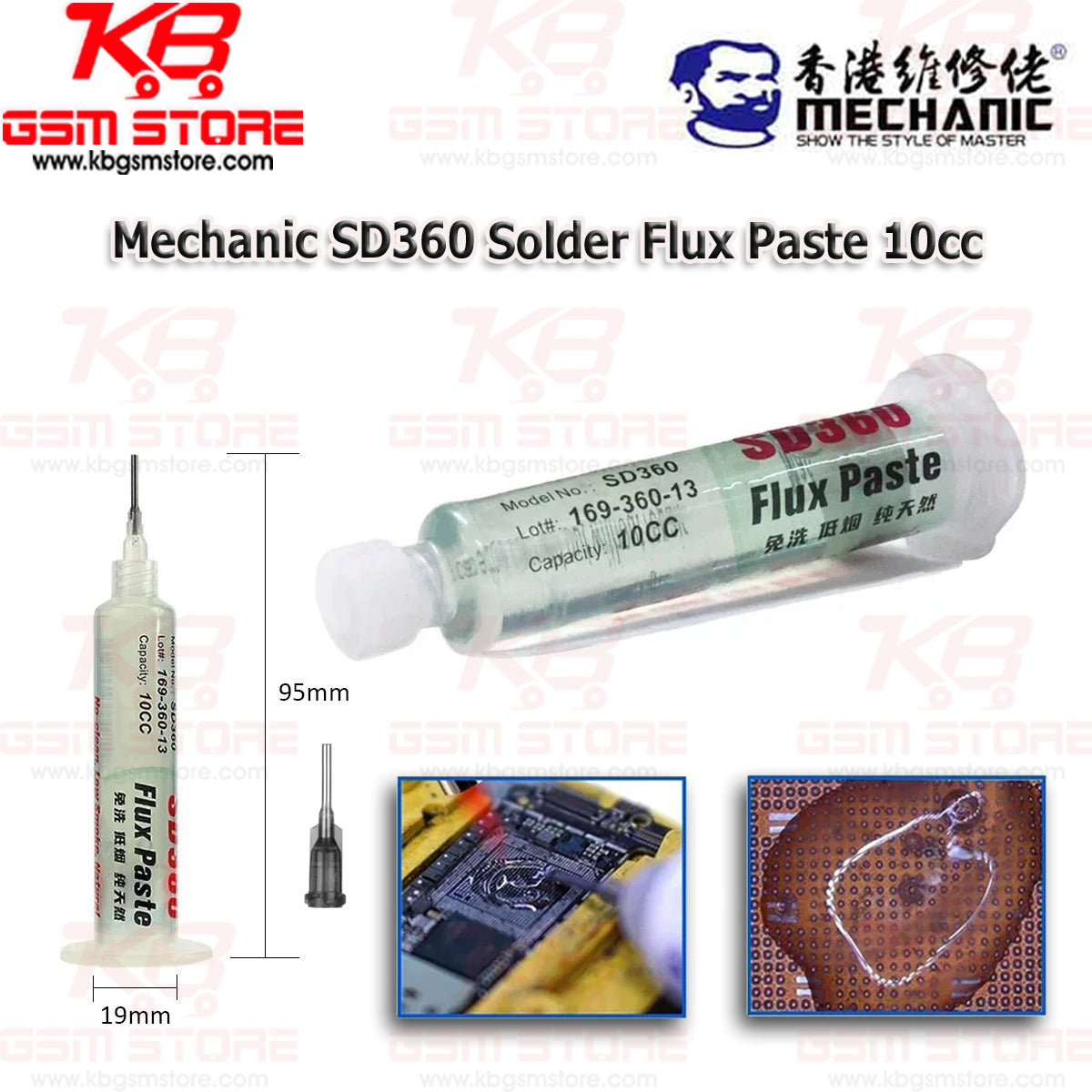
Mechanic SD360 Solder Flux Paste
Mechanic SD360 Solder Flux Paste
Regular price
Rs.600.00 PKR
Regular price
Sale price
Rs.600.00 PKR
Shipping calculated at checkout.
Quantity
Couldn't load pickup availability
The Mechanic SD360 is a 10cc no-clean transparent flux paste built for mobile phone motherboard repair, PCB rework, and SMD/BGA soldering. It comes in a syringe with a push rod, so you control the exact amount you apply instead of wasting paste on the board. The lead-free, halogen-free formula produces low smoke and light odor, which matters when you're working close to the board for hours. Technicians use it for IC reballing, chip soldering, and general rework where clean, residue-free joints are the goal. It works with both lead and lead-free soldering setups on your repair bench.
SKU:MST-SOLDERING-ACCESSORIES-42
⚖️ Weight: 0.09 kg
- Safe & Secure Payment
- Fast Delivery
- WhatsApp Support


Description
FAQ
What is the product name?
The product name is Mechanic SD360 Solder Flux Paste.
What is the brand of this product?
The brand of this product is Mechanic.
What is the model of this product?
The model of this product is SD360 (also available as SD360 Max).
What is this product used for?
This product is used for soldering, desoldering, and reballing tasks on mobile phone and laptop motherboards, including BGA, SMD, and IC repair work.
Which devices are compatible with this product?
This product is compatible with any mobile phone or laptop motherboard and general PCB/SMD/BGA repair work, regardless of brand or chipset.
Who should use this product?
This product is suitable for mobile repair technicians, repair shops, service centers, and professional PCB rework technicians.
Does this flux work with lead-free soldering?
Yes, the SD360 is a lead-free formula and works with both lead and lead-free soldering setups without any process changes.
Does this flux leave residue that needs cleaning after soldering?
No, it uses a no-clean formula that leaves minimal residue, so the board does not need washing after the joint is made.