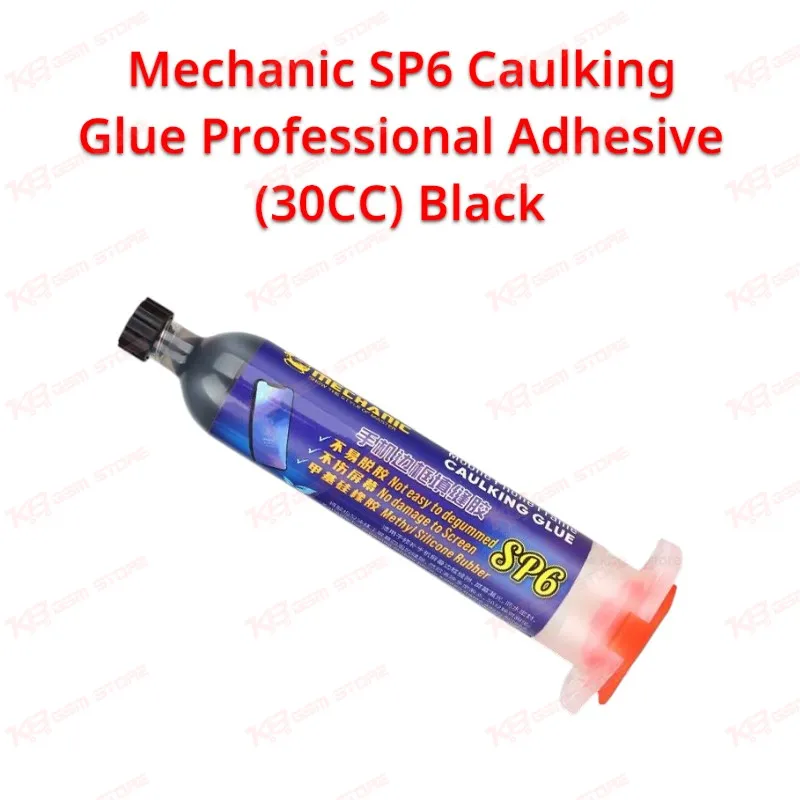
When a customer brings in a phone with a cracked glass cover but a working touch panel and LCD, you don't always need a full screen swap. Mechanic SP6 Caulking Glue lets you reseal the glass cover onto the touch panel and LCD directly, saving the customer money and saving you a part order. This is a 30cc black caulking glue made from methyl silicone rubber, formulated specifically for mobile phone frame and screen sealing rather than general-purpose bonding, so it holds up under the flexing and thermal cycling a phone frame goes through daily. On your repair bench, this glue solves three recurring problems at once: bezel gaps after a frame reassembly, water ingress around the screen edge, and light leakage where the display doesn't sit flush against the frame. Apply a thin, even line along the frame or screen edge, press the components together, and hold for the initial fixation window before moving on to your next job. Full structural cure takes 24 hours, so avoid stress-testing the seal or running water-resistance checks before that window closes even though the bond feels tacky-set much sooner. The particle size in this formulation sits in the 1–10μm range, which is why the cured line stays thin and even instead of pooling or leaving visible ridges along the bezel, something that matters when a customer inspects the phone edge closely after pickup. Because the cured adhesive stays flexible rather than turning brittle, it tolerates the small amount of frame flex that happens during normal phone use without cracking or separating at the seam. That flexibility is also what keeps the bond intact through repeated drops and everyday handling, rather than just an initial hold that fails a month later. This is the same category of glue Pakistani technicians reach for when a phone comes in with a display problem traced to a loose frame seal rather than a dead panel, or when a customer complains about a hang on logo issue after water exposure and you trace it back to a compromised frame seal instead of a board fault. Curved-edge Android phones from brands like Huawei, OPPO, and Vivo are where this glue gets used most often, since their curved glass-to-frame transition is harder to seal with tape alone. It also works for straight-edge phones where the disassembly process during a screen or battery job disturbed the original factory seal. Keep the tip clean between uses and store the tube upright in a cool spot on your bench, since exposure to open air for extended periods will start curing the adhesive inside the nozzle and waste product on your next repair. A workshop running multiple screen and frame jobs a week will burn through a 30cc tube fairly quickly, so most repair shops keep more than one unit on hand rather than ordering a single tube at a time. Pair it with a frame press tool or suction cups for even pressure while the initial bond sets, since uneven pressure during the fixation window is the most common reason a seal comes apart on inspection.