


Brand:
MECHANIC
Mechanic SU7 Black UV Curing Masking Paste
Mechanic SU7 Black UV Curing Masking Paste
Regular price
Rs.350.00 PKR
Regular price
Sale price
Rs.350.00 PKR
Shipping calculated at checkout.
Quantity
Couldn't load pickup availability
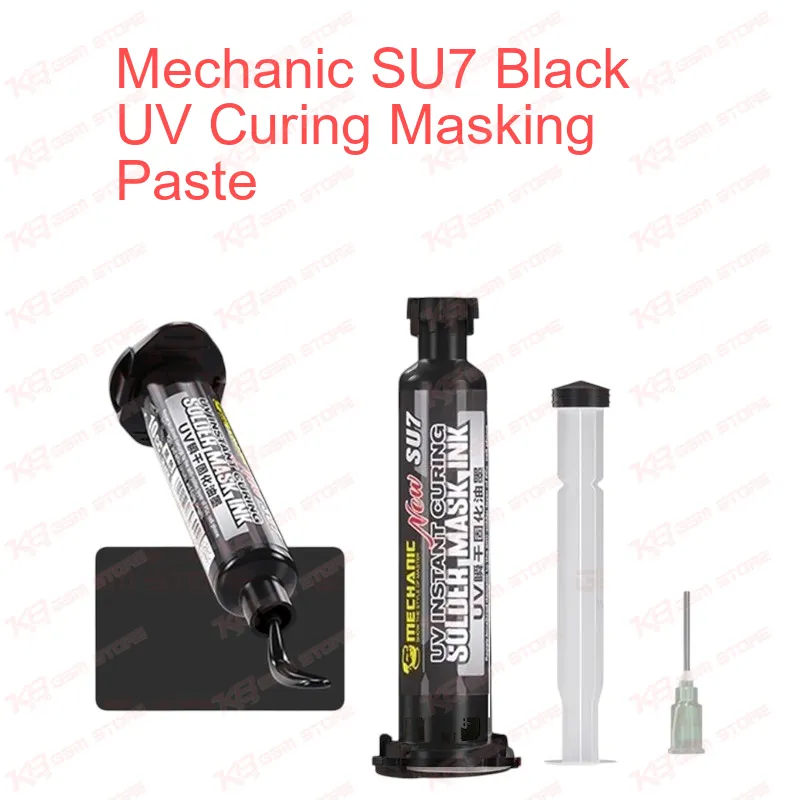
The Mechanic SU7 Black UV Curing Masking Paste gives mobile repair technicians a fast, clean way to restore damaged solder mask on black PCB motherboards. This 10cc syringe of UV solder mask ink lets you insulate exposed traces, lock jumper wires in place, and seal scraped pads after IC rework or corrosion cleaning. You apply a thin coat, cure it under a UV lamp or direct sunlight, and get a hard protective film that blocks shorts, solder bridges, and moisture. The black shade matches black-mask boards for a neat, factory-style finish on every board-level repair.
SKU:MST-SOLDERING-ACCESSORIES-595
⚖️ Weight: 0.1 kg
- Safe & Secure Payment
- Fast Delivery
- WhatsApp Support


Description
FAQ
What is the product name?
The product name is Mechanic SU7 Black UV Curing Masking Paste.
What is the brand of this product?
The brand of this product is MECHANIC.
What is the model of this product?
The model of this product is SU7 (Black).
What is this product used for?
This product is used for restoring solder mask, insulating exposed PCB traces, securing jumper wires, and protecting boards during rework.
Which devices are compatible with this product?
This product is compatible with PCBs and motherboards universally, with the best colour match on black solder mask boards.
Who should use this product?
This product is suitable for mobile repair technicians, repair shops, service centers, and professional users.
How do you cure the Mechanic SU7 black solder mask properly?
Apply a thin layer, then expose it to a UV lamp or direct sunlight until it hardens. For thicker coverage, build up several thin layers and cure each one fully before adding the next.
Can I use SU7 black mask to secure jumper wires on a dead phone motherboard?
Yes. Place the jumper wire, apply a small amount of SU7 over it, and cure it with UV light. The cured mask holds the wire in position and insulates it from nearby components.