


Brand:
MECHANIC
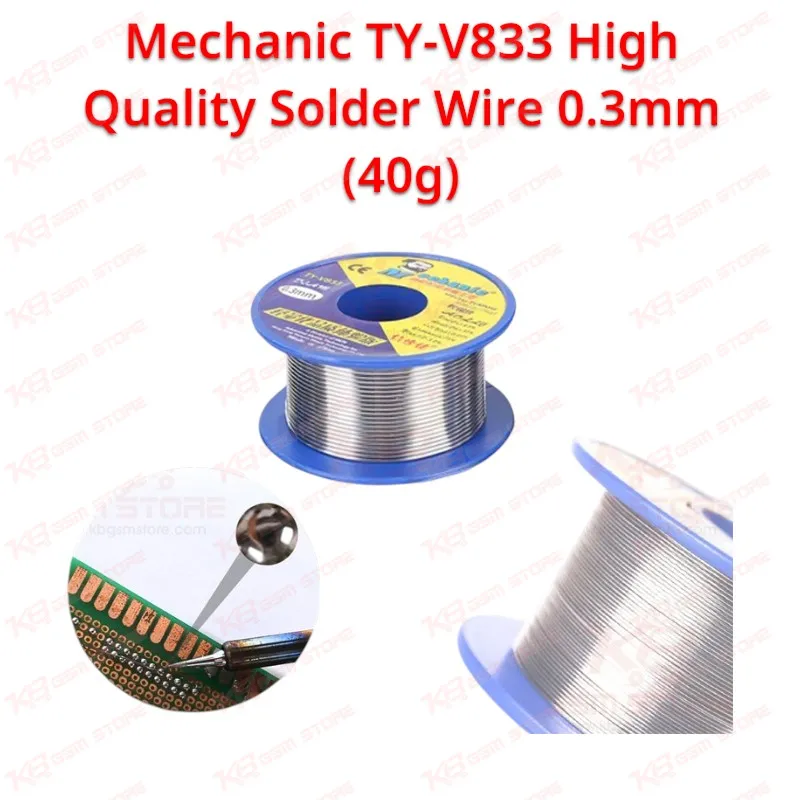
Mechanic TY-V833 High Quality Solder Wire 0.3mm (40g)
Mechanic TY-V833 High Quality Solder Wire 0.3mm (40g)
Regular price
Rs.1.00 PKR
Regular price
Sale price
Rs.1.00 PKR
Shipping calculated at checkout.
Quantity
Couldn't load pickup availability
MECHANIC TY-V833 is a 0.3mm rosin core solder wire supplied on a 40g roll, built for precision soldering on mobile phone motherboards and dense PCB layouts. The fine diameter gives you controlled tin deposition for IC legs, connector pads, and small SMD components without flooding neighboring pads. Fast melting flow and low residue leave clean joints that need minimal cleanup on the repair bench. Technicians handling charging port repair, IC change, jumper work, and board-level soldering get a consistent, reliable wire that holds insulation resistance and produces bright, stable joints across repeated repair jobs.
SKU:MST-SOLDERING-ACCESSORIES-448
⚖️ Weight: 0.1 kg
- Safe & Secure Payment
- Fast Delivery
- WhatsApp Support


Description
FAQ
What is the product name?
The product name is MECHANIC TY-V833 Solder Wire 0.3mm (40g).
What is the brand of this product?
The brand of this product is MECHANIC.
What is the model of this product?
The model of this product is TY-V833.
What is this product used for?
This product is used for precision soldering on mobile phone motherboards, PCB assemblies, and general electronics circuit boards.
Which devices are compatible with this product?
This product is universal and works across mobile phone motherboards and general electronics PCBs rather than being tied to a specific device or brand.
Who should use this product?
This product is suitable for mobile repair technicians, repair shops, service centers, and professional electronics repair users.
Can this 0.3mm solder wire be used for fine-pitch IC leg soldering?
Yes, the 0.3mm diameter is specifically suited for fine-pitch work like IC legs, connector pins, and tightly spaced SMD pads where a thicker wire would risk bridging.
Does this solder wire work with hot air stations and soldering irons together?
Yes, the rosin flow characteristics of this wire suit both hand soldering with an iron and touch-up work alongside hot air rework stations commonly used on the repair bench.