


Brand:
MECHANIC
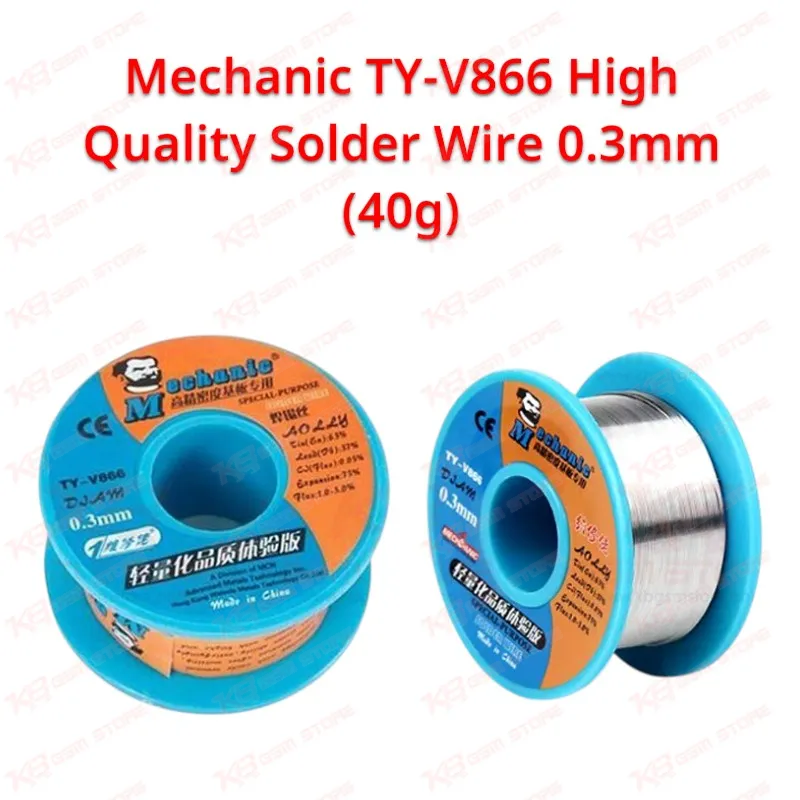
Mechanic TY-V866 High Quality Solder Wire 0.3mm (40g)
Mechanic TY-V866 High Quality Solder Wire 0.3mm (40g)
Regular price
Rs.480.00 PKR
Regular price
Sale price
Rs.480.00 PKR
Shipping calculated at checkout.
Quantity
Couldn't load pickup availability
Mechanic TY-V866 solder wire gives you a 0.3mm precision diameter built for motherboard-level repair work. Made from a 63% tin, 37% lead alloy with a built-in rosin flux core, it melts at 183°C and flows smoothly across fine pads, jumpers, and IC legs without spreading or bridging nearby tracks. The 40g spool sits comfortably on a crowded repair bench and lasts through dozens of dead phone and board-level jobs. Technicians use it daily for jumper lagana work, IC reballing touch-ups, and general SMD soldering where a thicker wire would just make a mess. Reliable, consistent, and priced for daily workshop use.
SKU:MST-SOLDERING-ACCESSORIES-357
⚖️ Weight: 0.1 kg
- Safe & Secure Payment
- Fast Delivery
- WhatsApp Support


Description
FAQ
What is the product name?
The product name is Mechanic TY-V866 High Quality Solder Wire 0.3mm (40g).
What is the brand of this product?
The brand of this product is Mechanic.
What is the model of this product?
The model of this product is TY-V866.
What is this product used for?
This product is used for soldering, jumper repair, IC tacking, and general PCB rework on mobile phone motherboards.
Which devices are compatible with this product?
This solder wire is universal and works on any mobile phone motherboard, including Samsung, Oppo, Vivo, Infinix, Tecno, and iPhone boards.
Who should use this product?
This product is suitable for mobile repair technicians, repair shops, service centers, and professional users.
Does this solder wire work for IC reballing touch-ups?
Yes, the 0.3mm diameter and rosin core make it suitable for tacking ICs and cleaning up joints after reballing, though a dedicated flux paste is still recommended for full BGA reflow work.
What is the melting point of Mechanic TY-V866 solder wire?
It melts at 183°C, matching the standard eutectic point for 63/37 tin-lead solder used in mobile repair work.