


Brand:
MECHANIC
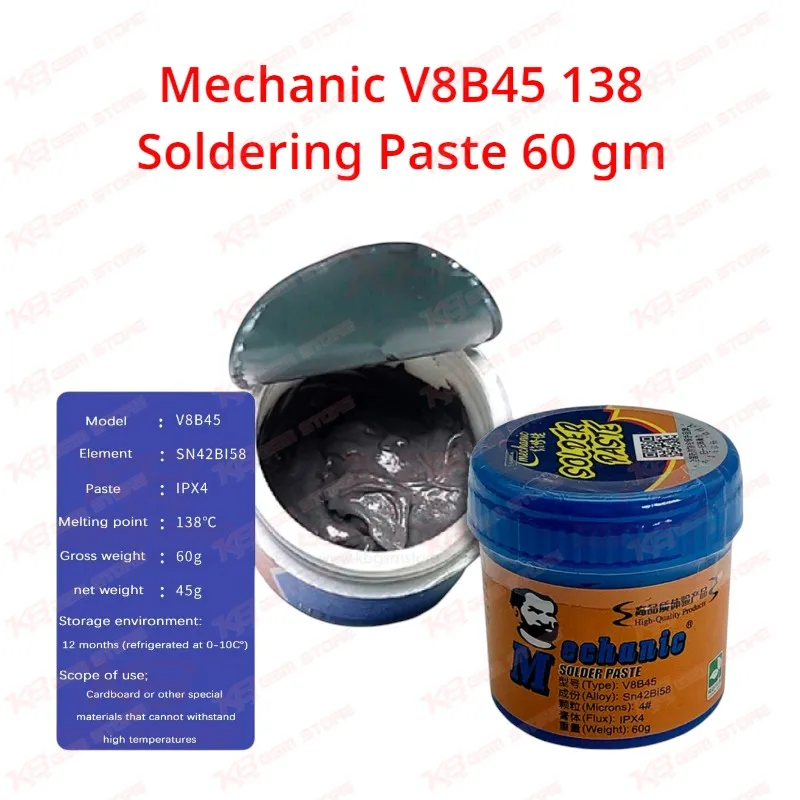
Mechanic V8B45 138 Soldering Paste 60 gm
Mechanic V8B45 138 Soldering Paste 60 gm
Regular price
Rs.1,200.00 PKR
Regular price
Sale price
Rs.1,200.00 PKR
Shipping calculated at checkout.
Quantity
Couldn't load pickup availability
Mechanic V8B45 138 Soldering Paste 60 gm is a lead-free, low-temperature Sn42Bi58 solder paste that melts at 138°C, made for mobile PCB rework where high heat puts pads and nearby components at risk. Its 20–38 micron powder fills BGA stencil holes cleanly, so you get uniform balls when you reball eMMC, UFS, PMIC, and charging ICs. Moderate viscosity keeps the paste on the stencil without slumping, and strong wetting forms clean joints on copper pads. The 60 g pack suits busy repair shops and service centres, and refrigerated storage at 0–10°C keeps it usable for up to 12 months.
SKU:MST-SOLDERING-ACCESSORIES-744
⚖️ Weight: 0.1 kg
- Safe & Secure Payment
- Fast Delivery
- WhatsApp Support


Description
FAQ
What is the product name?
The product name is Mechanic V8B45 138 Soldering Paste 60 gm.
What is the brand of this product?
The brand of this product is Mechanic.
What is the model of this product?
The model of this product is V8B45.
What is this product used for?
This product is used for low-temperature BGA reballing, IC rework, and mobile PCB soldering where high heat can damage pads or nearby components.
Which devices are compatible with this product?
This product is compatible with mobile phone PCBs and BGA-packaged ICs that suit 138°C low-temperature soldering; it is universal and not device-specific.
Who should use this product?
This product is suitable for mobile repair technicians, repair shops, service centers, and professional users.
What alloy and melting point does the Mechanic V8B45 solder paste use?
It uses a lead-free Sn42Bi58 tin-bismuth alloy that melts at 138°C, far lower than 183°C leaded paste or 217°C SAC lead-free paste.
How should I store this solder paste to keep it usable?
Store it in a refrigerator between 0°C and 10°C, where it stays usable for up to 12 months; bring it to room temperature and stir it before each use.
What powder particle size does this paste use for reballing?
It uses 20–38 micron powder, which fills BGA stencil holes cleanly and produces uniform solder balls.