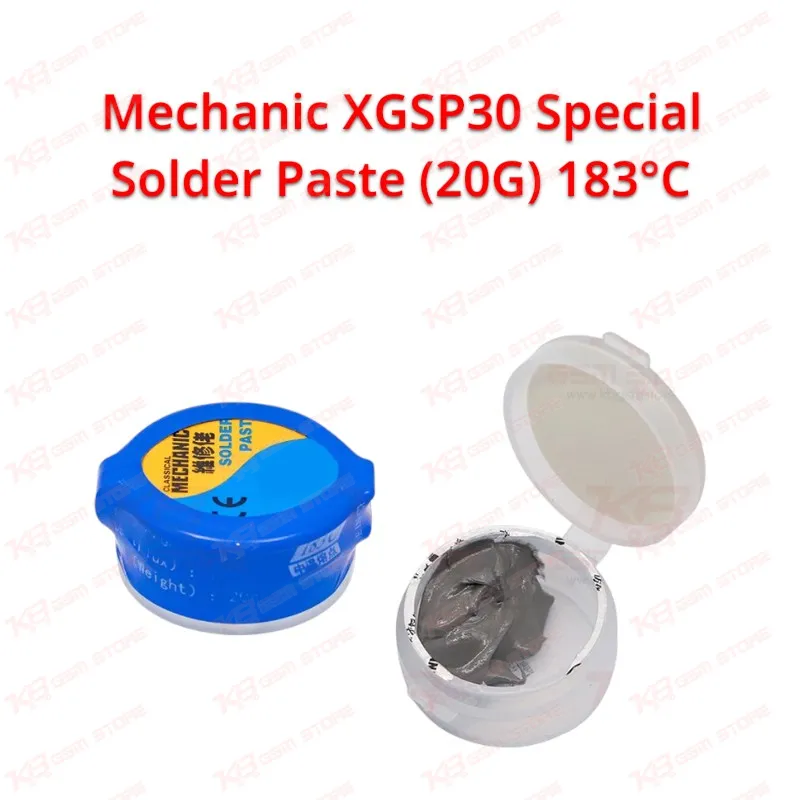
Mechanic XGSP30 is a 20g special-formula solder paste made for technicians who do chip-level board repair every day. It carries a Sn63/Pb37 alloy composition, the standard tin-lead ratio used across the GSM repair industry for its low melting point and stable wetting behavior. The paste activates at 183°C, which lines up with common hot air station and preheater settings, so you don't need to adjust your workflow to use it. Particle size sits in the 20-38 micron range, fine enough for tight-pitch BGA pads and small SMD components found on modern smartphone motherboards. Technicians use this paste mainly for BGA reballing and chip reattachment, where getting a consistent solder layer on the pad before placing the ball or chip decides whether the repair holds long term. Before pre-coating BGA pads, apply a thin, even layer with a metal spatula or dispensing needle, keeping the paste away from surrounding components to avoid bridging during reflow. The formula includes resin and solvent-based flux, so it cleans oxidation off the pad surface as it heats, and this reduces the "dead after flash" or intermittent boot issues that come from weak or cold solder joints on IC legs. Since it's a no-clean paste, there's no acetone wash or brush-cleaning step required after soldering, saving time on a busy repair bench where you're moving between multiple boards in a shift. The silver-infused mix gives brighter, fuller solder joints compared to older lead-only pastes, which matters when you're reattaching a CPU, PMIC, or NAND/eMMC chip and need the joint to survive repeated handling. This paste suits IC removal and re-soldering work, motherboard-level component repair, pad restoration after a failed IC change, and general PCB rework where a dead phone board needs multiple small chips reflowed or replaced. For CPU jumper work or fine jumper lagana tasks around damaged tracks, a controlled paste like this gives better control than bar solder, since you can place exact amounts without excess flowing onto neighboring pads. Store the paste between 0°C and 10°C to keep the flux active and the paste from drying out or separating; leaving it at room temperature for extended periods shortens its usable life and affects flow consistency during reflow. Before use, let it come back to room temperature for a few minutes so the viscosity settles and application stays smooth. This paste fits into diagnostics and rework workflows where a board comes in with hardware fault symptoms, hang on logo, or charging issue complaints traced back to a specific IC, and a full IC replacement is the fix rather than a jumper or software marna attempt. It works with a hot air rework station, a BGA reballing kit, and a PCB holder to keep the board steady during the reflow cycle, since movement during cooling is one of the most common causes of dry joints. Compared to lower micron-count generic pastes sold loose, the packaged 20g tube gives more predictable dosing per repair, which matters when you're billing repairs by IC and want consistent material cost per job. It's a practical addition to a technician's soldering kit alongside flux, tweezers, and a microscope for verifying joint quality after reflow, particularly on boards where multiple chips need reattachment in one session. Whether you're running a dedicated repair shop or handling board-level work at a service center, this paste covers the BGA and SMD soldering demands that come up daily on smartphone motherboards.