Skip to product information
1 of 4
Brand: MIJING

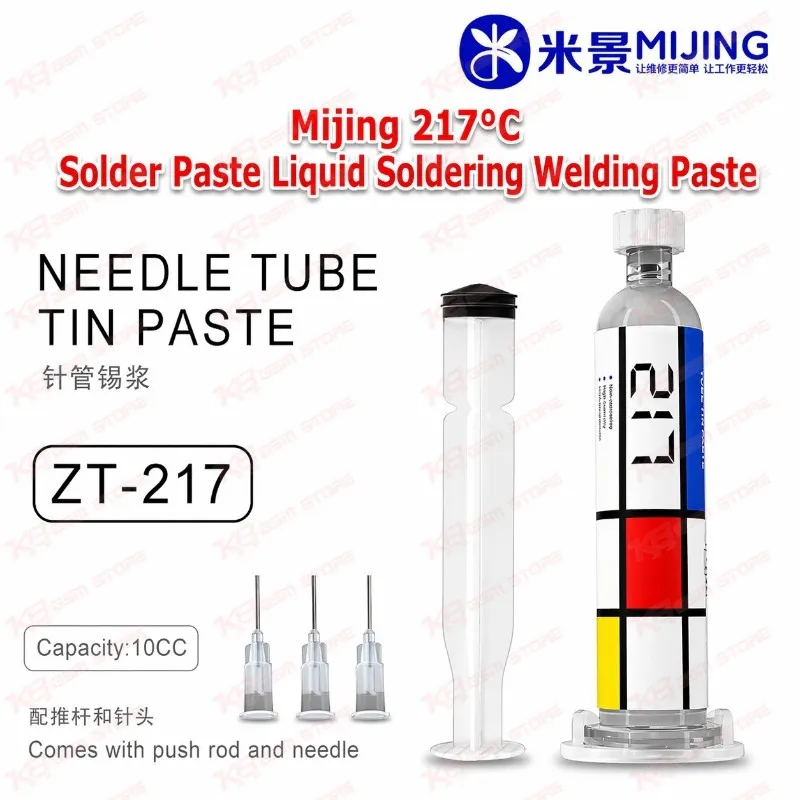
Mijing 217°C Solder Paste Liquid Soldering Welding Paste

Mijing 217°C Solder Paste Liquid Soldering Welding Paste

Regular price Rs.800.00 PKR
Regular price Sale price Rs.800.00 PKR
Sale Sold out
Shipping calculated at checkout.
Quantity

The Mijing 217°C Solder Paste gives you a lead-free, high-purity soldering compound built for mobile phone motherboard and PCB rework on your repair bench. You get a stable 217°C melting point, matching standard SAC-type reflow behavior, so your BGA reballing, IC resoldering, and chip-level repairs come out clean and consistent. This paste flows evenly under a hot air station or soldering iron, cuts down cold joints, and keeps your workflow fast when you're fixing dead boards, charging issues, or hang on logo problems caused by loose or failed IC connections. Built for technicians who need dependable tin flow without babysitting the reflow profile, it fits directly into your existing ISP, UFS, and eMMC repair toolkit at the workshop.

SKU:MST-SOLDERING-ACCESSORIES-547

⚖️ Weight: 0.03 kg

  • Safe & Secure Payment
  • Fast Delivery
  • WhatsApp Support
View full details

Description


When you're working on a dead phone or a board that's hanging on logo after a failed IC change, your solder paste decides whether the joint holds or fails again in a week. The Mijing 217°C Solder Paste is formulated as a lead-free tin compound with a melting point calibrated to 217°C, which puts it in the same reflow range as standard SAC-alloy pastes used across professional mobile repair benches. You apply it directly onto the pad, chip leg, or BGA ball site, bring your hot air station or iron up to temperature, and the paste transitions cleanly from solid to liquid without the grainy separation that cheaper pastes show under heat. That consistency matters most when you're reballing a CPU or PMIC on a tight board where thermal control is everything. Because this is a lead-free formulation, you avoid the extra fume load and residue buildup that leaded pastes leave behind on your bench and tools, which keeps your microscope lens and tip cleaner over repeated jobs. You get a workflow that suits IC change karna sessions where you need the paste to wet the pad fast and hold shape until the iron passes over it — no slumping, no bridging between fine-pitch legs. Technicians handling UFS and eMMC programmer work often pair a 217°C paste like this with their box chalana routine, since a stable melting point reduces retries when a chip needs to come off and go back on the same board. The paste also holds up well for general charging issue and display problem repairs where a connector or IC pad needs resoldering after mechanical damage, giving you a joint that survives daily handling rather than cracking after the customer walks out. In your PCB repair process, this paste sits at the soldering and rework stage — after diagnostics confirm a hardware fault and before you move into testing the board back on a power supply or test box. Its role in the mobile repair workflow connects naturally to ISP pinout tools, eMMC programmers, and UFS adapters already on your bench, since a clean solder joint is what lets those tools read the chip correctly in the first place. A jumper lagana job on a broken trace also benefits from a paste that flows into tight spaces without excess spread, keeping neighboring components free of solder bridges. For technicians training junior staff at a service center, a predictable melting point paste like this reduces the guesswork around iron temperature settings, which speeds up onboarding on BGA and IC rework stations. Whether you're running a solo repair counter or managing a full workshop floor handling network issue boards, boot loop issue units, or pattern unlock jobs that need a chip swap first, this paste gives you one dependable material across most of your soldering bench work instead of switching pastes for every job type. Store it in a cool, dry spot away from direct heat to keep the consistency workable, and give the bottle a light shake before use if it has been sitting for a while. Over repeated use, you'll notice fewer false soldering complaints coming back to your bench, which directly protects your reputation with repeat customers and referral business in a competitive local repair market.

Key Features

Lead-free formulation reduces fume exposure on the workbench

Calibrated 217°C melting point matches standard SAC-type reflow profiles

Smooth, even flow reduces bridging on fine-pitch IC legs

Suitable for BGA reballing and CPU/PMIC rework

Works with hot air stations and soldering irons alike

Low residue after reflow keeps boards and tools cleaner

Reduces false soldering and cold joint failures

Fits directly into existing ISP, UFS, and eMMC repair workflows

Specifications

Brand Entity Mijing
Product Entity 217°C Lead-Free Solder Paste
Technology Entity SAC-type Lead-Free Solder Alloy
Compatible Device Entities Mobile Phone Motherboards, PCB Boards, BGA Chips
Repair Process Entity BGA Reballing, IC Resoldering, PCB Rework
Industry Entity Mobile Repair Industry, PCB Repair Industry

Compatible Devices


Universal — not device-specific; suitable for mobile phone motherboards, PCB boards, and BGA chip packages across major chipset families

Common Repair Uses


BGA reballing, IC and chip resoldering, motherboard cold joint repair, PCB pad and trace rework, general SMD component soldering

FAQ

What is the product name?
The product name is Mijing 217°C Solder Paste.
What is the brand of this product?
The brand of this product is Mijing.
What is this product used for?
This product is used for lead-free soldering and rework on mobile phone motherboards, PCBs, and BGA chips.
Which devices are compatible with this product?
This product is compatible with mobile phone motherboards, PCB boards, and BGA chip packages across major chipset families.
Who should use this product?
This product is suitable for mobile repair technicians, repair shops, service centers, and professional PCB rework technicians.
Does this paste work with hot air rework stations for BGA chips?
Yes, the 217°C melting point makes it suitable for hot air BGA reballing and chip removal/reattachment work.
Is this solder paste lead-free and safe for daily bench use?
Yes, it uses a lead-free alloy formulation, which reduces fume exposure compared to leaded pastes during regular repair sessions.