


Brand:
MIJING
Mijing BY20 Pressure Retaining Fixture
Mijing BY20 Pressure Retaining Fixture
Regular price
Rs.1.00 PKR
Regular price
Sale price
Rs.1.00 PKR
Shipping calculated at checkout.
Quantity
Couldn't load pickup availability
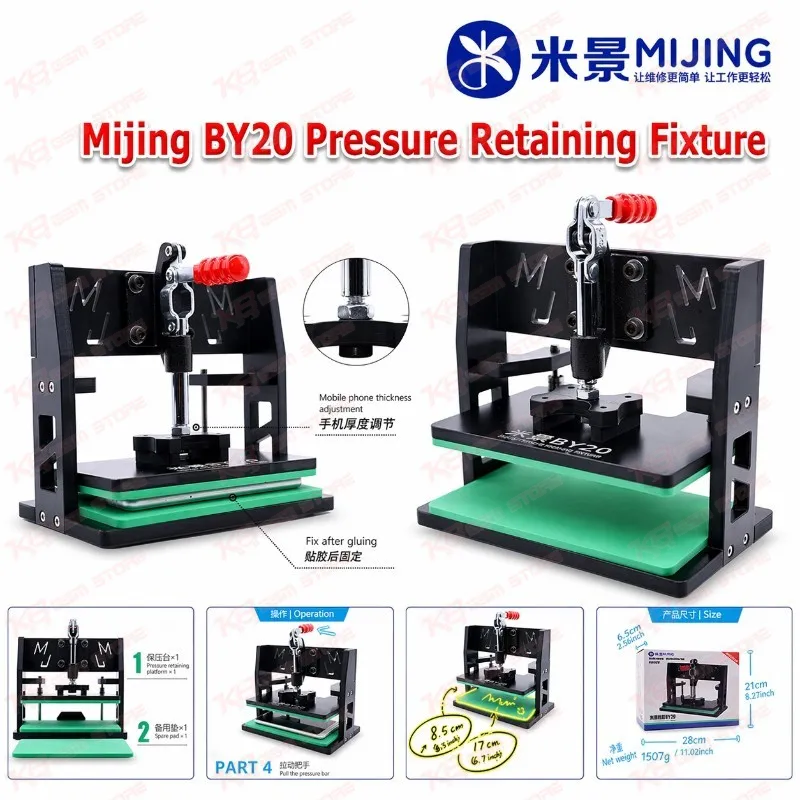
Short Description: The Mijing BY20 is a universal pressure retaining fixture built for holding glued phone and tablet back covers or screens firmly in place while the adhesive cures. Instead of manually pressing a back glass or LCD for several minutes, you set it in the BY20 and let the platform apply steady pressure across a 17 x 8.5cm working area. It works on both mobile and tablet panels, adjusts to different device thicknesses, and keeps your hands free for other repair bench tasks. A practical addition for any technician doing back glass replacement, frame reassembly, or screen glass lamination work.
SKU:MST-SOLDERING-ACCESSORIES-544
⚖️ Weight: 2.0 kg
- Safe & Secure Payment
- Fast Delivery
- WhatsApp Support


Description
FAQ
What is the product name?
The product name is Mijing BY20 Pressure Retaining Fixture.
What is the brand of this product?
The brand of this product is Mijing.
What is the model of this product?
The model of this product is BY20.
What is this product used for?
This product is used for holding glued phone or tablet back covers and screen frames firmly in place while the adhesive cures.
Which devices are compatible with this product?
This product works as a universal fixture for mobile phones and tablets within its 17 x 8.5cm working area, not limited to specific device models.
Who should use this product?
This product is suitable for mobile repair technicians, repair shops, service centers, and professional repair businesses.
Kya BY20 tablet ke back cover ke liye bhi kaam karta hai?
Haan, BY20 universal fixture hai jo mobile phones ke sath sath chhote tablets ke back cover aur screen panels ke liye bhi use hota hai, jab tak wo 17 x 8.5cm working area mein fit ho.
Does the BY20 adjust for different phone thicknesses during pressing?
Yes, the clamp arm on the BY20 is height-adjustable, so it can apply pressure evenly across devices of varying thickness rather than fitting only one panel size.