


Brand:
MIJING
Mijing GK12 Mini PCB Fixture
Mijing GK12 Mini PCB Fixture
Regular price
Rs.4,000.00 PKR
Regular price
Sale price
Rs.4,000.00 PKR
Shipping calculated at checkout.
Quantity
Couldn't load pickup availability
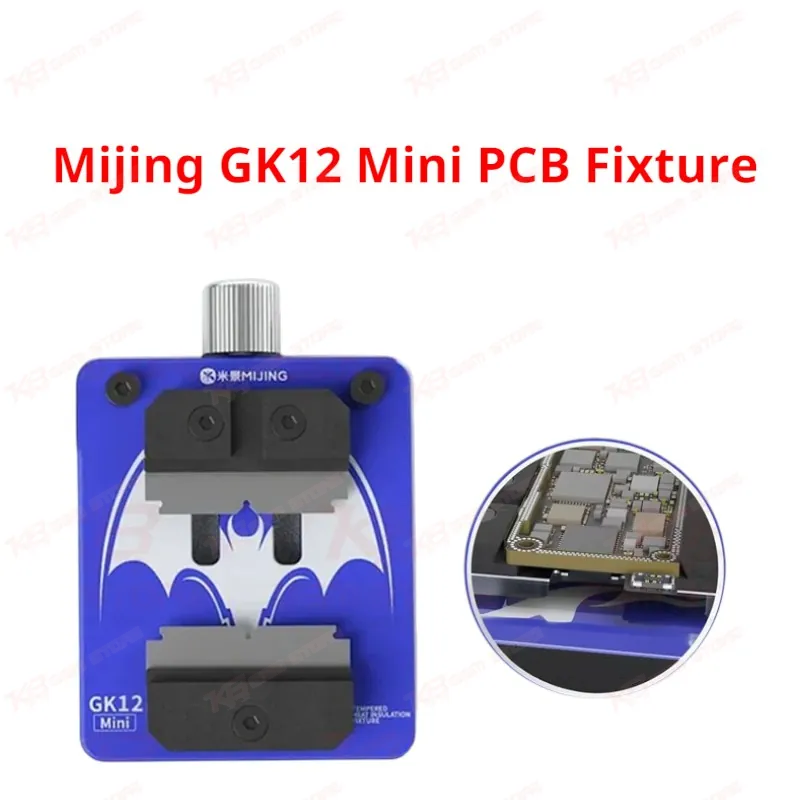
The Mijing GK12 Mini clamps a phone or tablet mainboard steady while you run hot air over an IC, so the board stays flat and the chip stays put during reflow or removal. The toughened glass panel takes direct heat from your hot air gun without cracking or clouding up, and you get a clean, easy-to-wipe surface after every job. A concealed threaded clamping rod keeps flux and rosin from gumming up the mechanism, so the fixture keeps gripping tight job after job. It's a compact bench tool for dead phone repairs, IC change karna, and board-level rework where a steady hand needs a steady board.
SKU:MST-SOLDERING-ACCESSORIES-312
⚖️ Weight: 0.35 kg
- Safe & Secure Payment
- Fast Delivery
- WhatsApp Support


Description
FAQ
What is the product name?
The product name is Mijing GK12 Mini Toughened Insulated Glass Motherboard Repair Fixture.
What is the brand of this product?
The brand of this product is Mijing.
What is the model of this product?
The model of this product is GK12 Mini.
What is this product used for?
This product holds a mobile phone or tablet mainboard steady during hot air rework, IC removal, and chip-level repair.
Which devices are compatible with this product?
This fixture is compatible with iPhone, iPad, and other mobile device mainboards, with a mainboard slot range of roughly 17–33mm and a chip slot range of 0–16mm.
Who should use this product?
This product is suitable for mobile repair technicians, repair shops, service centers, and professional GSM technicians.
What size mainboards and chips does the GK12 Mini clamp?
The mainboard fixing slot covers roughly 17–33mm and the chip fixing slot covers 0–16mm, suiting both full motherboard clamping and single-chip work.
Can the GK12 Mini's glass panel take direct hot air gun heat without cracking?
Yes, the panel is made from toughened, high-temperature insulated glass built to withstand repeated direct hot air exposure during reflow and rework.