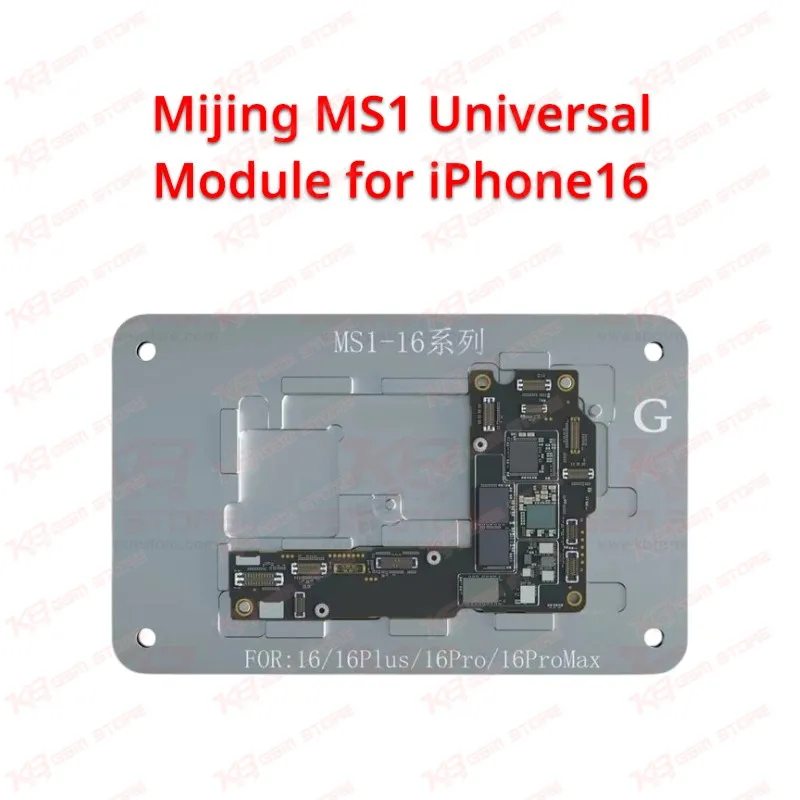
The Mijing iRepair MS1 Universal Module for iPhone 16 series is the model-specific attachment that extends the MS1 desoldering and preheating platform to the iPhone 16, 16 Plus, 16 Pro, 16 Pro Max, and 16e motherboards. Instead of buying a separate heating machine for every new iPhone generation, you snap this module onto your existing MS1 base station and get a precision-molded fit that matches the exact board contour and component layout of the iPhone 16 family. This matters on the repair bench because generic universal plates rarely seat flush against newer boards, and uneven contact leads to hot spots, warped shields, or damaged pads during motherboard layer separation. The module works directly with the MS1 base station's intelligent temperature control system, which reads and adjusts heat output in real time as the board absorbs it, so you get consistent 183°C ramp-up in around three minutes without babysitting a manual dial. That speed and consistency matter most on jobs where the phone is dead after flash, has a boot loop issue, or shows charging issue symptoms traced back to a board-level fault rather than a simple software marna fix — cases where you need to physically separate motherboard layers to access ICs, connectors, or damaged traces underneath. Once the module heats the board evenly, technicians can lift shields, remove faulty PMICs or charging ICs, or reflow components without the risk of overheating one corner while the rest stays cold, which is the most common cause of board damage when using unbranded heating plates on newer, denser iPhone 16 boards. The MS1 base station's built-in 15-minute intelligent sleep function also protects the module and the board from prolonged unnecessary heat exposure if you step away mid-repair, an important safety feature for busy repair shops running multiple boards through the same station in a day. Because the module is purpose-fit for the iPhone 16 series rather than a stretched universal plate, board contact stays flush across the full surface, which reduces the chance of shield lifting damage or pad lifting that often happens when technicians force older or mismatched modules onto newer board shapes. For a Pakistani repair shop already invested in the MS1 ecosystem, this module is the practical way to stay current with Apple's yearly board changes without replacing the entire heating station — you keep the same base unit, digital display, and control logic, and simply swap in the correct module for whichever iPhone generation is on the bench. It fits naturally into a standard board-repair workflow: diagnose the fault first with a multimeter or test box, confirm the issue is board-level rather than software, mount the correct module on the MS1 base, run the preheat and layer-separation cycle, then move into IC removal, jumper lagana work, or reballing under a hot air station or microscope as needed. Technicians handling display problem, network issue, or hang on logo cases that trace back to physical board damage will find this module particularly useful, since it standardizes the heating step across every iPhone 16 variant instead of relying on inconsistent manual heat gun work. Overall, this module gives repair shops a repeatable, lower-risk way to bring iPhone 16 series board work into their existing MS1 workflow.