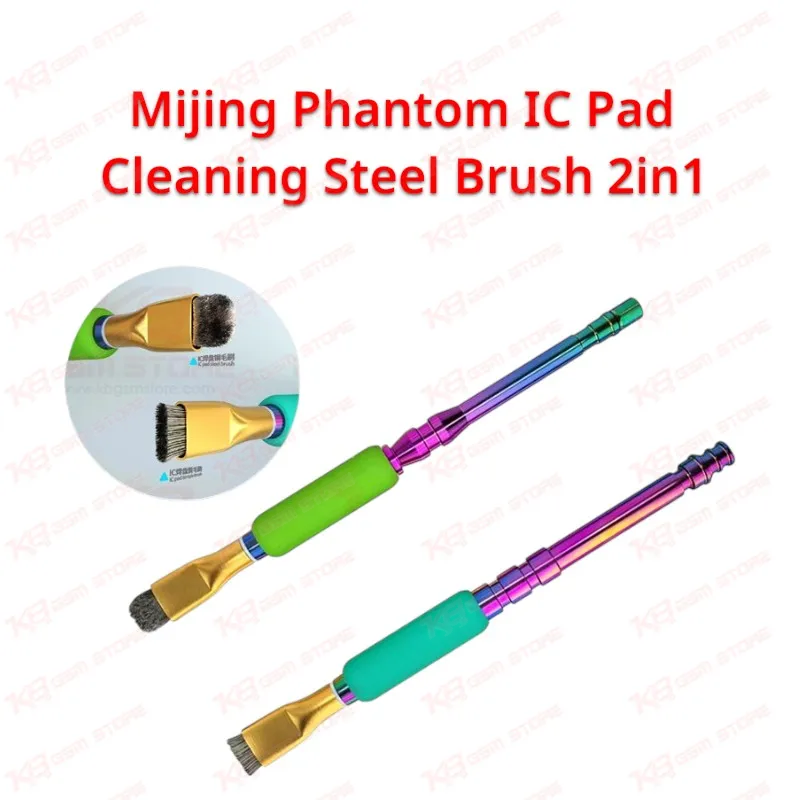
When you pull a board apart for IC change or reballing, the first problem you run into is old solder, dried glue, and dust sitting on the pads, and the Mijing Phantom IC Pad Cleaning Steel Brush 2in1 exists to clear that mess before you touch a jumper wire or drop a new chip. The brush uses 0.08mm ultra-fine steel wire bristles packed tightly together, giving you a tool that feels rigid enough to cut through hardened flux and solder yet gentle enough not to lift copper pads or damage fine BGA traces. You run the brush across a heated platform set anywhere from -20°C to 550°C, and the bristles hold their shape instead of melting, bending, or losing tension, which matters when you clean a chip that just came off a hot air rework station. This heat tolerance separates a steel sideburns brush from a plastic or nylon bristle brush, since plastic bristles soften and smear residue the moment they touch a heated board, while this steel brush keeps cutting through glue and tin at working temperature. Each pack gives you two brushes with colorful anti-static handles, so you always have a spare on the bench when one wears down from daily use on solder pad cleaning, dust removal, and glue residue work. The anti-static build protects sensitive ICs and CPUs from static discharge while you work close to exposed pads, which matters on boards where a single static spike can kill a chip that already survived a board-level short. Technicians reach for this brush constantly during IC pad cleaning before reballing, since a clean, flat pad surface determines whether new BGA balls make solid contact or leave you chasing a dead after flash issue that traces back to a bad reball job. You also use it for general motherboard cleaning on boards pulled from a dead phone, clearing years of dust and corrosion buildup before diagnosing a charging issue, display problem, or network issue at the component level. On a board with hang on logo symptoms tied to a suspect power IC, brushing the pad clean before reflow often reveals cold joints or lifted pads that were hidden under residue, turning a guessing game into a visible diagnosis. The brush works equally well for polishing pads on Qualcomm, MediaTek, Samsung Exynos, and HiSilicon boards, since the tool interacts with the physical pad surface rather than any specific chipset, making it a universal fixture on any GSM software or hardware repair bench. You get consistent results whether you're cleaning a small NAND flash pad or a wider CPU footprint, because the tight bristle arrangement adapts to different pad sizes without losing contact pressure. Shops running high repair volume in Lahore, Karachi, and Islamabad keep several of these on hand since bristles wear out faster than the handle, and having a spare from the 2-pack means you never stop mid-repair to source a replacement. Compared to a single-brush purchase, this 2in1 pack gives you backup coverage for busy workshops handling multiple boards a day. The compact handle size fits into a standard tool roll or tackle box alongside your other rework tools, and the colored handle makes it easy to spot on a cluttered bench next to tweezers, flux pens, and desoldering wick. If your workflow includes reballing stencils, hot air stations, or ISP pinout tools, this brush becomes the prep step that determines how clean your pads look before any of that equipment gets used, directly affecting first-attempt repair success on jumper lagana and IC change jobs.