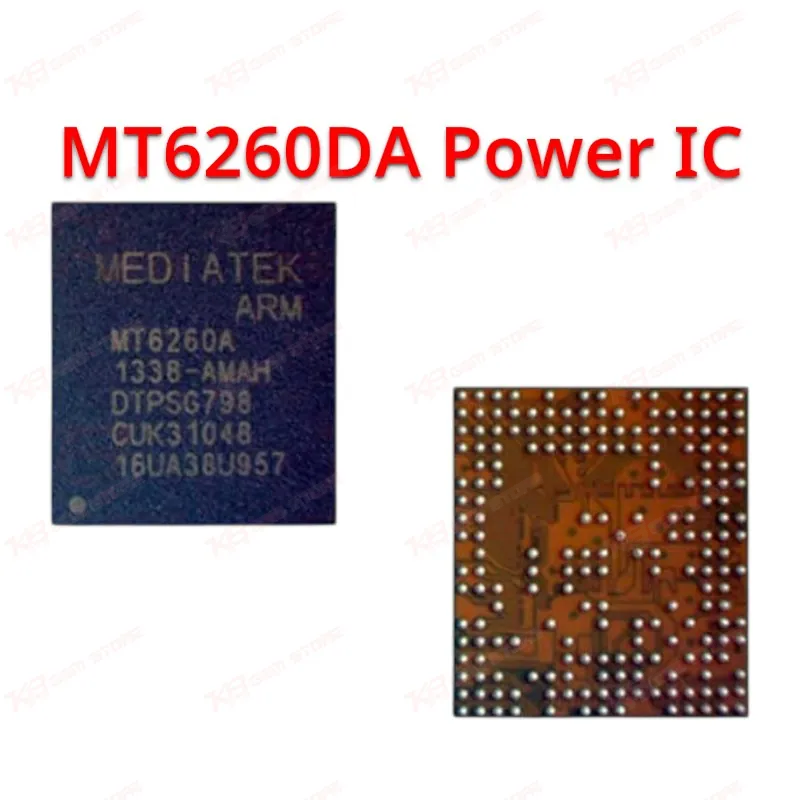
The MT6260DA sits at the center of the power-on sequence on any board built around MediaTek's MT6260 platform. When a dead phone lands on your bench with no backlight, no charging response, and no vibration on power button press, this chip is one of the first suspects, because it houses the power management unit that wakes up the rest of the circuit. You get a single-chip solution here — MediaTek folded the ARM7EJ-STM RISC processor, a dedicated DSP core, an embedded Bluetooth baseband controller, the analog baseband, RF radio circuitry, and the power management unit into one low-power CMOS die, so a fault here can take down power delivery, network registration, and audio functions all at once. Board techs working GSM feature phone repair Karachi, Lahore, and Islamabad-wide already know this chip by feel: a phone that was dropped, exposed to moisture, or shorted on the charging line often comes back dead after flash, or stuck at boot loop with no recovery through software alone. Since the MT6260DA drives the initial power rail sequencing before the rest of the board wakes up, reflow or reballing this IC frequently resolves power-on faults that survive a full firmware reflash. Before committing to an IC change, check the charging line, battery connector, and PMU output test points first — many "dead after flash" cases trace back to a cracked solder joint under this chip rather than die-level damage, and confirming that saves you an unnecessary IC swap. The MCU subsystem inside the MT6260DA runs the high-level GSM/EDGE-Rx protocol stack alongside basic multimedia handling, while the DSP subsystem manages the low-level modem processing and audio path. A dedicated embedded processor handles Bluetooth baseband and link control, with the Bluetooth radio itself built into the same package rather than sitting on a separate chip — a layout choice that keeps feature phone boards compact but also means a single-point failure here can knock out connectivity along with power and network. The chip ships in a TFBGA package measuring 9.6mm by 8.6mm with 199 balls on a 0.5mm pitch, which calls for a proper preheat profile, flux control, and a calibrated hot air or infrared rework station to avoid ball bridging or pad lift during removal and reballing — standard practice on any fine-pitch BGA, but worth restating since misjudging the thermal profile on a 0.5mm pitch part is the most common cause of a failed jumper lagana attempt turning into a lifted pad. Genuine MediaTek-sourced MT6260DA units matter here more than with most passive components: counterfeit or remarked chips on this platform are common in the open market, and a mismarked die will either fail immediately or introduce intermittent power issues that waste hours of diagnostic time. Stock this IC as a direct swap part for confirmed PMU or baseband failures on MT6260-based boards, keep a hot air station calibrated for 0.5mm pitch TFBGA work on hand, and pair the replacement with a full continuity check on the surrounding power rail before final reassembly. For repair shops running high volumes of feature phone board work, this chip belongs in your standard stock alongside your existing ISP and jumper wire kit for fast turnaround on power-on complaints.