


MT6331P Power IC
MT6331P Power IC
Regular price
Rs.250.00 PKR
Regular price
Sale price
Rs.250.00 PKR
Shipping calculated at checkout.
Quantity
Couldn't load pickup availability
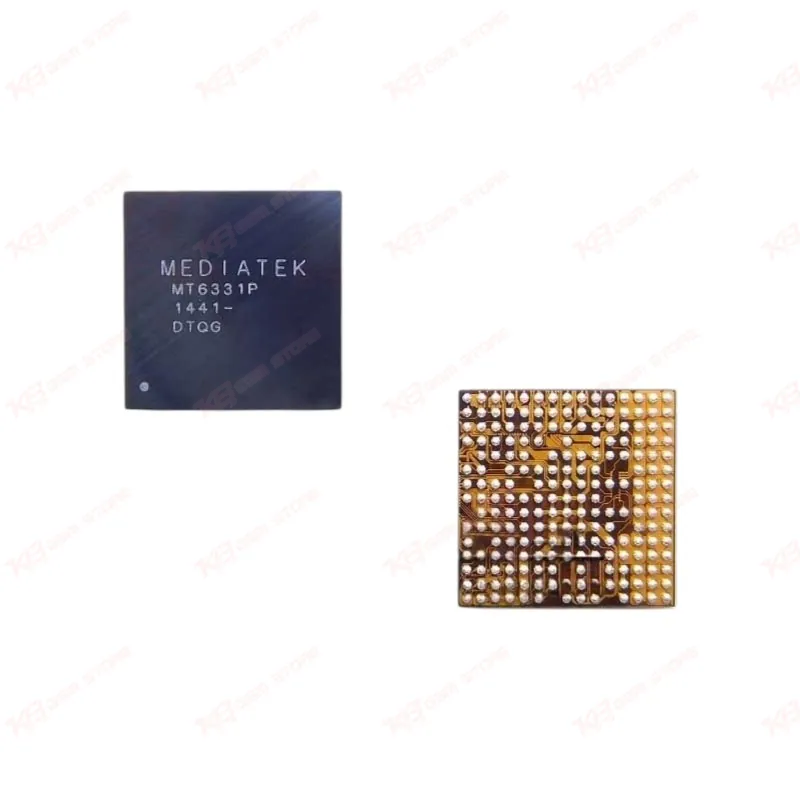
The MT6331P is a MediaTek power management IC (PMIC) in BGA package, built for MTK chipset platforms. It handles voltage regulation, real-time clock function, and power-key control on the motherboard. Technicians reach for this IC when a phone shows dead symptoms, won't power on, or has erratic charging behavior tied to the power rail rather than the battery or charging port. Reflow or replace it directly on the board using standard BGA rework equipment. Supplied as an original new unit, ready for direct heating installation on supported MTK-based boards.
⚖️ Weight: 0.01 kg
SKU:MST-IC-42
- Safe & Secure Payment
- Fast Delivery
- WhatsApp Support


Description
FAQ
What is the product name?
The product name is MT6331P Power IC.
What is the brand of this product?
The brand of this product is MediaTek (MTK).
What is the model of this product?
The model of this product is MT6331P.
What is this product used for?
This product is used for restoring core power regulation on dead or no-power MTK-based mobile boards.
Which devices are compatible with this product?
This product is compatible with select Oppo, Realme, Vivo, Infinix, and Motorola models built on MTK platforms using this PMIC.
Who should use this product?
This product is suitable for mobile repair technicians, repair shops, service centers, and professional users.
Does the MT6331P require a matching reballing stencil?
Yes, use a BGA stencil matched to the MT6331P's ball count and pitch for a clean reball before reflow.
Can the MT6331P cause charging issues even if the charging port tests fine?
Yes, since it manages the board's power rails, a faulty MT6331P can produce charging or no-power symptoms even when the charging port and battery test normal.