


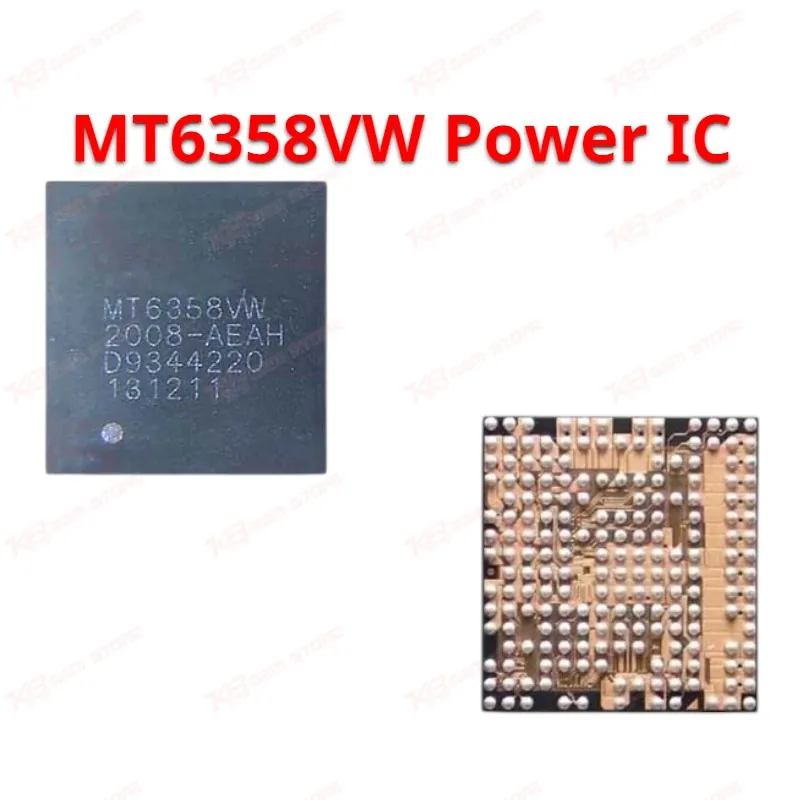
MT6358VW Power IC
MT6358VW Power IC
Regular price
Rs.450.00 PKR
Regular price
Sale price
Rs.450.00 PKR
Shipping calculated at checkout.
Quantity
Couldn't load pickup availability
MT6358VW is a MediaTek power management IC used in Redmi 9, Oppo A9, A91, A79, A3, and Vivo Y5s motherboards. It handles voltage regulation, buck conversion, and battery charging control for the SoC. Techos face dead phone, no power, and reboot loop faults when this IC develops a fault or shorts on the board. This original BGA replacement restores stable power sequencing to the mainboard. Suitable for board-level repair at GSM workshops and service centers across Lahore, Karachi, and Islamabad handling MediaTek-based budget and mid-range smartphones.
⚖️ Weight: 0.01 kg
SKU:MST-IC-130
- Safe & Secure Payment
- Fast Delivery
- WhatsApp Support


Description
FAQ
What is the product name?
The product name is MT6358VW Power Management IC.
What is the brand of this product?
The brand of this product is MediaTek.
What is the model of this product?
The model of this product is MT6358VW.
What is this product used for?
This product is used for regulating and distributing power on MediaTek smartphone motherboards, including battery charging control and voltage sequencing for the SoC.
Which devices are compatible with this product?
This product is compatible with Redmi 9, Oppo A9, Oppo A91, Oppo A79, Oppo A3, and Vivo Y5s.
Who should use this product?
This product is suitable for mobile repair technicians, repair shops, service centers, and professional users.
Does the MT6358VW cause dead phone issues if it fails?
Yes, a shorted or faulty MT6358VW can cause complete dead phone symptoms, no current draw, or reboot loop faults since it powers the SoC's core rails.
What package type does the MT6358VW use, and does it need a specific reballing stencil?
The MT6358VW uses a BGA/WLCSP package, and reballing requires a stencil matched to its ball pitch for proper reflow.