


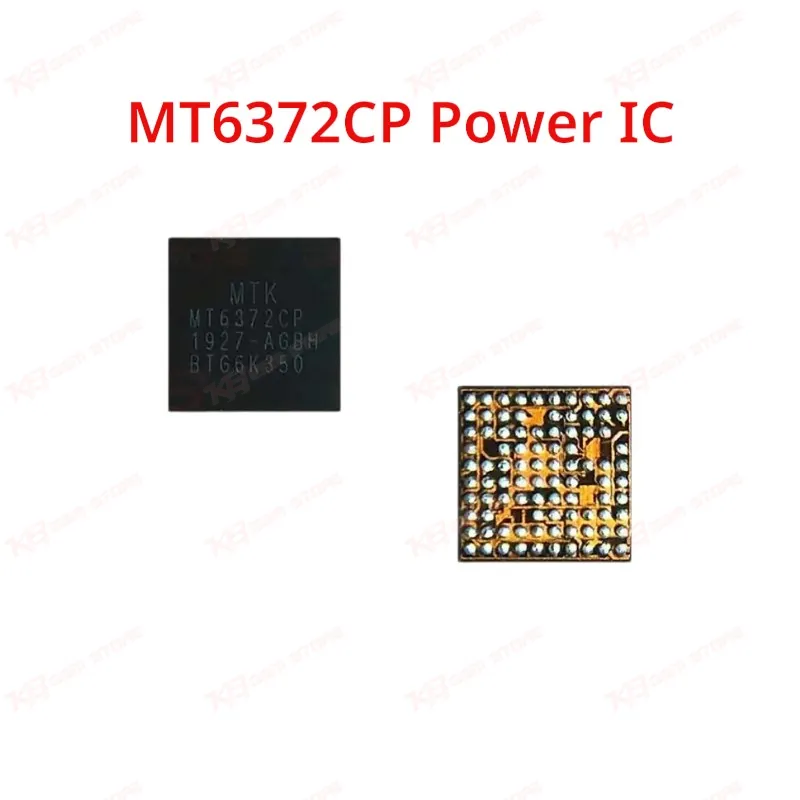
MT6372CP Power IC
MT6372CP Power IC
Regular price
Rs.500.00 PKR
Regular price
Sale price
Rs.500.00 PKR
Shipping calculated at checkout.
Quantity
Couldn't load pickup availability
The MT6372CP is a MediaTek power management IC (PMIC) used as a companion regulator on MT6771V-based smartphone boards. You'll find it fitted alongside the main PMIC on devices like the Honor V30 Pro and Oppo F15, where it handles additional voltage rail duties for the platform. Technicians reach for this IC when a board shows dead-after-flash symptoms, hang on logo, or power-rail related hardware faults that the main PMIC alone doesn't explain. Genuine replacement parts matter here — a mismatched or counterfeit IC often causes recurring boot loop issues even after a clean reflow.
⚖️ Weight: 0.01 kg
SKU:MST-IC-257
- Safe & Secure Payment
- Fast Delivery
- WhatsApp Support


Description
FAQ
What is the product name?
The product name is MT6372CP Power Management IC.
What is the brand of this product?
The brand of this product is MediaTek.
What is the model of this product?
The model of this product is MT6372CP.
What is this product used for?
This product is used for board-level power management repair on MediaTek MT6771V-based smartphone boards, replacing a faulty secondary PMIC.
Which devices are compatible with this product?
This product is compatible with MediaTek MT6771V-platform devices, verified on the Honor V30 Pro and Oppo F15 (CPH2001), with reported use on Oppo A91, F1S, A8, and A9 2020.
Who should use this product?
This product is suitable for mobile repair technicians, repair shops, service centers, and professional users.
Does the MT6372CP work as the main PMIC or a secondary chip?
It works as a secondary companion regulator alongside the board's main PMIC, such as the MT6358W, rather than replacing it.
Can the MT6372CP cause dead-after-flash symptoms if it fails?
Yes — a faulty MT6372CP can cause dead-after-flash or hang-on-logo symptoms if the rail it feeds isn't reaching the board's other components, even though a software flash completes normally.