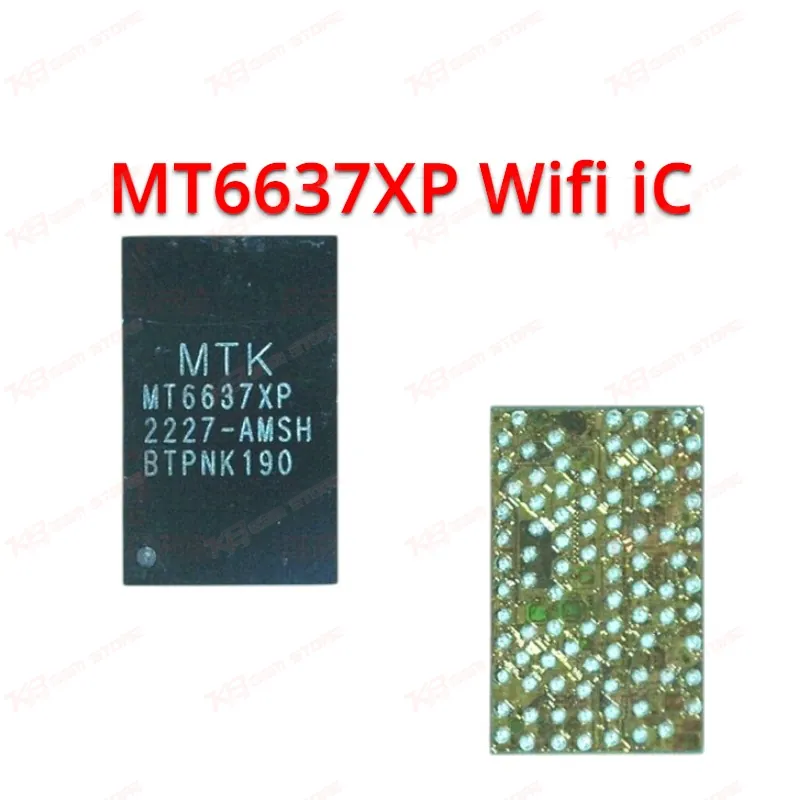
Mobile devices depend on a single chip to keep WiFi, Bluetooth, and GPS working together without interference, and on MediaTek Dimensity-based phones, that job falls to the MT6637XP. This connectivity IC integrates wireless transceiver functions for network communication, short-range Bluetooth pairing, and satellite-based location tracking into one compact package mounted close to the main SoC and antenna interfaces. Independent teardown analysis of the Oppo K10 PGJM10 confirmed the MT6637XP as the WiFi/BT/GPS IC on that board, working alongside the Dimensity 8000-MAX application processor and other MediaTek power management chips. When a phone loses its ability to detect WiFi networks, drops Bluetooth connections randomly, or shows a GPS signal that never locks, the fault frequently traces back to this IC rather than the antenna or software settings. Liquid exposure, board flexing, drop damage, and thermal stress around the connectivity zone are common causes of failure. A technician diagnosing this issue typically starts by checking antenna continuity and power rails feeding the chip before concluding the IC itself needs replacement, since misdiagnosis here wastes both time and stock. Replacing the MT6637XP is a board-level repair, not a plug-and-play swap. You need a hot air rework station with accurate temperature control, quality flux, and a steady hand, since the chip sits in a densely populated RF section where nearby components are easy to damage with excess heat. After removing the old IC and cleaning the pads, reballing with the correct BGA ball size matters for a solid connection — undersized or misaligned balls lead to intermittent WiFi or the classic dead-after-reflow scenario. Once seated, a full reflow cycle followed by continuity and function testing confirms the repair before the board goes back into the device. This is one of the more common repair calls on Dimensity-platform devices, especially units that have been dropped or exposed to moisture. A "no WiFi found" or "Bluetooth not turning on" complaint after a customer's phone survives a fall or spill is a strong indicator to inspect this IC. Technicians handling MediaTek boards regularly should keep this part in stock, since sourcing it mid-repair delays turnaround and risks losing the customer to a competing shop. Precision matters more than speed with this type of repair. Static discharge, contaminated pads, or inconsistent hot air temperature during removal can crack the die or lift pads on the board itself, turning a straightforward IC swap into a board-level disaster. Working under a microscope, using a preheat station to reduce thermal shock, and keeping the work area free of static are standard practice for anyone doing this repair professionally. Stocking the MT6637XP alongside your existing reballing stencils, fixtures, and hot air equipment keeps your workshop ready for connectivity-related callbacks on Dimensity-based smartphones. Pair it with a quality soldering station and flux for a dependable outcome, and always verify power rail integrity before and after installation to confirm a complete, lasting repair.