


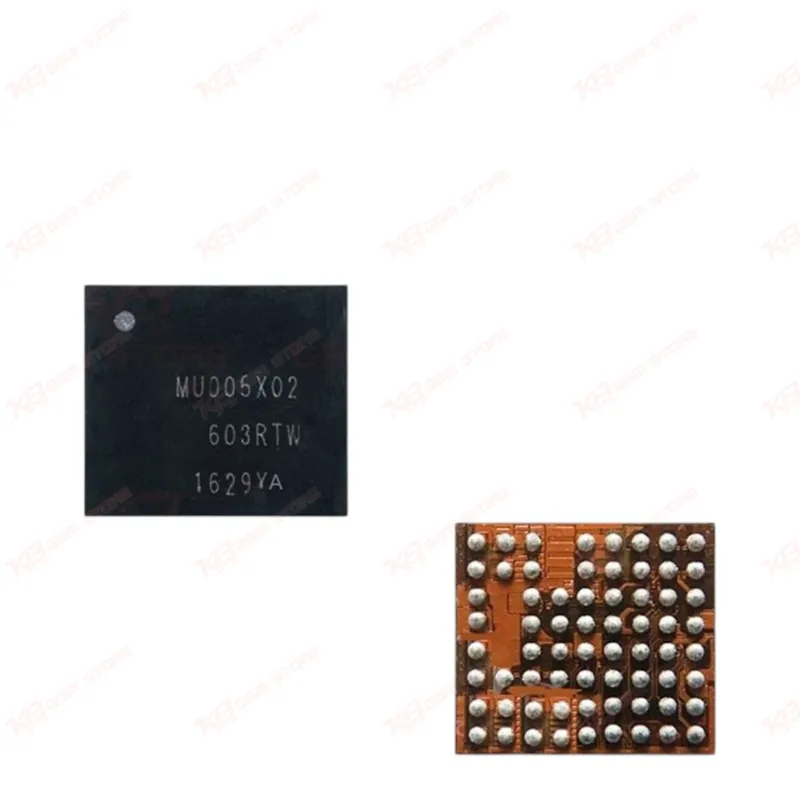
MU005X01-2/MU005X02 Power IC for Samsung Galaxy J710F
MU005X01-2/MU005X02 Power IC for Samsung Galaxy J710F
Regular price
Rs.350.00 PKR
Regular price
Sale price
Rs.350.00 PKR
Shipping calculated at checkout.
Quantity
Couldn't load pickup availability
This MU005X01-2 / MU005X02 Power IC handles voltage regulation and power distribution on the Samsung Galaxy J710F motherboard. Technicians reach for this chip when a J710F comes in dead, stuck on the logo, or refusing to charge after a drop or liquid exposure. The IC also fits J510F, J120H, and G610 boards that share the same power management architecture. You get a direct replacement part for board-level repair work, not a bypass or workaround. Reflow it correctly and the board regains stable power delivery to the CPU, RAM, and charging circuit. Stock this IC on your bench for common J-series dead phone jobs.
⚖️ Weight: 0.01 kg
SKU:MST-IC-84
- Safe & Secure Payment
- Fast Delivery
- WhatsApp Support


Description
FAQ
What is the product name?
The product name is MU005X01-2 / MU005X02 Power IC for Samsung Galaxy J710F.
What is the brand of this product?
The brand of this product is Samsung (OEM-compatible power IC).
What is the model of this product?
The model is MU005X01-2 / MU005X02, also marked S2MPU06, S2MU005X, and S2MU04.
What is this product used for?
This product is used for replacing a faulty power control IC on Samsung J-series motherboards during dead phone repair.
Which devices are compatible with this product?
This product is compatible with Samsung Galaxy J710F, J510F, J120H, and G610 boards.
Who should use this product?
This product is suitable for mobile repair technicians, repair shops, service centers, and professional GSM technicians.
Does this IC fix a J710F that hangs on logo after liquid damage?
Yes, this IC addresses power-stage faults that commonly cause a J710F to hang on the logo after liquid or drop damage, provided the power rail testing confirms the fault sits at this IC.
Can this power IC be used on a J510F board as well?
Yes, the J510F Galaxy J5 (2016) shares the same power management architecture, so this IC works as a direct replacement on that board too.