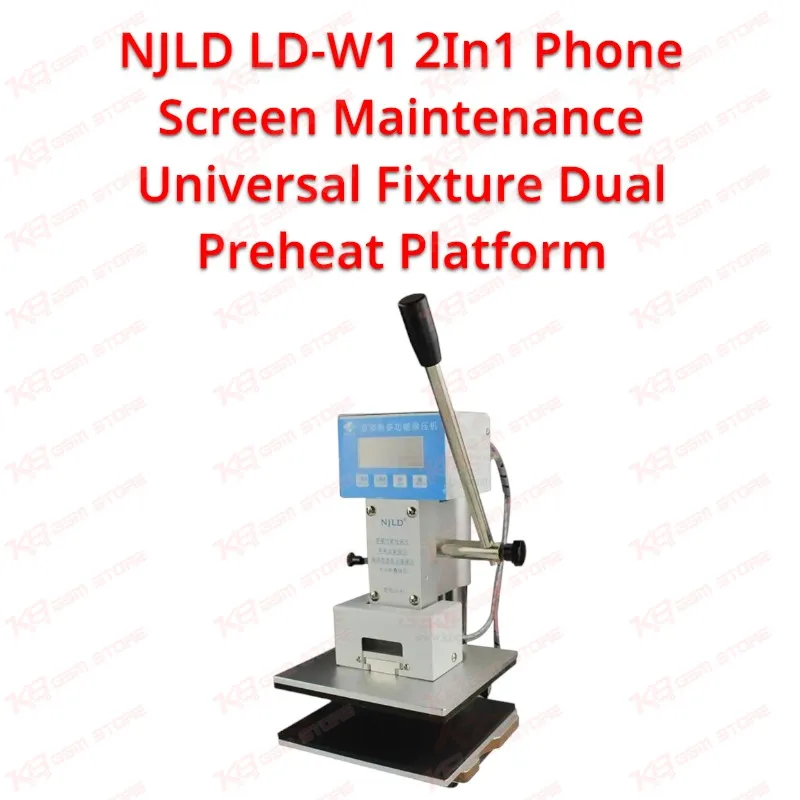
Screen replacement on modern iPhones is rarely a one-step job. You separate the glass, deal with curved edges on newer models, then re-press the frame and back cover without leaving gaps or loose adhesive. The NJLD LD-W1 exists to shorten that workflow. It is a 2-in-1 dual preheat platform that heats both sides of the device housing at once, then doubles as a pressing fixture to hold the frame, back glass, or flat screen in place while the adhesive sets. For a technician running several screen jobs a day, that combination saves real bench time compared to using a separate heating pad and a manual clamp.The dual preheat design is the core of this tool. Instead of heating one side of the phone and flipping it to work on the other, the LD-W1 applies controlled heat from both directions. This matters most on folding and curved screen repairs, where uneven heating is a common cause of adhesive not bonding properly and the screen lifting again after a few weeks. On straight, flat panels the same dual heating shortens softening time before you separate the digitizer or reseat a new one, which keeps the board and battery inside from sitting under prolonged heat exposure.Once the housing is prepped, the platform switches to its pressing function. This is where frame and back cover holding comes in. On iPhone X, XS, and XS Max repairs, back glass replacement depends on even pressure across the whole panel so the adhesive line seals without bubbling. The LD-W1 fixture keeps the back cover locked flat during this stage, which reduces the "dead after flash" style complaints technicians sometimes get when a phone comes back with display flicker or a loose frame traced to an uneven repair rather than a software fault. For frames on 11 through 15 series units, the same principle applies to screen edge sealing after LCD or OLED replacement.Pakistani repair shops working through daily walk-in traffic already know that hardware fault jobs — cracked glass, display problem complaints, or a "hang on logo" call that turns out to be a loose display connector after a rough repair — often trace back to inconsistent pressing technique rather than the part itself. A dedicated fixture like the LD-W1 standardizes that step across your team, so a junior technician gets close to the same seal quality as your most experienced hand on the bench. That consistency matters more on a busy counter where five or six screen jobs pass through in a shift and no two units can be treated casually.The universal fixture design covers a device range from iPhone X up to the 15 series, which is the bulk of the screen and back glass volume a Karachi or Lahore repair counter sees today. Rather than keeping separate jigs for each generation, one platform adjusts to hold curved-edge models and flat-panel models alike. That reduces the clutter of dedicated fixtures piling up on a workbench and cuts the setup time between jobs, since you are not hunting for the right clamp size before starting the next repair.Weighing 6.0 kg, the unit sits solidly on a repair bench without shifting during the pressing stage, which is important when applying even downward pressure on a phone chassis. The power adapter ships in multiple plug configurations, including 220V options suited to Pakistan's standard mains supply, so setup at the shop does not require a separate step-down converter for most counters.In terms of where this fits in the repair workflow, the LD-W1 sits between the initial diagnostic stage — where you rule out board-level or IC-level faults — and the final reassembly stage. It does not touch flashing, programming, or IC-level work; its job is entirely mechanical and thermal, focused on getting the screen, frame, and back glass to seat and bond correctly. That makes it a companion tool to your existing glue removing, laminating, and OCA bonding equipment rather than a replacement for any of them. Technicians running a full glass refurbishment line will find it slots in right after separation and glue cleanup, and right before final inspection.For a repair shop deciding whether to add this to the bench, the value case is straightforward: fewer redo jobs from uneven pressing, faster turnaround per unit since preheat and pressing overlap instead of running as separate steps, and a universal fit that avoids buying model-specific jigs as new iPhone generations release. If your shop handles regular iPhone X to 15 series screen and back glass work, the LD-W1 addresses a real bottleneck in that process rather than adding another tool that sits unused after the first week.