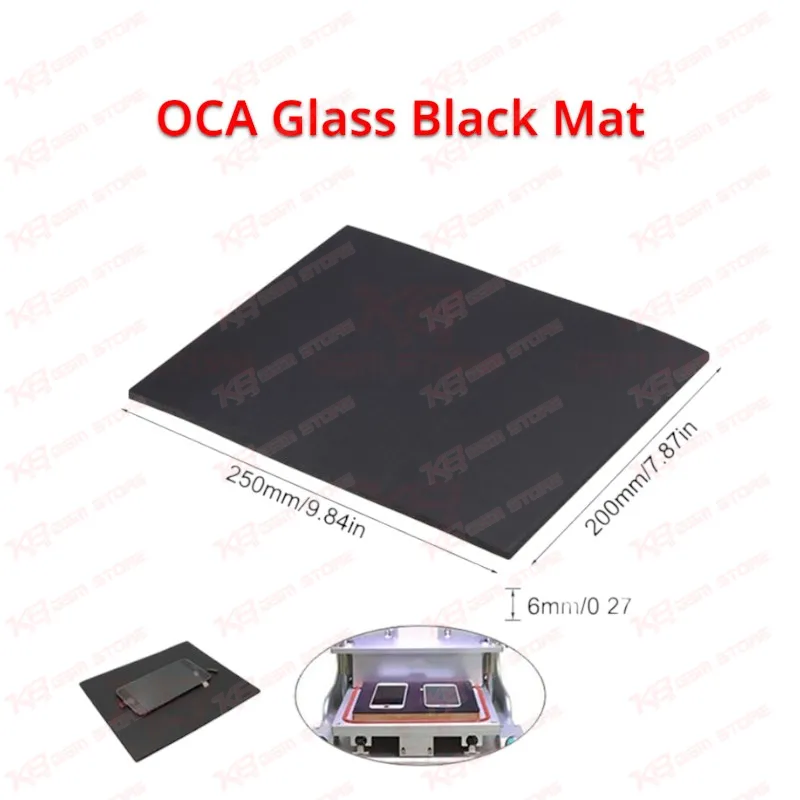
Every technician running an OCA lamination setup knows the mat under the glass matters as much as the machine pressing it. The OCA Glass Black Mat sits inside your OCA lamination machine as the working surface where you place the LCD or glass assembly before the vacuum and heat cycle begins, and its job is simple but critical: cushion the panel evenly, hold it flat, and release without sticking or marking the display after lamination finishes. Made from soft silicone rubber, the mat compresses under pressure and returns to its original shape afterward, so it does not flatten out, harden, or crack after weeks of daily lamination work the way cheaper foam pads do. That auto-recovery property is what keeps your bonding results consistent laminate after laminate, because an uneven or worn mat surface is one of the most common causes of bubble marks and pressure lines showing up on a freshly bonded screen. In a Pakistani repair shop where OCA jobs run back-to-back through the day, that consistency directly protects your yield and cuts down on rework. The mat also carries anti-static properties, which matters when you are handling exposed LCD flex cables and digitizer connectors during the lamination process, reducing the risk of static discharge damaging sensitive display driver components while the panel sits uncovered on the bench. Heat resistance is built into the material as well, since the OCA lamination cycle involves controlled heating alongside vacuum pressure to help the optically clear adhesive bond the glass to the LCD without trapping air bubbles; a mat that softens or warps under that heat would ruin your lamination geometry, and this one is designed to hold its shape through the cycle. Thickness plays a direct role in lamination quality too. An 8mm profile gives enough cushioning depth to absorb pressure evenly across the panel surface while still keeping the glass and LCD properly aligned inside the machine chamber, which matters whether you are working on a flat display or setting up a curved-glass lamination job. Because the material can be trimmed with a blade, many technicians cut the mat down to match curved OCA machines or smaller panel sizes, giving you flexibility across different lamination setups without buying a separate mat for every machine model you run. Day-to-day, this mat earns its place on the bench for more than just lamination. Technicians use the same soft silicone surface as a safe resting pad when separating glass from LCD, cleaning residual OCA glue off a panel, or laying out a display during a screen refurbishing job, since the non-slip surface keeps the glass from sliding around while you work on it with a scraper or UV light. For a workshop refurbishing OCA glass regularly, keeping a spare mat on hand also means less downtime if the mat in the machine wears out mid-job, since a slick, sticky, or worn mat surface is a common cause of a dead after lamination panel where the bond fails to hold and the screen has to be redone. Whether you're running iPhone, Samsung, or general Android glass through your OCA machine, the mat itself is universal to the lamination process rather than tied to a specific phone brand or model, so it fits into any workshop's OCA workflow regardless of what devices are on the bench that day. It is a low-cost consumable, but one that directly affects the quality and consistency of every glass lamination job that passes through your machine.