


Brand:
ONE-STOP
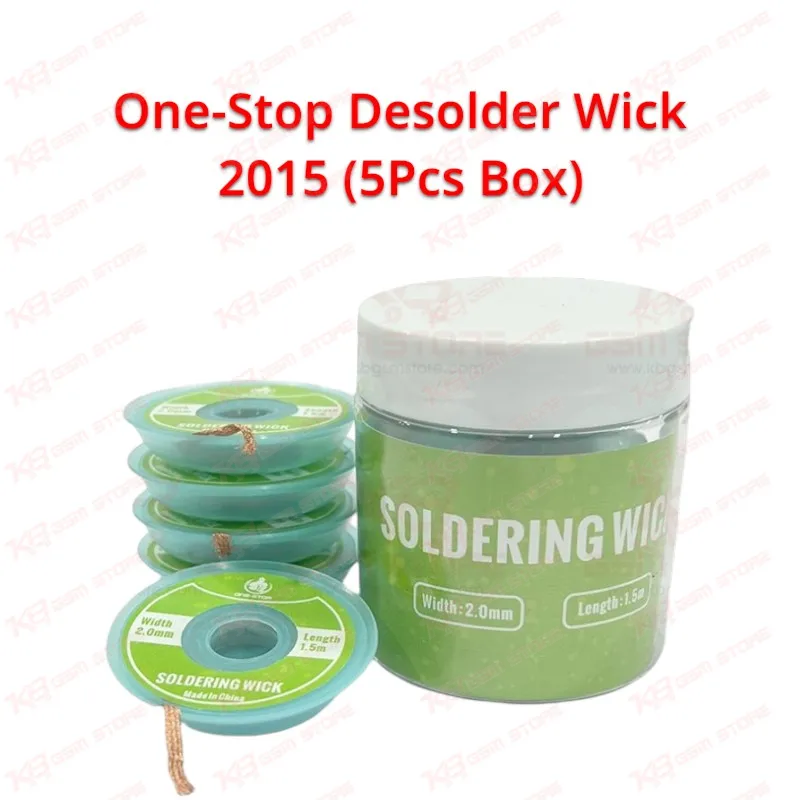
One-Stop Desolder Wick 2015 (5Pcs Box)
One-Stop Desolder Wick 2015 (5Pcs Box)
Regular price
Rs.1,499.00 PKR
Regular price
Sale price
Rs.1,499.00 PKR
Shipping calculated at checkout.
Quantity
Couldn't load pickup availability
The One-Stop Desolder Wick 2015 gives you a reliable copper braid for lifting excess solder off boards without damaging pads or nearby components. Each box packs 5 pieces of 2.0mm wide, 1.5-meter long wick, enough for weeks of bench work on mobile boards, connectors, and small SMD parts. You lay the braid over the joint, touch it with a hot iron, and watch the solder wick up into the copper strands. It works with almost any soldering iron you already run in your workshop, so there's no extra equipment to buy. For IC removal, connector desoldering, or general board cleanup, this wick earns a permanent spot in your tool drawer.
SKU:MST-SOLDERING-ACCESSORIES-362
⚖️ Weight: 0.01 kg
- Safe & Secure Payment
- Fast Delivery
- WhatsApp Support


Description
FAQ
What is the product name?
The product name is One-Stop Desolder Wick 2015.
What is the brand of this product?
The brand of this product is One-Stop.
What is this product used for?
This product is used for removing excess solder from PCB pads, connectors, and components during mobile repair and rework.
Which devices are compatible with this product?
This product is universal and not device-specific — it works on any mobile phone board or PCB regardless of brand or chipset.
Who should use this product?
This product is suitable for mobile repair technicians, repair shops, service centers, and professional users.
How many pieces come in one box?
One box contains 5 pieces of desoldering wick, each 1.5 meters long.
Does this wick work with any soldering iron?
Yes, it works with standard soldering irons commonly used on mobile repair benches — no special iron or tip is required.