


Brand:
ONE-STOP
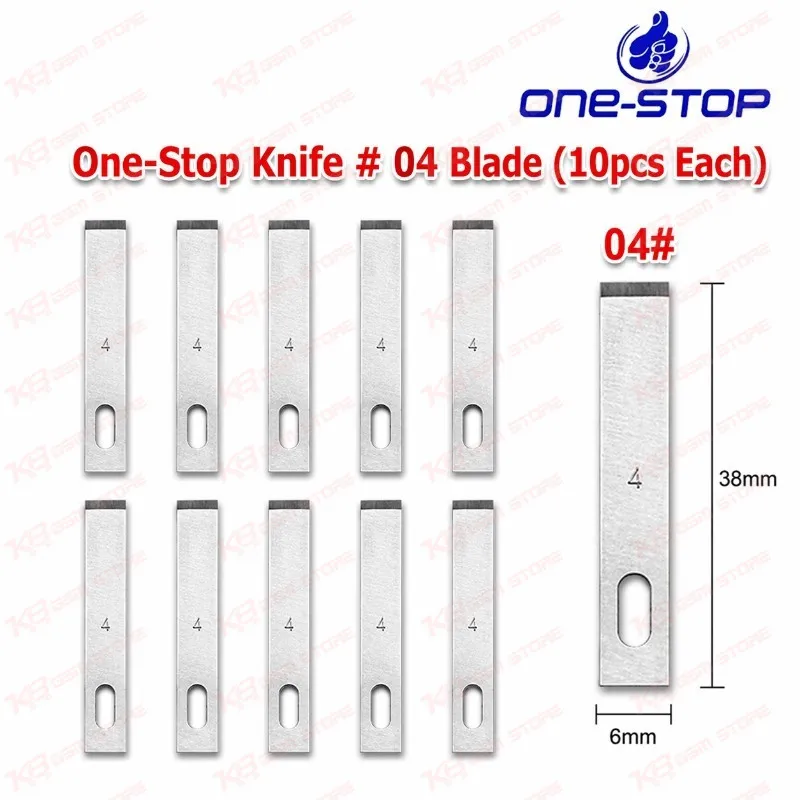
One-Stop Knife # 04 Blade (10pcs Each)
One-Stop Knife # 04 Blade (10pcs Each)
Regular price
Rs.1.00 PKR
Regular price
Sale price
Rs.1.00 PKR
Shipping calculated at checkout.
Quantity
Couldn't load pickup availability
The One-Stop #04 Flat Blade is a straight-edge precision knife blade built for everyday mobile repair bench work. Pack of 10 pieces gives you enough stock to get through weeks of screen separation, adhesive scraping, and board cleaning without running out mid-job. The flat #04 profile slides cleanly under glass and frame edges, making it a go-to blade when you need to break down old adhesive without gouging the chassis. It fits standard precision knife handles used across repair shops, so you are not locked into one tool brand. A simple, low-cost consumable that stays in every technician's toolbox.
SKU:MST-SOLDERING-ACCESSORIES-534
⚖️ Weight: 0.01 kg
- Safe & Secure Payment
- Fast Delivery
- WhatsApp Support


Description
FAQ
What is the product name?
The product name is One-Stop #04 Flat Blade Precision Knife.
What is the brand of this product?
The brand of this product is One-Stop.
What is the model of this product?
The model of this product is #04.
What is this product used for?
This product is used for adhesive scraping, screen separation, and board cleaning during mobile repair work.
Which devices are compatible with this product?
This product is compatible with any smartphone or tablet repair job through a standard precision knife handle, since it is a universal blade and not device-specific.
Who should use this product?
This product is suitable for mobile repair technicians, repair shops, service centers, and professional users.
Does this blade fit knife handles from other brands?
Yes, the #04 blade fits standard precision knife handles with the common hex-lock or screw-lock fitting used across the repair industry.
Is this blade suitable for prying open a sealed phone body?
No, it is designed for scraping and separation work rather than heavy prying — use a dedicated spudger or plastic pry tool for forcing open tightly sealed unibody devices.