Skip to product information
1 of 4

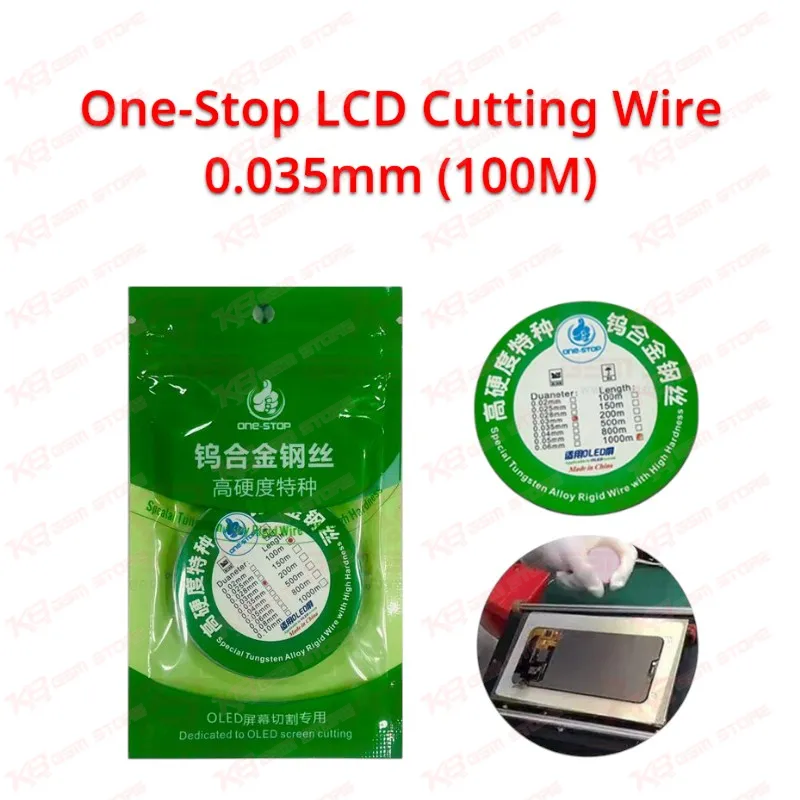
One-Stop LCD Cutting Wire 0.035mm (100M)

One-Stop LCD Cutting Wire 0.035mm (100M)

Regular price Rs.150.00 PKR
Regular price Sale price Rs.150.00 PKR
Sale Sold out
Shipping calculated at checkout.
Quantity

This 0.035mm Molybdenum cutting wire is built for technicians who separate LCD screens without damaging the panel underneath. At 100 meters per roll, you get enough length to handle dozens of separation jobs on your repair bench. The ultra-thin 0.035mm diameter cuts through the adhesive layer between the glass and LCD cleanly, which matters most on tight-budget screens where you want to save the LCD after a cracked glass. Molybdenum construction gives you a wire that resists snapping mid-cut, so you are not restarting a separation halfway through. Pair it with a heating plate or hot air station for the best results on dead phone glass replacement jobs.

SKU:MST-SOLDERING-ACCESSORIES-409

⚖️ Weight: 0.01 kg

  • Safe & Secure Payment
  • Fast Delivery
  • WhatsApp Support
View full details

Description

Screen separation is one of the most repeated jobs on any repair bench, and the wire you use decides whether you save the LCD or scrap it along with the broken glass. This 0.035mm Molybdenum cutting wire gives you a diameter thin enough to slide through the adhesive bond between the front glass and the display panel without dragging on the LCD surface itself. That thinness is the entire point at this gauge — thicker wires like 0.06mm or 0.1mm cut faster but leave more room for pressure marks on the digitizer, while 0.035mm lets you work slower and more precisely on screens you actually plan to reuse.Molybdenum wire holds up under repeated tension pulls without snapping the way cheaper steel alternatives do. You will still feel some resistance on stubborn OCA glue, especially on screens that have not been preheated properly, but the wire itself keeps its shape and diameter consistent across the full 100-meter roll. That consistency matters when you are running a service center bench and cutting several screens a day — a wire that thins out or frays halfway through the roll costs you more time than the roll itself costs in rupees.On your repair bench, this wire fits directly into the glass separation step: heat the screen on a separator plate or hot air station to soften the adhesive, then work the wire through the gap between glass and LCD using a back-and-forth sawing motion rather than a straight pull. Straight pulls are what snap wires at this diameter — the sawing motion distributes the tension and lets the wire do the cutting instead of just stretching. For dead phone screens where the LCD itself is not the problem, this step is often the difference between reusing an OEM display and buying a new combo.0.035mm sits in the middle of the common gauge range technicians stock. If you mainly separate glass on older or mid-range devices with simpler OCA bonding, this thickness gives you a workable balance between cutting speed and control. Repair shops handling glass-only replacement in bulk — a common workflow in Pakistani service centers dealing with cracked screen jobs — usually keep two or three gauges on hand, and 0.035mm covers the bulk of everyday jobs where you want to protect the LCD underneath.The wire itself carries no electronics and no firmware, so there is no software side to this tool — it is a physical consumable, not a programming device. What determines your results is technique: proper preheating before you start, a controlled sawing motion instead of yanking, and cutting from the same starting point rather than sawing randomly across the panel. Technicians running a busy bench go through a roll faster than expected once they start using it for every glass-only replacement instead of skipping straight to a full combo swap.Stock this alongside your heating plate, digitizer separator clamps, and OCA/glue removal tools, since separation wire rarely gets used on its own — it is one step inside a full screen replacement workflow that also touches lamination and glue cleanup on the reused LCD.

Key Features

0.035mm diameter for precise, low-damage cutting on the glass-to-LCD bond line

Molybdenum alloy construction resists snapping under repeated tension

100-meter roll length covers dozens of separation jobs per roll

Works with any heating plate or hot air station in your existing setup

Thin gauge reduces pressure marks on digitizers you plan to reuse

Suitable for glass-only replacement jobs where the LCD stays in service

No firmware or electronics — a pure mechanical consumable tool

Fits directly into standard screen separation and refurbishing workflow

Specifications

Brand Entity One-Stop
Product Entity LCD Cutting Wire 0.035mm
Technology Entity Molybdenum Alloy Wire Cutting
Compatible Device Entities Universal smartphone and tablet LCD assemblies
Repair Process Entity Screen Separation / Glass Removal
Industry Entity Mobile Phone Repair Tools, PCB and Screen Refurbishing

Compatible Devices

Universal — not device-specific. Works on the glass-to-LCD adhesive bond found in most smartphone and tablet touch screen assemblies, regardless of brand or chipset.

Common Repair Uses

Glass-only screen separation to save the LCD panel, cracked front glass replacement, OCA glue-line cutting during screen refurbishing, digitizer-to-LCD separation before relamination.

FAQ

What is the product name?
The product name is One-Stop LCD Cutting Wire 0.035mm (100M).
What is the brand of this product?
The brand of this product is One-Stop.
What is the model of this product?
This is the 0.035mm diameter, 100-meter cutting wire variant.
What is this product used for?
This product is used for separating cracked front glass from the LCD panel during screen repair.
Which devices are compatible with this product?
This wire works on the glass-to-LCD adhesive bond of any smartphone or tablet touch screen, regardless of brand.
Who should use this product?
This product is suitable for mobile repair technicians, repair shops, service centers, and professional refurbishing businesses.
Does 0.035mm cutting wire reduce LCD damage compared to thicker wires?
Yes, the thinner 0.035mm gauge applies less pressure while cutting, lowering the risk of pressure marks on the digitizer compared to 0.06mm or 0.1mm wires.
Do I need to preheat the screen before using this cutting wire?
Yes, using a heating plate or hot air station to soften the OCA adhesive first is necessary — cutting cold glass increases the chance of the wire snapping.