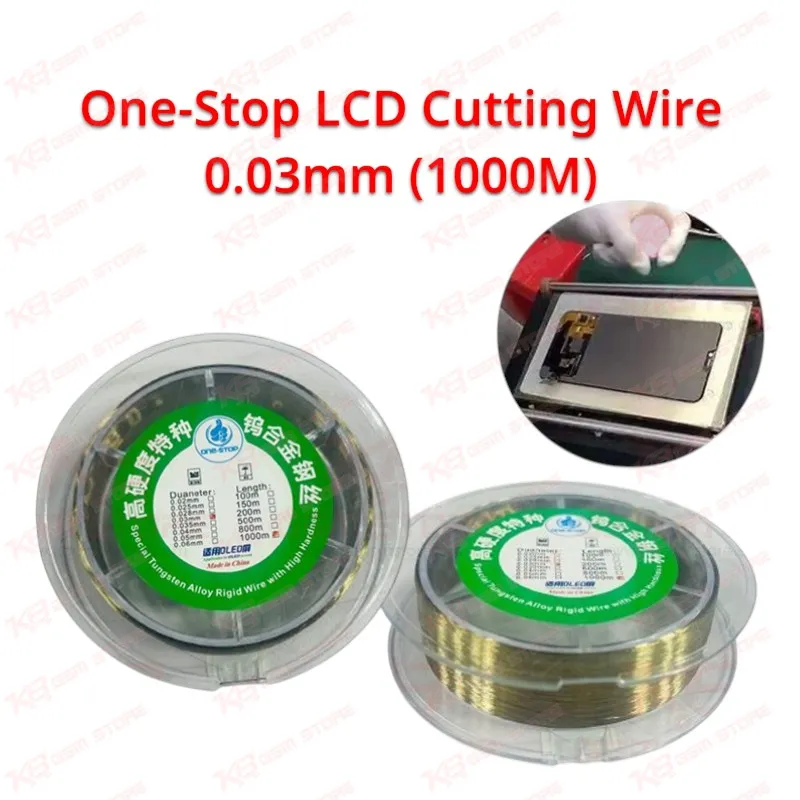
When a phone comes in with a cracked outer glass but a working LCD underneath, the separation step decides whether that panel gets saved or scrapped, and that's exactly where this 0.03mm cutting wire earns its place on your bench. At just 0.03mm in diameter, the wire cuts through the OCA adhesive layer bonding the glass to the LCD or OLED without transferring heavy pressure onto the display itself, which is the main reason technicians lose panels during manual separation with thicker wire or blades. The 1000-meter length means you're not restocking every few days if you're running a busy repair shop or a screen refurbishment line — one roll covers hundreds of separation jobs before you need another. The wire itself is built with high hardness and strong abrasion resistance, so it keeps a clean edge through repeated pulls instead of fraying or losing tension halfway through a cut, and the high tensile strength stops it from snapping when you're working through a stiff adhesive bond. You can use it two ways depending on your workflow: wrap it around a wooden or plastic handle and pull it through by hand for one-off repairs, or load it into an LCD separator machine with a hot plate for faster, more consistent cuts when you're processing multiple units in a day. Either method relies on the same principle — heat the adhesive slightly to soften it, then draw the wire through the gap between the glass and the panel in a steady, even motion rather than forcing it, which keeps the digitizer flex and LCD backlight layer intact. This is a universal tool, not locked to one phone model or brand, so it fits into the glass separation step for Samsung, Oppo, Vivo, Infinix, Tecno, iPhone, and most other smartphone and tablet screen assemblies you'll see coming through the shop. Within a typical repair workflow, this wire sits at the diagnostics-to-disassembly stage — after you've confirmed the LCD itself is functional and only the outer glass or digitizer needs replacing, this is the tool that gets you from a cracked-glass unit to a clean, reusable panel. It's also a common companion tool alongside OCA laminating machines, since panels separated cleanly with a fine wire like this go back into the lamination process with fewer scratches and better yield. For shops handling display problems and glass replacement as a core service line, having a reliable, thin-gauge wire on hand directly affects your repair turnaround and your ability to save panels instead of ordering full LCD replacements. The gold-toned alloy construction commonly used in this wire type also resists rust and wear better than plain steel wire, which matters if it's sitting in a workshop environment with soldering fumes and flux residue nearby. Overall, this is a low-cost, high-use consumable that belongs in the toolkit of anyone doing regular screen separation work, from independent technicians to full-scale refurbishment operations.