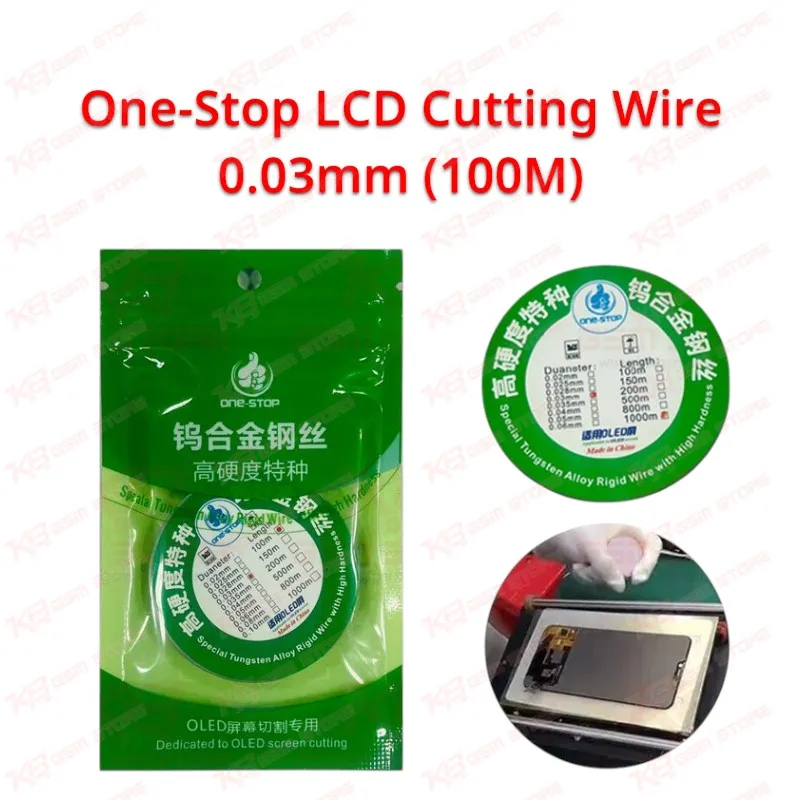
Screen separation is one of the most repeated jobs on a repair bench, and the wire you use decides whether the job goes clean or turns into a cracked LCD and a wasted panel. This 0.03mm molybdenum alloy cutting wire gives you a thinner cutting edge than the common 0.04mm or 0.08mm wires, so you get more control when running it through the adhesive layer between the glass and the LCD assembly. The finer diameter means less pressure needed on the frame, which lowers the risk of scratching the digitizer or putting stress cracks into an already fragile panel. High hardness and abrasion resistance keep the wire from fraying or snapping halfway through a cut, so one roll takes you through far more separations than a low-grade wire before it wears out. Tensile strength matters here too — a wire that stretches or weakens under tension will bind mid-cut and force you to restart the separation from a new angle, which is exactly when LCDs get damaged. With 100m on a single roll, you are cutting new lengths for weeks of daily repair work without reordering, which keeps your workshop consumables organized and your per-job cost low. Technicians handle glass-only replacements on a regular basis where the LCD underneath is still good, and this wire is what makes that possible instead of writing off the whole assembly. Run it flat against the frame edge, keep steady tension, and work it through the adhesive in a smooth back-and-forth motion rather than forcing it straight through — that technique alone saves more panels than any tool spec does. This wire also comes into play on digitizer-only replacements, where the glass and touch layer are separated from the LCD to swap just the damaged part, common on older device models where full assemblies are expensive or hard to source. For a service center handling glass and touch problems daily, having a reliable cutting wire on the bench cuts down turnaround time since you are not waiting on full LCD assembly stock for every cracked-screen job. It also pairs naturally with your existing screen separator machine or hot plate setup — heat softens the adhesive first, then the wire does the clean separation pass. Keep spare rolls on hand since wire length gets used up fast once it becomes your default option for adhesive-related display problems. This is a repeat-purchase consumable, not a one-time tool, so shops that do volume screen repair typically keep multiple rolls stocked at once. Whether you are running a single-tech repair counter or a full service center, a dependable 0.03mm cutting wire keeps your screen separation workflow consistent, protects your LCD stock, and keeps repair costs down on every glass-only job that comes across your bench.