


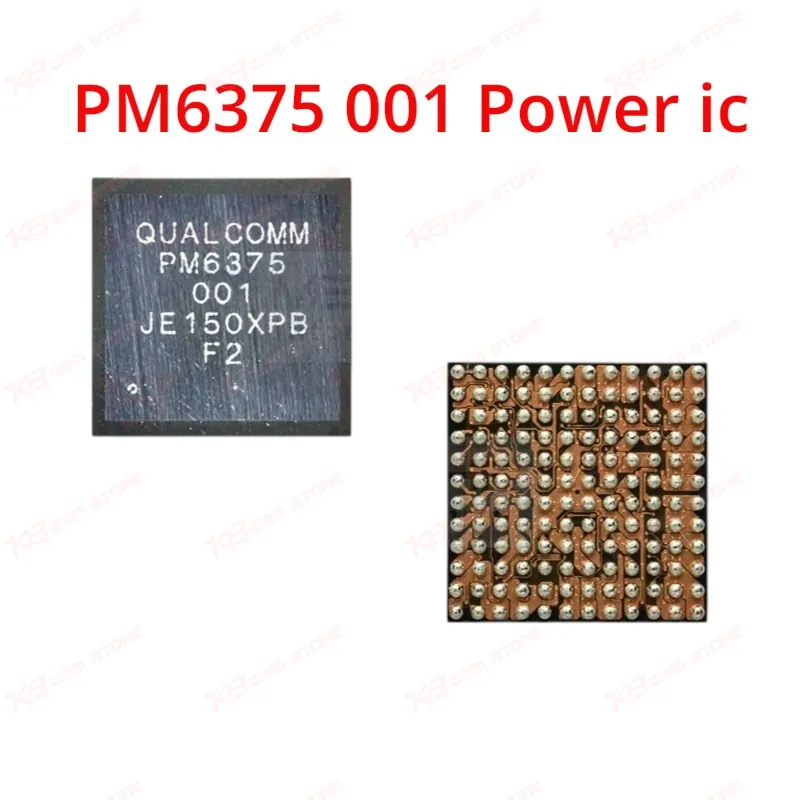
PM6375 001 Power ic
PM6375 001 Power ic
Regular price
Rs.450.00 PKR
Regular price
Sale price
Rs.450.00 PKR
Shipping calculated at checkout.
Quantity
Couldn't load pickup availability
The PM6375 001 is the power management IC (PMIC) fitted on the Xiaomi 12 and Xiaomi 12 Pro motherboard. It regulates power delivery across the board, controlling voltage rails that feed the processor, charging circuit, and display driver. When a technician hits a dead phone, no-charging fault, or hang on logo issue on these two models, this IC is one of the first checkpoints in the diagnostic flow. Built as a BGA chip, it needs a proper reballing setup and a steady hand under the microscope to replace correctly. Stock this one if you handle Xiaomi 12 series board repair regularly.
⚖️ Weight: 0.01 kg
SKU:MST-IC-198
- Safe & Secure Payment
- Fast Delivery
- WhatsApp Support


Description
FAQ
What is the product name?
The product name is PM6375 001 Power IC.
What is the brand of this product?
This IC is a genuine Qualcomm PMIC part.
What is the model of this product?
The model is PM6375-001.
What is this product used for?
It regulates power distribution to the SoC, charging circuit, and display on compatible boards.
Which devices are compatible with this product?
This IC is compatible with Xiaomi 12 and Xiaomi 12 Pro.
Who should use this product?
This product is suitable for mobile repair technicians, repair shops, service centers, and professional users.
Which chipset platform pairs with the PM6375 001?
It pairs with the Snapdragon 8 Gen 1 platform used in the Xiaomi 12 and 12 Pro.
What symptoms usually point to a failing PM6375 001?
Dead phone, no-charging faults, hang on logo, and abnormal current draw during a bench power test.