


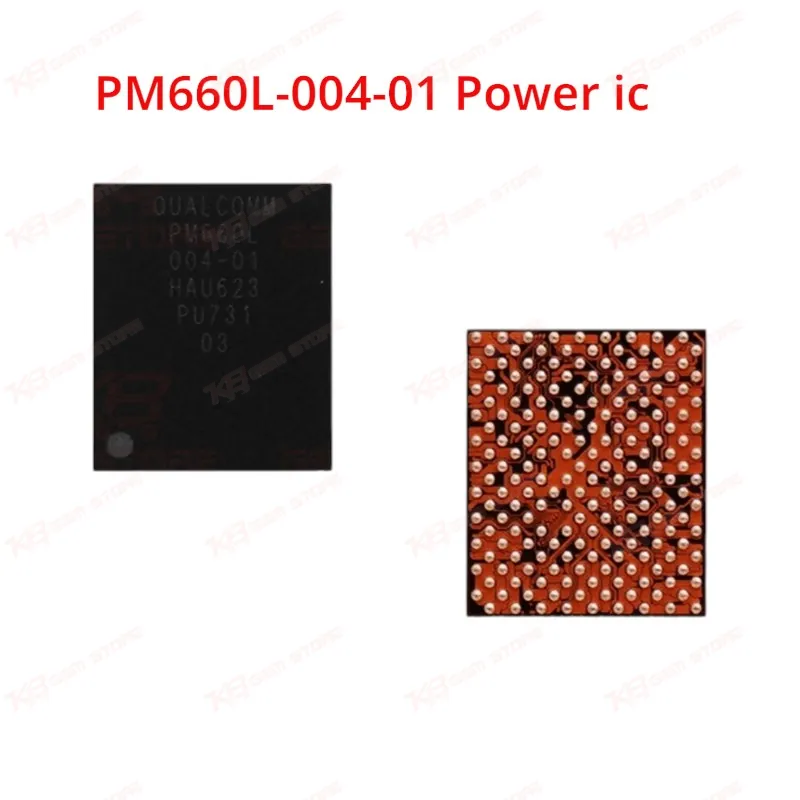
PM660L-004-01 Power ic
PM660L-004-01 Power ic
Regular price
Rs.200.00 PKR
Regular price
Sale price
Rs.200.00 PKR
Shipping calculated at checkout.
Quantity
Couldn't load pickup availability
The PM660L-004-01 is a Qualcomm power management IC built for Snapdragon 660-series boards, confirmed compatible with the Xiaomi Redmi Note 6 Pro and Redmi Note 7. It works alongside the main PM660 PMIC to handle voltage regulation, LDO output, and battery charging control on the motherboard. Technicians reach for this chip when a phone shows dead board symptoms, random shutdowns, no charging response, or a hang-on-logo fault traced back to the power rail rather than the CPU or software. Each unit ships tested and ready for reballing, so you get a clean swap without hunting for a working donor board.
⚖️ Weight: 0.01 kg
SKU:MST-IC-200
- Safe & Secure Payment
- Fast Delivery
- WhatsApp Support


Description
FAQ
What is the product name?
The product name is PM660L-004-01 Power IC.
What is the brand of this product?
This is a Qualcomm-designed power management IC.
What is the model of this product?
The model is PM660L-004-01.
What is this product used for?
It's used to repair dead board, no-power, and boot loop faults caused by power management IC failure on supported boards.
Which devices are compatible with this product?
It's confirmed compatible with the Xiaomi Redmi Note 6 Pro and Redmi Note 7.
Who should use this product?
Mobile repair technicians, GSM shops, and service centers handling Xiaomi board-level repairs.
Does the PM660L-004-01 need to be reballed before installation, or does it come pre-balled?
It's supplied as a standalone chip for reballing — you'll need a stencil matched to its ball pitch and a hot air station to install it.
Can a PM660L fault cause a phone to charge but never boot?
Yes — since the 660L handles secondary voltage rails, a fault here can let the board draw charging current while still failing to complete the boot sequence.