


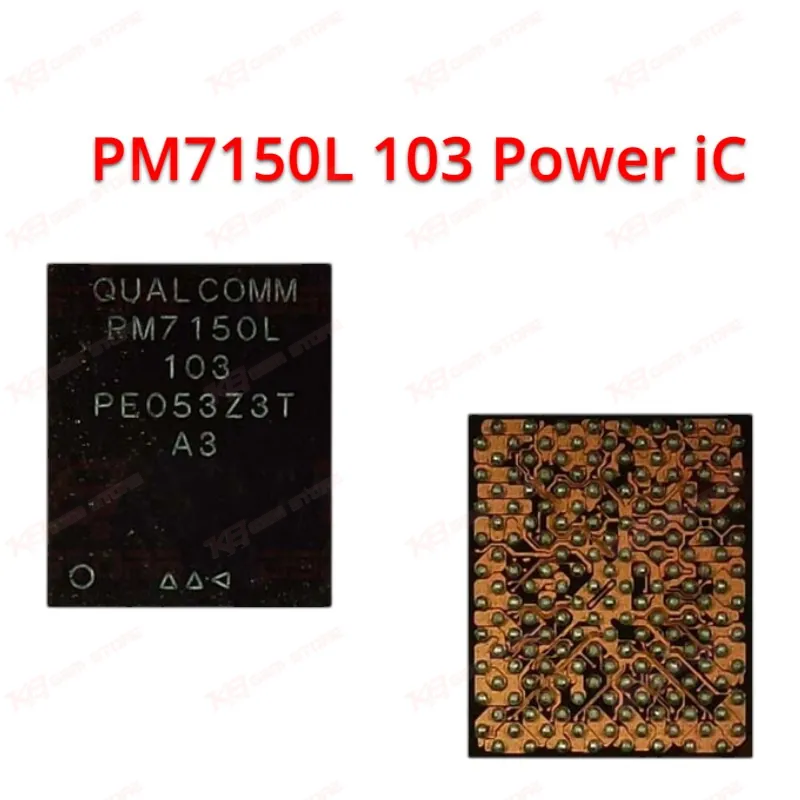
PM7150L 103 Power iC
PM7150L 103 Power iC
Regular price
Rs.1,200.00 PKR
Regular price
Sale price
Rs.1,200.00 PKR
Shipping calculated at checkout.
Quantity
Couldn't load pickup availability
The Qualcomm PM7150L-103 is a genuine BGA power management IC (PMIC) used in Snapdragon-powered Xiaomi, Samsung, and Motorola devices including Redmi K30, Poco X3, Redmi K20, Mi 9T, Mi 9, and Galaxy A80. Technicians install this chip when a phone shows dead symptoms, no power-on response, charging failure, or unstable boot behavior linked to the power rail. KB GSM Store supplies tested PM7150L-103 units for board-level repair work across Pakistan, ready for reballing and reflow on your repair bench.
⚖️ Weight: 0.01 kg
SKU:MST-IC-280
- Safe & Secure Payment
- Fast Delivery
- WhatsApp Support


Description
FAQ
What is the product name?
The product name is Qualcomm PM7150L-103 Power Management IC.
What is the brand of this product?
The brand of this product is Qualcomm.
What is the model of this product?
The model of this product is PM7150L-103.
What is this product used for?
This product regulates power delivery on the motherboard and is used to repair dead phone, no power-on, and charging-related faults.
Which devices are compatible with this product?
This IC is compatible with Xiaomi Redmi K30, Poco X3, Redmi K20, Mi 9T, Mi 9, Mi CC9 Pro, Samsung Galaxy A80, Galaxy A71, and Motorola XT2087.
Who should use this product?
This product is suitable for mobile repair technicians, repair shops, service centers, and professional users.
Does this PMIC require BGA reballing to install?
Yes, the PM7150L-103 ships in a BGA package, so you need a hot air rework station and a matched stencil to reball and reflow it onto the board.
How do I confirm a dead Redmi K30 fault is the PMIC and not a software issue?
Check current draw on a DC power supply first — abnormally high current with no display response points to a PMIC or rail short, especially after software flashing attempts have already failed.