


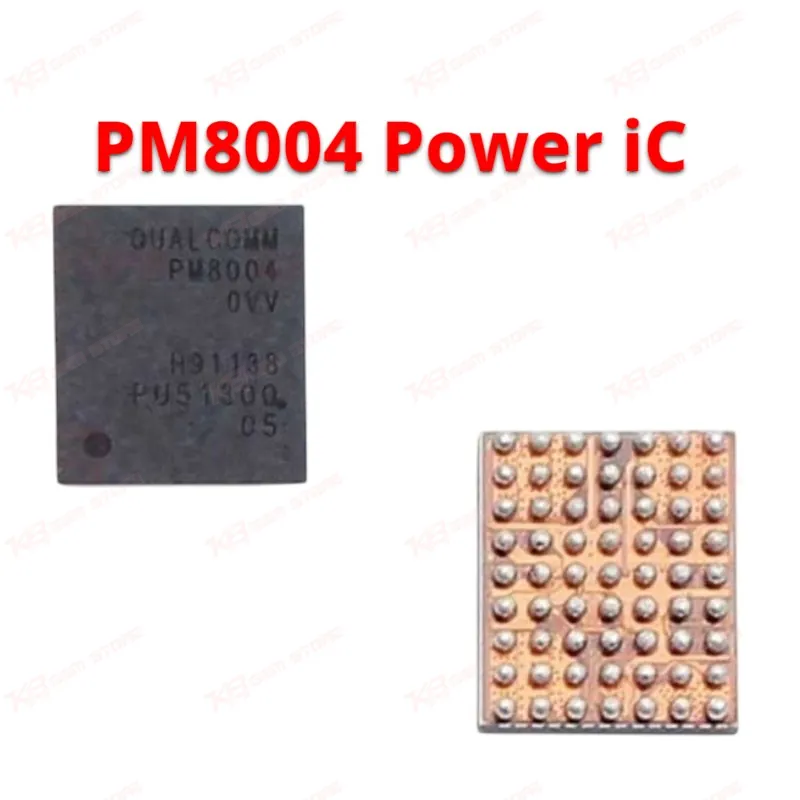
PM8004 Power iC
PM8004 Power iC
Regular price
Rs.300.00 PKR
Regular price
Sale price
Rs.300.00 PKR
Shipping calculated at checkout.
Quantity
Couldn't load pickup availability
The PM8004 Power IC is a genuine Qualcomm power management chip designed for Samsung Galaxy S7 and S7 Edge motherboards. Technicians use this small BGA power IC to resolve dead board, no power, and charging-related faults linked to the secondary power rail. Paired with proper reballing and hot air rework equipment, it restores stable board-level power delivery on affected Galaxy S7 series units. Sourced for GSM repair shops in Lahore, Karachi, and Islamabad, this IC suits technicians handling board-level Samsung repairs on a daily basis.
⚖️ Weight: 0.01 kg
SKU:MST-IC-163
- Safe & Secure Payment
- Fast Delivery
- WhatsApp Support


Description
FAQ
What is the product name?
The product name is PM8004 Power IC.
What is the brand of this product?
The brand of this product is Qualcomm.
What is the model of this product?
The model of this product is PM8004.
What is this product used for?
This product is used for replacing a faulty power management IC on Samsung Galaxy S7 and S7 Edge motherboards to resolve dead board and charging faults.
Which devices are compatible with this product?
This product is compatible with Samsung Galaxy S7 (G930F, G930A, G930T, G930V, G930P, G930R) and Galaxy S7 Edge.
Who should use this product?
This product is suitable for mobile repair technicians, repair shops, service centers, and professional users.
Does the PM8004 fault always show as a completely dead board?
No, PM8004 faults can also appear as intermittent charging or a hang on the logo screen, not only a fully dead board.
Do I need a specific stencil to reball the PM8004?
Yes, use a stencil matched to the PM8004 ball pitch for accurate paste application and a clean reflow.