


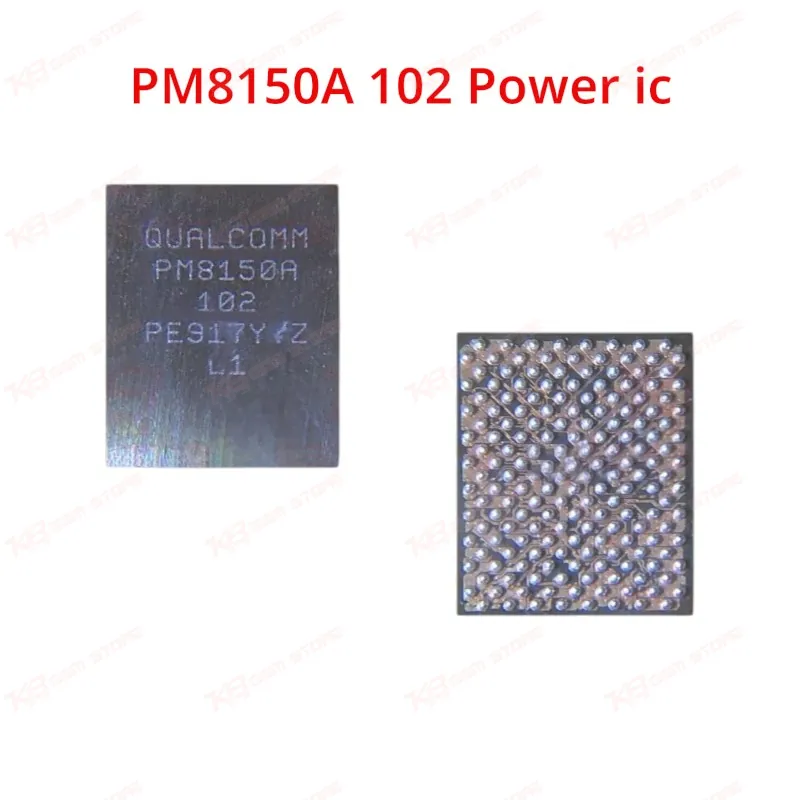
PM8150A 102 Power ic
PM8150A 102 Power ic
Regular price
Rs.250.00 PKR
Regular price
Sale price
Rs.250.00 PKR
Shipping calculated at checkout.
Quantity
Couldn't load pickup availability
The PM8150A-102 is a Qualcomm power management IC used alongside the PM8150 and PM8150B on Snapdragon 855, 855+, 860, and 865 platform boards. Technicians reach for this chip when a phone shows a dead phone symptom, hangs on logo, or won't charge after a board-level fault. It handles secondary voltage regulation for RF and sensor circuits on flagship-tier Samsung, Xiaomi, Motorola, and Oppo boards. Test the power rail before you commit to an IC change karna decision — this replacement gets your bench diagnostics moving without guesswork.
⚖️ Weight: 0.01 kg
SKU:MST-IC-202
- Safe & Secure Payment
- Fast Delivery
- WhatsApp Support


Description
FAQ
What is the product name?
The product name is PM8150A 102 Power IC.
What is the brand of this product?
The brand of this product is Qualcomm.
What is the model of this product?
The model of this product is PM8150A-102.
What is this product used for?
This product is used to replace a faulty companion power management IC on Snapdragon 855-family boards showing dead phone, boot loop, or no-charging faults.
Which devices are compatible with this product?
This IC fits Snapdragon 855, 855+, 860, and 865 platform boards, with confirmed use on Samsung Galaxy S10 series, Xiaomi Mi 9/Mi 9T/Mi 10 Pro, Motorola Edge Plus, and Oppo Reno 10x Zoom.
Who should use this product?
This product is suitable for mobile repair technicians, repair shops, service centers, and professional users.
Does the PM8150A-102 handle the same rails as the PM8150 and PM8150B on the same board?
No — each of the three PMICs on a Snapdragon 855-family board manages a separate set of voltage regulators, so you need to isolate which chip's rail is faulty before replacing one.
Can a shorted PM8150A rail cause a phone to stay dead after a flash attempt?
Yes — if the rail this IC controls is shorted or open, the board can fail to power on even after a successful flash, since the fault sits at the hardware power-delivery level rather than the software.