


PM8226 Power IC
PM8226 Power IC
Regular price
Rs.250.00 PKR
Regular price
Sale price
Rs.250.00 PKR
Shipping calculated at checkout.
Quantity
Couldn't load pickup availability
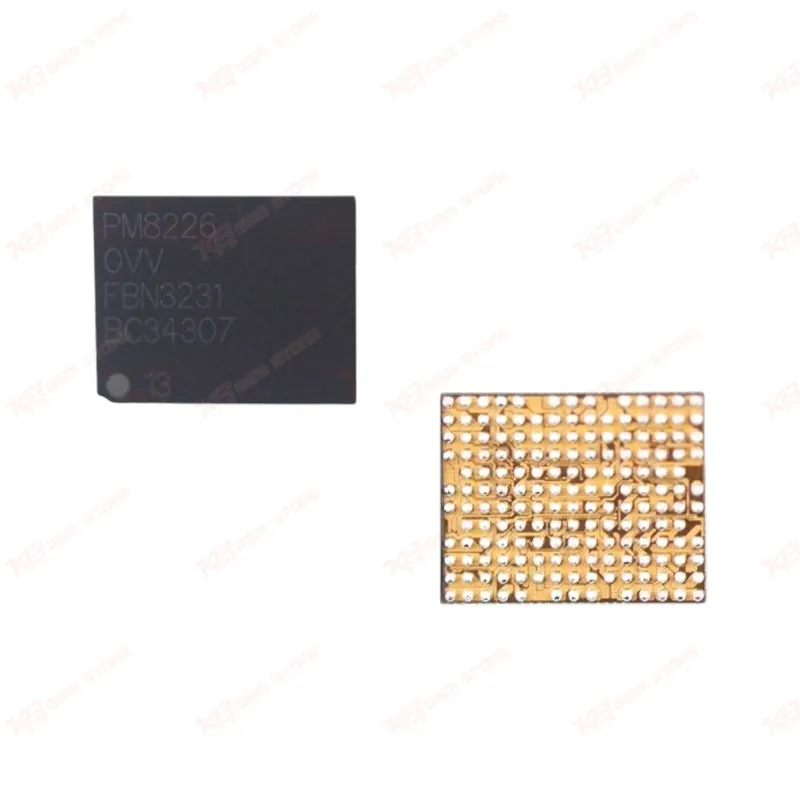
The PM8226 is a Qualcomm power management IC built for the Snapdragon 400-series platform, most commonly found on the Samsung Galaxy Grand Duos 2 (G7102) motherboard. Technicians reach for this chip when a board shows dead phone symptoms, hangs on logo, or refuses to charge after a PMIC-related hardware fault. It handles voltage regulation and power sequencing for the SoC, so a bad PM8226 usually means no power rail, no boot, or erratic charging behavior. This BGA-packaged IC ships new and tested, ready for reballing and board-level replacement on your bench.
SKU:MST-IC-52
- Safe & Secure Payment
- Fast Delivery
- WhatsApp Support


Description
FAQ
What is the product name?
The product name is PM8226 Power Management IC.
What is the brand of this product?
The brand of this product is Qualcomm.
What is the model of this product?
The model of this product is PM8226.
What is this product used for?
This product is used for replacing a faulty power management IC on Snapdragon 400-series motherboards to fix dead phone, boot loop, and charging faults.
Which devices are compatible with this product?
This product is compatible with Samsung G7102, Samsung I9300I, Samsung I9301I, HTC A5-DUG, and Xiaomi Redmi 1S.
Who should use this product?
This product is suitable for mobile repair technicians, repair shops, service centers, and professional PCB repair users.
Does the PM8226 fix boot loop issues on the Samsung G7102?
Yes, when the boot loop traces back to an unstable power rail from a degraded PMIC rather than a software fault, replacing the PM8226 resolves it.
Can the PM8226 be reballed with a standard hot air rework station?
Yes, the PM8226 uses a standard BGA package that reballs with a normal hot air station and matching stencil, no specialized equipment required.