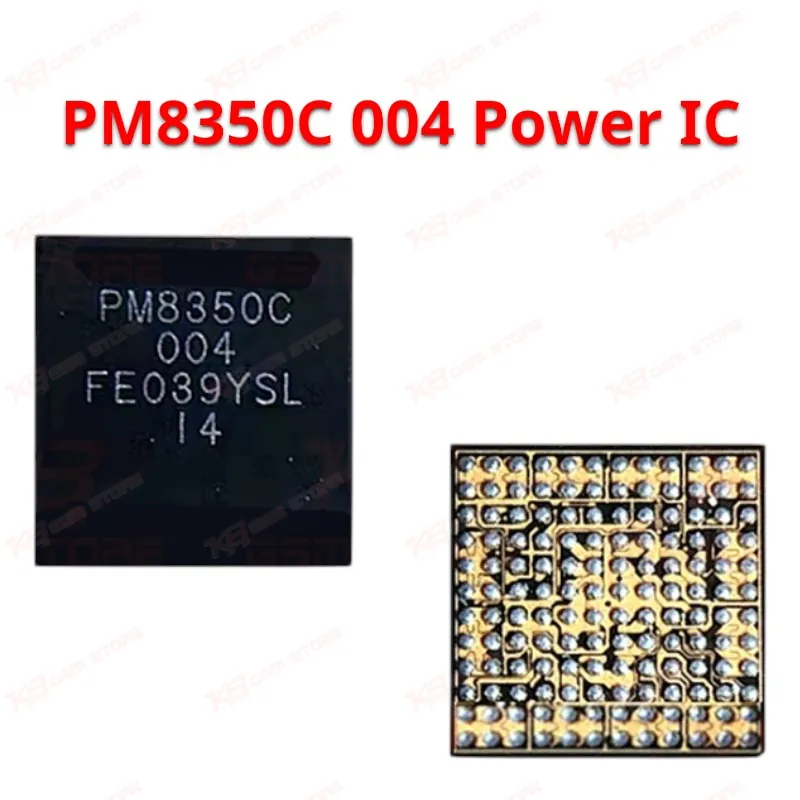
The PM8350C 004 Power IC is part of the multi-chip PMIC set Qualcomm designed for the Snapdragon 888 (SM8350) platform. On boards like the Xiaomi Mi 11, this IC sits alongside the primary PM8350 and the PM8350BH, splitting power management duties across three coordinated chips instead of relying on a single PMIC. This design lets Qualcomm isolate different rail groups — core processor voltages, memory supply, and auxiliary peripherals — across separate silicon, which improves thermal distribution but also means a single faulty PMIC in the set can still bring the whole board down.For a GSM technician, that split matters. When a Mi 11 series phone comes in dead or refuses to power on, you can't assume the fault sits with just one chip. You start with a current draw test on the battery connector. If the board pulls unusually high current with no display response, or pulls almost nothing at all, the PM8350C is one of three PMICs you need to isolate before committing to a reballing job. Boot loop issues and hang on logo symptoms on these boards also trace back to PMIC faults often enough that experienced technicians check power rail continuity before touching software.Common failure triggers include liquid damage, physical board flex from drops, and cascading damage after a failed charging IC repair sends incorrect voltage back through shared rails. Since the PM8350C handles specific downstream rails rather than the whole board, a fault here sometimes shows narrower symptoms than a dead PM8350 — a phone might power on and reach the logo, then hang or reboot under load. That behavior pattern is a useful diagnostic clue before you open the hot air station.Reballing this IC requires the same discipline as any BGA power chip: clean pad prep, correct paste selection, and controlled reflow temperature to avoid disturbing neighboring components on a densely packed board. Given how tightly Xiaomi routes the Snapdragon 888 power section, technicians should confirm board revision and PMIC placement against a verified schematic or boardview before removal, since PM8350, PM8350C, and PM8350BH sit close together and misidentifying the faulty chip wastes a rework cycle.Sourcing matters as much as the repair technique. A counterfeit or relabeled PM8350C often passes a basic continuity check but fails during actual power sequencing, leading to a phone that looks fixed on the bench and fails again within days. For a repair shop building a reputation on reliable board-level work, using a verified PM8350C 004 protects both the repair outcome and the shop's warranty commitments. This part fits naturally into any Snapdragon 888 repair workflow — alongside PM8350 and PM8350BH stock, BGA reballing stencils sized for Qualcomm PMIC footprints, and a hot air station capable of stable low-airflow reflow for dense board areas.