


KB GSM Store
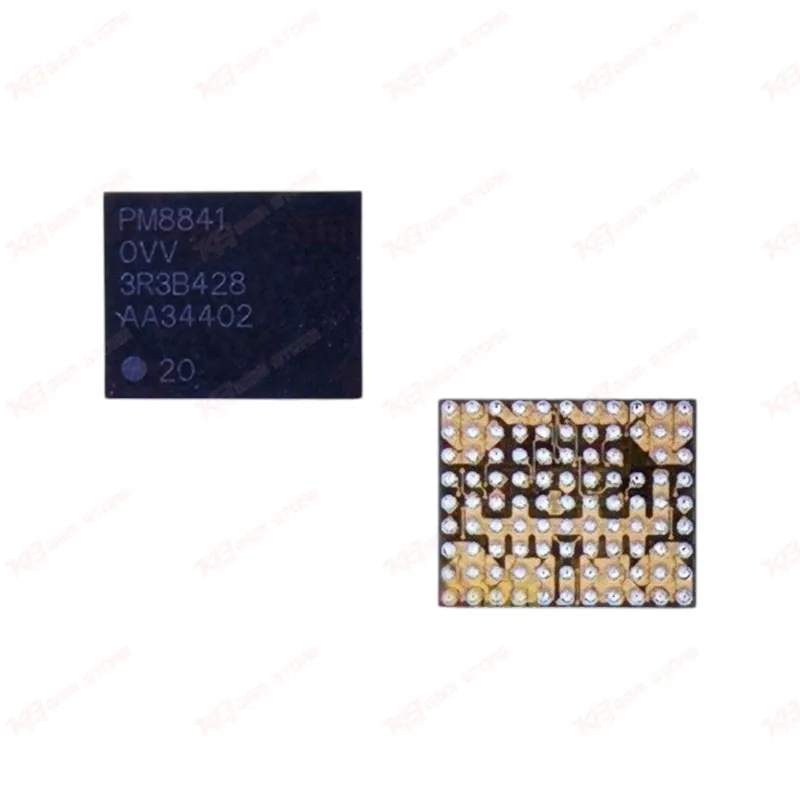
PM8841 Power IC
PM8841 Power IC
Regular price
Rs.250.00 PKR
Regular price
Sale price
Rs.250.00 PKR
Shipping calculated at checkout.
Quantity
Couldn't load pickup availability
The PM8841 is Qualcomm's secondary power management IC, built to work alongside the PM8941 on Snapdragon 800, 801, and 805 boards. It handles core voltage rails and auxiliary power delivery through the SPMI bus, so when a board shows dead phone symptoms, no power, or hang on logo after a drop or short, this chip is one of the first suspects. Technicians reballing or replacing this IC restore proper power sequencing to the application processor. Genuine, tested stock for your repair bench — accurate reflow profile and correct ball map matter here, so verify board revision before ordering.


Description
FAQ
What is the product name?
The product name is PM8841 Power IC.
What is the brand of this product?
The brand of this product is Qualcomm.
What is the model of this product?
The model of this product is PM8841.
What is this product used for?
This product is used for restoring power management on dead Snapdragon 800/801/805 boards, typically through IC replacement or reballing.
Which devices are compatible with this product?
This product is compatible with Snapdragon 800/801/805-based boards, including Sony Xperia Z3, LG G3, and Xiaomi devices from that chipset generation.
Who should use this product?
This product is suitable for mobile repair technicians, repair shops, service centers, and professional users.
Does the PM8841 work alone or does it need the PM8941 too?
It works alongside the PM8941 primary PMIC — both are part of the same reference power design, so check both ICs when diagnosing a dead board.
Can a bad PM8841 cause hang on logo instead of a fully dead board?
Yes, an out-of-spec rail from a poor reball or a partially failed PM8841 often causes boot loop or hang on logo rather than a completely dead board.