Skip to product information
1 of 5

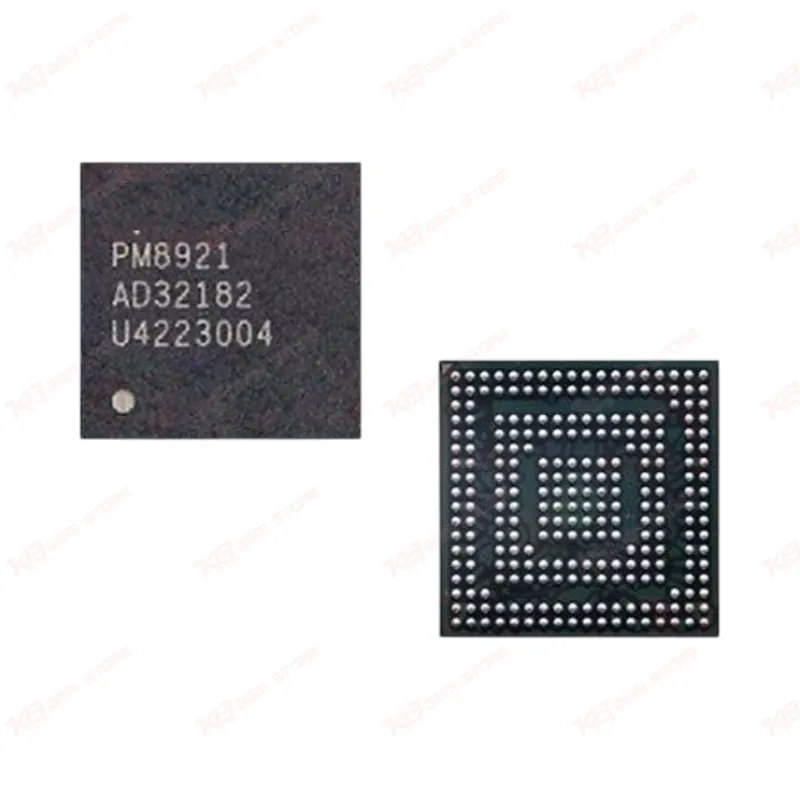
PM8921 Power IC

PM8921 Power IC

Regular price Rs.150.00 PKR
Regular price Sale price Rs.150.00 PKR
Sale Sold out
Shipping calculated at checkout.
Quantity

The PM8921 is a genuine Qualcomm power management IC built on TSMC's 180nm BCD process. Repair shops across Pakistan use this chip to fix dead motherboards on Snapdragon S4 Pro and Snapdragon 600 platform devices. When a board shows no power, dead after flash symptoms, or a short on the main power rail, technicians pull this IC first to rule out the power management stage before touching the CPU or PMIC-adjacent components. Supplied as a BGA package ready for reballing and reflow on your hot air station.

⚖️ Weight: 0.01 kg

SKU:MST-IC-76

  • Safe & Secure Payment
  • Fast Delivery
  • WhatsApp Support
View full details

Description

When a phone comes into your workshop completely dead - no charging light, no vibration, no logo on power press - the PM8921 power management IC is one of the first components a Snapdragon-era board points you to. This chip handles input power regulation, output rail distribution, and general housekeeping functions for the motherboard, which means a fault here can take down charging, display power, and CPU boot sequencing all at once.Qualcomm designed the PM8921 as a dedicated PMIC for its Snapdragon S4 Pro (APQ8064) and Snapdragon 600 (MSM8960T) chipset families. On these boards, the PM8921 often works alongside its companion die, the PM8821, forming what Qualcomm packages as the PMM8920 module on some devices. You get one chip handling multiple regulated voltage outputs instead of scattered discrete regulators, which is exactly why board-level failures here cause such broad symptoms - it's not one rail down, it's the whole distribution stage.TSMC fabricates the PM8921 on a 180nm BCDMOS process, combining LDMOS transistors, bipolar transistors, and standard CMOS logic on a single die. That mixed-signal construction is normal for PMICs and explains why these chips tolerate the electrical stress of constant charge cycling far better than smaller-geometry digital chips, but it also means physical damage from liquid ingress or a bad charger still takes them out.For your repair bench, this IC comes up in a specific pattern of jobs. A phone that was working fine and now shows dead after flash almost never has a software cause when a PMIC fault is present - reflashing won't fix a hardware short. Boot loop issues where the phone vibrates, shows the logo, then dies before OS load also point here once you've cleared out RAM and eMMC as causes. And a board pulling excessive current on your bench power supply with no visible short elsewhere in the power tree is a classic PM8921 short-to-ground symptom.Before you commit to a swap, run your usual diagnostic sequence. Check the power rail resistance to ground with your multimeter in diode mode, compare readings against a known-good board if you have one on your test bench, and confirm the fault traces back to the PMIC footprint rather than a capacitor or inductor nearby. Once you're confident, reballing gives better long-term reliability than a straight swap with old balls - use your microscope to inspect the pads for lifted traces before reflow, since PMIC lands see a lot of thermal cycling over a phone's life.This chip ships as a BGA component, so you'll need a reballing kit with the correct stencil, flux, and a hot air station capable of controlled ramp profiles - PMICs are more sensitive to reflow temperature spikes than simple ICs, and overheating the die during removal is the single most common cause of a "new chip, same problem" callback. Keep your PCB holder steady during the whole process; even a small shift during reballing misaligns the ball grid and creates cold joints that pass a visual check but fail under load.Stock the PM8921 alongside your ISP pinout tools and UFS/eMMC programmers if you're taking on Snapdragon board-level work regularly - dead board repair on this chipset generation comes up often enough in Pakistan's repair market that having the part on hand saves you a return visit for the customer and a lost job for you.

Key Features

Genuine Qualcomm PMIC built on TSMC 180nm BCDMOS process

Handles input power management, output rail distribution, and housekeeping functions

Matches Snapdragon S4 Pro (APQ8064) and Snapdragon 600 (MSM8960T) board designs

BGA package suited for standard reballing and hot air rework workflows

Common fix for dead board, dead after flash, and boot loop symptoms

Works alongside companion PM8821 die on PMM8920 module-based boards

Suitable for board-level diagnosis alongside multimeter and microscope inspection

Fits directly into existing Snapdragon-era motherboard repair workflow

Specifications

Brand Entity Qualcomm Product Entity

Compatible Devices

Qualcomm Snapdragon S4 Pro (APQ8064) and Snapdragon 600 (MSM8960T) platform devices, including HTC One, HTC One X/XL, HTC Windows Phone 8X, BlackBerry Z10, Asus Nexus 7 (2013) GSM Edition, Asus Transformer Pad Infinity (3G/4G), Motorola Droid Razr HD/Maxx HD/M, Motorola Atrix HD, Samsung Galaxy S4 (Snapdragon 600 variant), and Samsung Galaxy S Relay 4G (SGH-T699)

Common Repair Uses

Dead phone/no power repair, dead after flash troubleshooting, boot loop diagnosis on Snapdragon boards, power rail short-to-ground repair, PMIC reballing and reflow work, motherboard-level power management fault isolation

FAQ

What is the product name?
The product name is PM8921 Power Management IC. What is the brand of this product?
What is the model of this product?
The model of this product is PM8921. What is this product used for?
Which devices are compatible with this product?
This product is compatible with Qualcomm Snapdragon S4 Pro (APQ8064) and Snapdragon 600 (MSM8960T) platform devices, including HTC One, Samsung Galaxy S4, BlackBerry Z10, and Motorola Droid Razr HD.
Who should use this product?
This product is suitable for mobile repair technicians, repair shops, service centers, and professional users. Is the PM8921 the same chip as the PM8821?
Can a dead after flash phone be fixed by replacing the PM8921 without reflashing again?
Yes, if diagnosis confirms a hardware short or open circuit on the PMIC power rail, replacing the chip addresses the root cause and reflashing afterward is only needed if the original flash was interrupted.

Ask any Query