


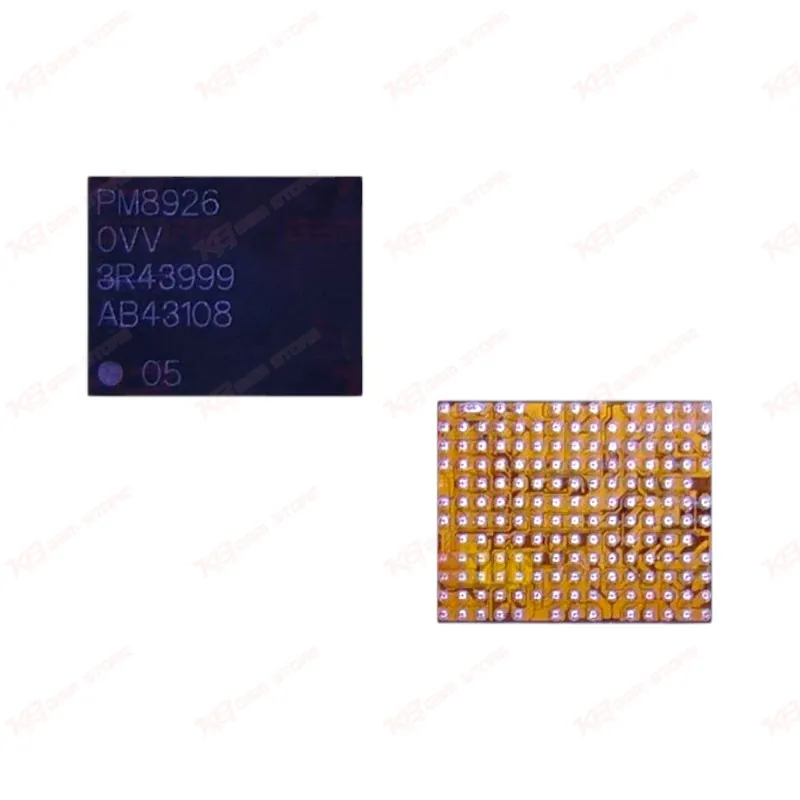
PM8926 Power IC
PM8926 Power IC
Regular price
Rs.300.00 PKR
Regular price
Sale price
Rs.300.00 PKR
Shipping calculated at checkout.
Quantity
Couldn't load pickup availability
The PM8926 Power IC is a Qualcomm BGA-packaged power management chip built for Sony and HTC Snapdragon-based handsets. When a phone comes in dead, stuck on logo, or refusing to charge, this IC is often the root cause on the power rail side. You get a direct replacement part for board-level repair work — no rebranding, no guesswork on pinout compatibility for the supported models. Technicians use it to restore power delivery after a short, a liquid damage fault, or a failed reflow. Fit it with proper BGA reballing and reflow practice for a stable, long-term repair result on your bench.
⚖️ Weight: 0.01 kg
SKU:MST-IC-75
- Safe & Secure Payment
- Fast Delivery
- WhatsApp Support


Description
FAQ
What is the product name?
The product name is PM8926 Power IC.
What is the brand of this product?
The brand of this product is Qualcomm.
What is the model of this product?
The model of this product is PM8926.
What is this product used for?
This product is used for replacing a faulty power management IC on supported Sony and HTC boards showing dead phone, no-power, or power rail faults.
Which devices are compatible with this product?
This product is compatible with Sony Xperia D2502, S55T, D5103, D5303, D2533, D5316, D2303, and HTC D816 (A5-UL), D630N (A16-DWGL), A11-CHL.
Who should use this product?
This product is suitable for mobile repair technicians, repair shops, service centers, and professional users.
Does the PM8926 come in BGA package for reballing and reflow work?
Yes, the PM8926 is supplied in BGA package, so you handle it with standard hot air removal, reballing, and reflow procedures used for board-level IC repair.
Can the PM8926 fix a phone that shows dead after liquid damage?
If diagnostics confirm the power IC as the fault source — no output on key voltage rails with no short elsewhere on the board — replacing the PM8926 can resolve a dead-after-liquid-damage board on supported models.