


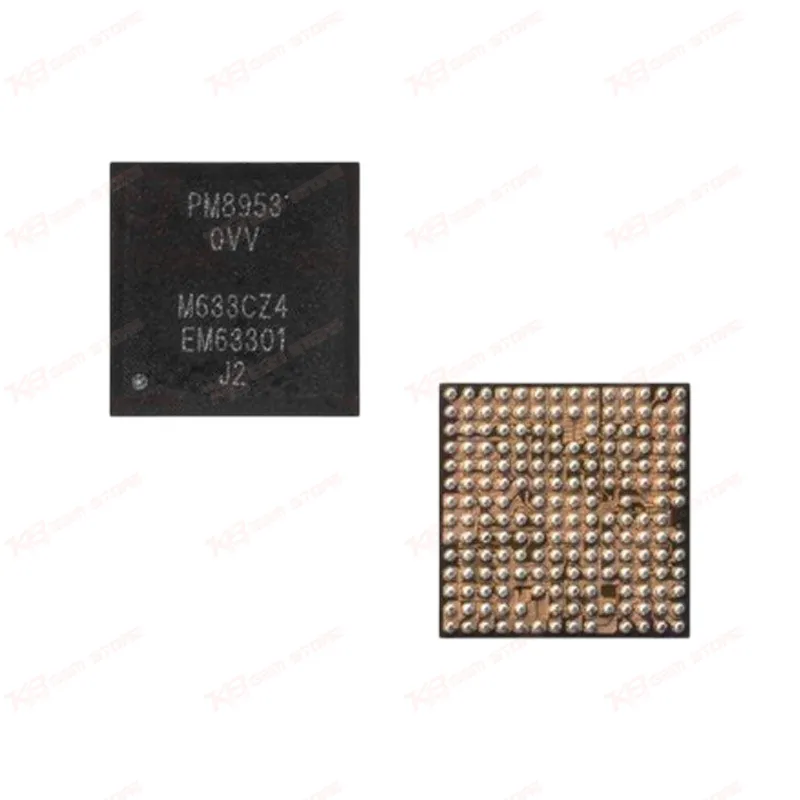
PM8953 0VV Power IC for Redmi Note 4
PM8953 0VV Power IC for Redmi Note 4
Regular price
Rs.350.00 PKR
Regular price
Sale price
Rs.350.00 PKR
Shipping calculated at checkout.
Quantity
Couldn't load pickup availability
The PM8953 0VV is the original Qualcomm power management IC used in the Redmi Note 4 (Snapdragon variant) and other MSM8953-platform Xiaomi devices. When a phone shows dead-after-flash symptoms, refuses to charge, or hangs on logo with no visible short, this PMIC is one of the first components a technician should test. It controls the power-on sequence and regulates voltage rails feeding the MSM8953 chipset, working alongside the PMI8952 companion IC. Replacing a faulty unit restores normal boot behavior and charging response on your repair bench without disturbing other circuit paths.
⚖️ Weight: 0.01 kg
SKU:MST-IC-30
- Safe & Secure Payment
- Fast Delivery
- WhatsApp Support


Description
FAQ
What is the product name?
The product name is PM8953 0VV Power IC.
What is the brand of this product?
The brand of this product is Qualcomm.
What is the model of this product?
The model is PM8953 0VV.
What is this product used for?
This product is used to repair power management faults such as dead phone, no charging response, and boot failure on MSM8953-platform devices.
Which devices are compatible with this product?
This IC is compatible with the Redmi Note 4 (Snapdragon variant), Redmi Note 4X, Redmi 6 Pro, and Xiaomi Mi A1.
Who should use this product?
This product is suitable for mobile repair technicians, repair shops, service centers, and professional GSM technicians.
Does replacing the PM8953 fix a phone that stays dead after flashing?
Yes, if the power-on sequence is broken due to a faulty PM8953, reflashing won't resolve the fault, and replacing the IC restores normal boot behavior.
Does the PM8953 work alone or does it need another IC to manage power?
It works together with the PMI8952 companion IC to split power management duties across the MSM8953 platform.