


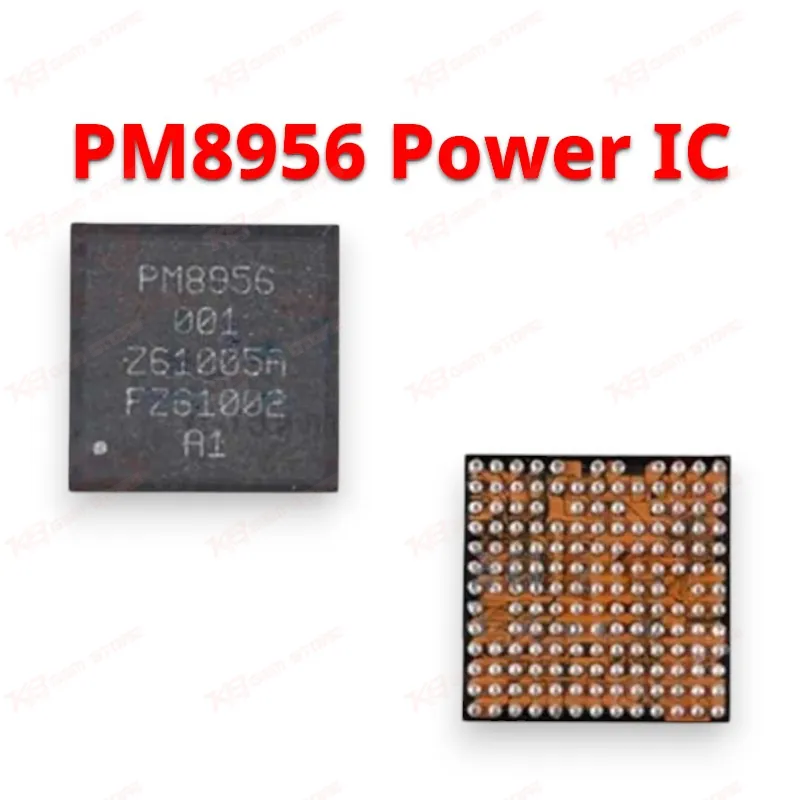
PM8956 Power IC
PM8956 Power IC
Regular price
Rs.250.00 PKR
Regular price
Sale price
Rs.250.00 PKR
Shipping calculated at checkout.
Quantity
Couldn't load pickup availability
The PM8956 is a Qualcomm power management IC (PMIC) in BGA package, used as a motherboard-level replacement part for phones running Snapdragon 617/650-family platforms. Technicians reach for this IC when a device shows dead phone symptoms, no power, or hang on logo after a fall, short, or liquid damage. It handles voltage regulation and power distribution across the board, so a faulty PM8956 often shows up as no charging response, no display, or a board that draws current but never boots. Genuine for board-level GSM repair work, not a retail accessory.
⚖️ Weight: 0.01 kg
SKU:MST-IC-156
- Safe & Secure Payment
- Fast Delivery
- WhatsApp Support


Description
FAQ
What is the product name?
The product name is PM8956 Power IC.
What is the brand of this product?
The brand of this product is Qualcomm.
What is the model of this product?
The model of this product is PM8956.
What is this product used for?
This product is used to replace a faulty power management IC on dead phone or no-power motherboards.
Which devices are compatible with this product?
This product is compatible with the Xiaomi Mi Max, Redmi Note 3 (Snapdragon 650 variant), and Samsung Galaxy A9 Pro 2016 (A910F).
Who should use this product?
This product is suitable for mobile repair technicians, repair shops, service centers, and professional GSM hardware technicians.
Does the PM8956 fault always cause a completely dead phone, or can it show partial symptoms?
A failing PM8956 can cause either a fully dead board or partial symptoms like hang on logo, no charging response, or random restarts, depending on which power rail is affected.
Is a hot air rework station enough to replace the PM8956, or do I need a BGA reballing kit too?
You need both — a hot air station for reflow and a matching BGA stencil for reballing, since the chip ships bare and requires precise ball placement before reflow.