Skip to product information
1 of 4

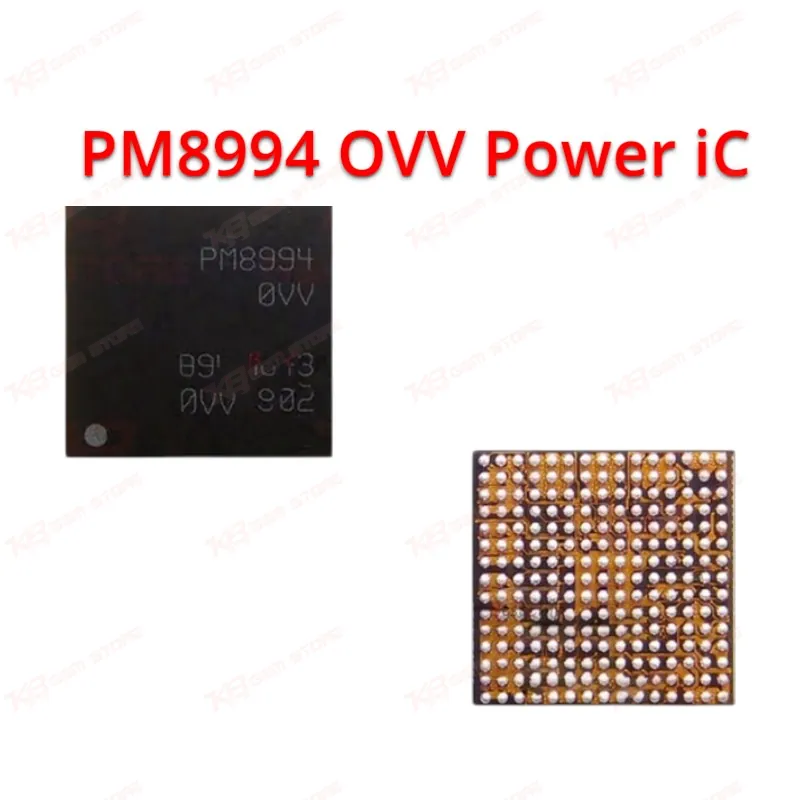
PM8994 OVV Power iC

PM8994 OVV Power iC

Regular price Rs.350.00 PKR
Regular price Sale price Rs.350.00 PKR
Sale Sold out
Shipping calculated at checkout.
Quantity

PM8994 OVV is a Qualcomm power management IC (PMIC) used on motherboards built around the Snapdragon 808/810 platform. Technicians reach for this chip when a phone shows dead board symptoms, no power-on, or abnormal current draw traced back to the power rail. It handles voltage regulation and power sequencing for the SoC, so a faulty PM8994 often shows up as a dead phone that won't charge, won't boot past logo, or draws current but never lights up. This IC is a direct board-level replacement part for your reballing and IC-change jobs, not a boxed tool — pair it with your hot air station and reballing stencil for the swap.

⚖️ Weight: 0.01 kg

SKU:MST-IC-352

  • Safe & Secure Payment
  • Fast Delivery
  • WhatsApp Support
View full details

Description

When a board comes in completely dead — no charging LED, no current draw pattern on your power supply, nothing on the display — the PM8994 OVV is usually one of the first suspects your multimeter and thermal check should point you toward. This chip sits at the center of the phone's power tree, feeding regulated voltage rails to the processor, RF sections, and display driver. If it's cracked internally, shorted, or has a lifted ball after a drop, the whole board stays dark no matter what software you throw at it.You'll mostly run into this exact part number on Snapdragon 808/810 based devices — LG G4 (H815), Sony Xperia Z3+ and Z5, and Xiaomi Mi 5 motherboards share this power IC family. On your bench, the failure pattern is fairly consistent: dead after flash, dead after liquid damage, or dead after a drop where the board shows a dead short on the battery rail. Before you commit to an IC change, always confirm with a thermal camera or current-limited power supply that the short is actually sitting under this chip and not under a nearby PMIC or the PA.

Replacing this IC is a hardware job, not a software fix — no box, no flashing tool will bring the board back if the PMIC itself is damaged. You'll need your hot air station set to a controlled profile, flux, a matching reballing stencil, and a microscope or good magnifier to check ball alignment before reflow. Preheat the board evenly, lift the old IC without dragging pads, clean the footprint completely, reball with fresh solder balls, and reflow with even heat distribution so you don't create new dry joints next to the ones you just fixed.A few things matter more than people think on this specific chip: ESD handling before you even touch it, because internal PMIC damage from static is common on repair benches that skip anti-static mats. Ball height consistency matters too — uneven balls on a power IC show up later as intermittent charging issues or a phone that boots fine cold but hangs on logo once it warms up, which sends the customer back to your shop with a "fixed but not really" complaint.This part fits into the broader board-repair workflow alongside your ISP pinout tools for reading boot logs when a board is soft-bricked rather than truly dead, your UFS adapters if the fault turns out to be storage-related instead of power, and your test boxes for verifying rail output after the swap. If you're stocking repair inventory, keeping a few of these alongside PM8996 and PMi8994 variants covers most of the Snapdragon 808/810 dead-board jobs that come through a typical Pakistani repair shop or service center.For technicians running a busy workbench, this IC is inventory you'll use regularly if you take in LG, Sony, or Xiaomi flagship-era boards — not a rare part sitting on the shelf. Confirm the exact board revision before ordering, since some batches use PM8996 instead of PM8994 even on visually similar boards.

Key Features

Direct board-level replacement for faulty PM8994 power management IC

Compatible with Snapdragon 808/810 based motherboards

Used for dead phone and no power-on repair jobs

Suitable for LG G4, Sony Xperia Z3+/Z5, and Xiaomi Mi 5 boards

Works with standard reballing and hot air rework process

Fits directly into existing board footprint without modification

Individually tested part for reliable bench use

Common stock item for professional GSM repair shops

Specifications

Brand Entity Qualcomm
Product Entity PM8994 OVV Power Management IC
Technology Entity SPMI Power Management IC, Snapdragon 808/810 platform
Compatible Device Entities LG G4 H815, Sony Xperia Z3+, Sony Xperia Z5, Xiaomi Mi 5
Repair Process Entity IC Reballing, Dead Board Repair, Power Rail Diagnosis
Industry Entity Mobile Repair Industry, PCB Repair Industry

Compatible Devices

LG G4 (H815), Sony Xperia Z3+, Sony Xperia Z5, Xiaomi Mi 5 — devices built on the Qualcomm Snapdragon 808/810 (MSM8994) platform family

Common Repair Uses

Dead board repair, no power-on fault diagnosis, power rail short circuit repair, IC reballing and replacement, dead-after-drop and dead-after-liquid-damage board recovery

FAQ

What is the product name?
The product name is PM8994 OVV Power Management IC.
What is the brand of this product?
The brand of this product is Qualcomm.
What is the model of this product?
The model of this product is PM8994 OVV.
What is this product used for?
This product is used for replacing a faulty power management IC on dead motherboards, mainly in dead-after-drop or dead-after-liquid-damage repair cases.
Which devices are compatible with this product?
This product is compatible with LG G4 (H815), Sony Xperia Z3+, Sony Xperia Z5, and Xiaomi Mi 5 boards built on the Snapdragon 808/810 platform.
Who should use this product?
This product is suitable for mobile repair technicians, repair shops, service centers, and professional users.
Does a faulty PM8994 always cause a completely dead phone?
Not always — it can also cause hang on logo, intermittent charging issues, or a board that draws current but never powers on, depending on which rail is affected.
Can this IC be installed without a reballing stencil?
It's not recommended — proper ball alignment through a matching stencil prevents dry joints and repeat dead-board complaints after the swap.

Ask any Query